Development and internal validation of a radiomics-clinical combined model for predicting axillary pathological complete response in clinically node-positive breast cancer patients after neoadjuvant chemotherapy - Report - MDSpire
Advertisement
Development and internal validation of a radiomics-clinical combined model for predicting axillary pathological complete response in clinically node-positive breast cancer patients after neoadjuvant chemotherapy
Clinical Report: Combined Radiomics-Clinical Model for Axillary Response in Breast Cancer
Overview
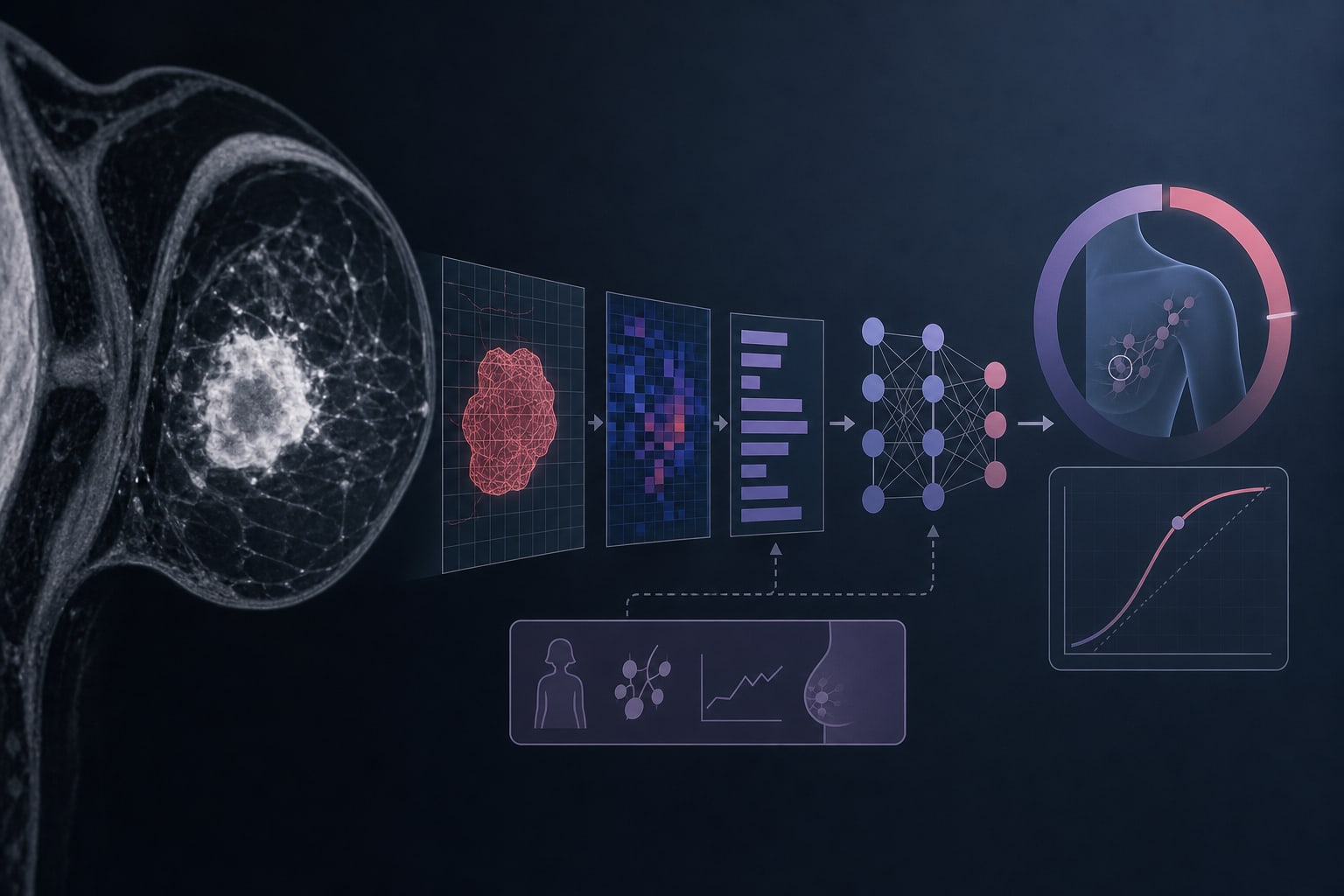
This study developed and validated a combined radiomics-clinical model to predict axillary pathological complete response (apCR) in clinically node-positive breast cancer patients after neoadjuvant chemotherapy. The model achieved a validation AUC of 0.703 (95% CI, 0.610–0.792).
Background
Accurate prediction of apCR in clinically node-positive breast cancer patients is crucial for guiding surgical decisions. Neoadjuvant chemotherapy is standard for these patients, yet the ability to predict outcomes remains limited.
Data Highlights
Metric
Value
Overall apCR Rate
43.5% (168/386)
Validation AUC of Combined Model
0.703 (95% CI, 0.610–0.792)
Optimism-Corrected Training AUC
0.742
Key Findings
The combined model included tumor size, HER2 status, Ki-67, breast clinical complete response, and Rad-score.
The combined model outperformed the radiomics-only model (ΔAUC = 0.094, P = 0.004).
The combined model did not significantly outperform the clinical-only model (ΔAUC = 0.020, P = 0.713).
The calibration slope of the combined model was 0.811.
Risk stratification showed apCR rates of 18.8% (low), 48.0% (intermediate), and 58.8% (high).
Clinical Implications
The combined model may assist in identifying patients who achieve apCR. However, its current misclassification rate limits direct clinical application.
Conclusion
The combined radiomics-clinical model requires external validation before clinical implementation.