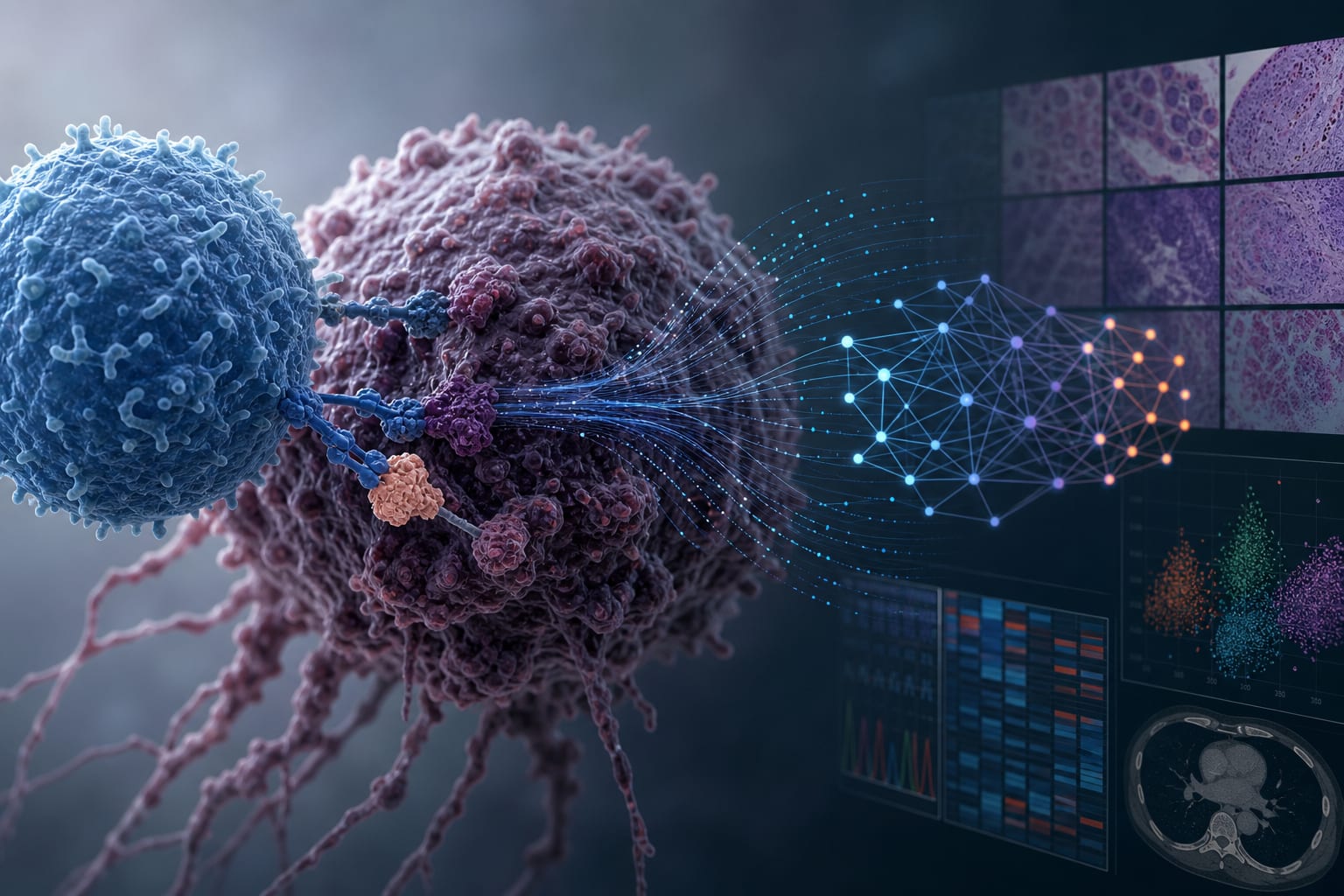
Clinical Report: An Innovative Explainable AI Framework for Identifying Factors Influencing Cancer Drug Response
Overview
This report presents a novel explainable AI framework that integrates multi-omics data to predict cancer drug responses. The framework demonstrates high accuracy and provides biologically meaningful insights into drug sensitivity and resistance mechanisms.
Background
Accurate prediction of cancer drug responses is crucial for optimizing treatment strategies and improving patient outcomes. Traditional models often lack interpretability and fail to integrate diverse molecular data. This innovative framework addresses these limitations by utilizing multi-omics data and advanced machine learning techniques.
Data Highlights
Metric
Value
Accuracy
95.87%
F1-score
95.87%
AUROC
0.957
AUPRC
0.946
Key Findings
The framework achieves an accuracy of 95.87% in predicting drug responses.
Utilizes multi-omics data from the GDSC2 resource, enhancing predictive power.
Identifies the PI3K/AKT/mTOR pathway as a recurrent factor in drug response.
Employs SHAP-based feature attributions for model interpretability.
Integrates chemical drug descriptors to improve prediction accuracy.
Clinical Implications
This framework can aid clinicians in selecting effective therapies based on individual tumor profiles, potentially reducing adverse effects from ineffective treatments. Its interpretability supports hypothesis generation and biomarker discovery in oncology.
Conclusion
The proposed explainable AI framework represents a significant advancement in cancer drug response prediction, combining high accuracy with meaningful biological insights. This approach may enhance personalized treatment strategies in oncology.