Clinical Report: Unique microbial factors connect dietary habits to inflammatory responses in Crohn's disease and ulcerative colitis
Overview
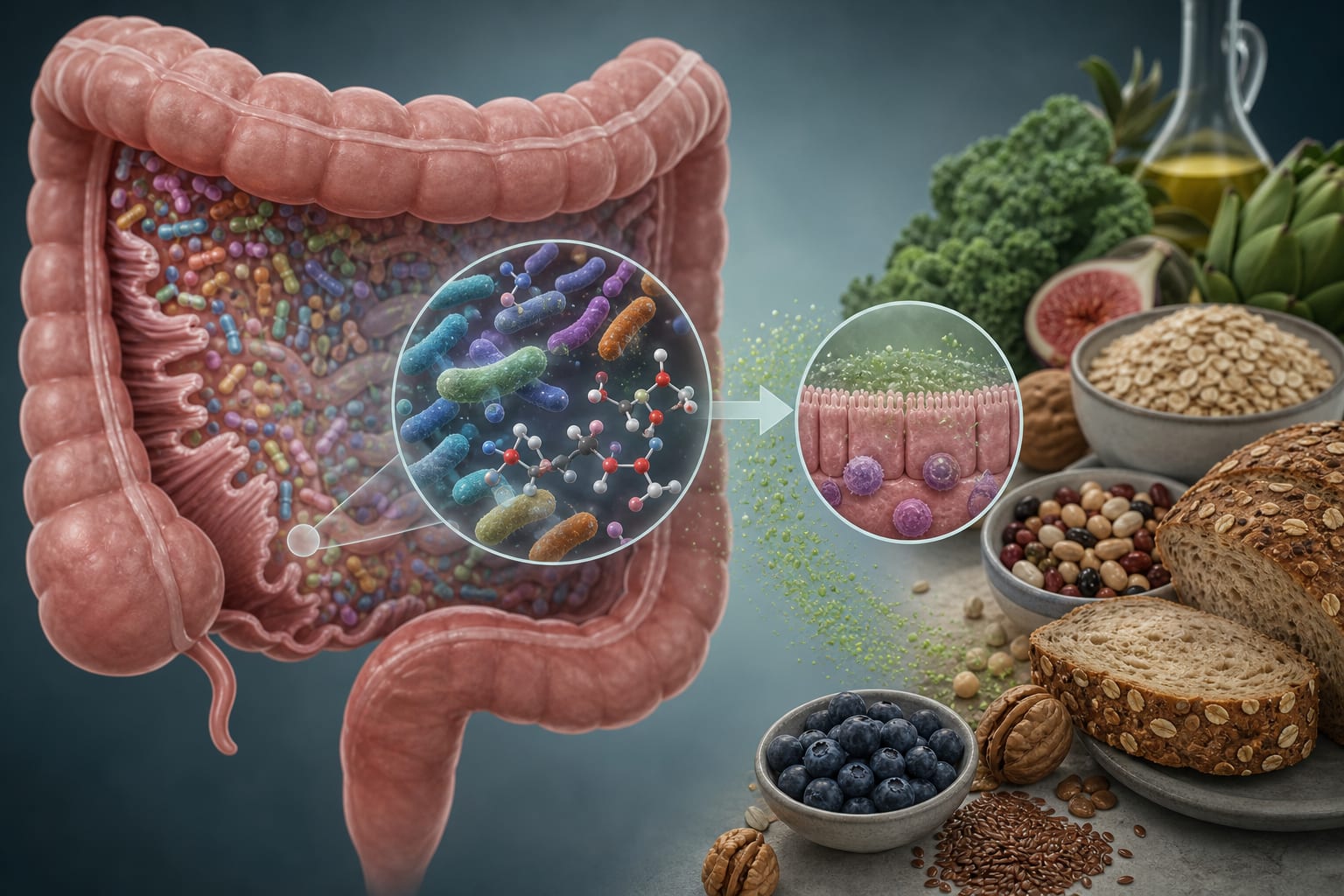
This study highlights the connection between dietary habits and inflammatory responses in IBD, revealing that patients with Crohn's disease (CD) exhibit lower microbial diversity compared to those with ulcerative colitis (UC). Specific dietary components, such as coffee and whole wheat bread, were found to reduce inflammation in CD, while Mediterranean-like diets improved inflammatory markers in UC.
Background
Inflammatory bowel disease (IBD), encompassing Crohn's disease and ulcerative colitis, affects a significant portion of the population and is associated with a reduced life expectancy. The interplay between diet, gut microbiome, and inflammation is crucial for understanding disease management and developing targeted interventions. This study aims to elucidate the microbial and metabolic pathways linking dietary intake to inflammation in IBD.
Data Highlights
No specific numerical data available in the provided material.
Key Findings
IBD patients demonstrated lower diet quality and microbiome diversity.
Crohn's disease patients exhibited the lowest microbial diversity among IBD patients.
Consumption of coffee and whole wheat bread was associated with reduced inflammation in Crohn's disease through SCFA-producing taxa.
In ulcerative colitis, Mediterranean-like, fiber-rich diets were linked to lower levels of C-reactive protein and calprotectin.
Enhanced microbial richness and reduced dysbiosis were observed in UC patients following specific dietary patterns.
Personalized dietary interventions targeting specific bacterial taxa may complement medical therapy in IBD management.
Clinical Implications
Healthcare professionals should consider the role of diet in managing IBD, particularly the differences in dietary impacts between Crohn's disease and ulcerative colitis. Personalized dietary strategies that enhance microbial diversity and target specific inflammatory pathways may improve patient outcomes and complement existing medical therapies.
Conclusion
The findings underscore the importance of dietary habits in influencing inflammatory responses in IBD, suggesting that tailored dietary interventions could play a significant role in disease management.
by Luis Mayorga, Arnau Noguera Segura, Laura Campderros, Marc Pons-Tarin, Zaida Soler, Sara Vega-Abellaneda, Gerard Serrano-Gomez, Claudia Herrera-deGuise, Virginia Robles-Alonso, Natalia Borruel, Chaysavanh Manichanh