Editorial: The Role of Imaging Techniques in Diagnosing and Managing Ocular Disorders
-
By
-
Weihua Yang
-
Yalin Zheng
-
Shujun Wang
-
June 18, 2026
Clinical Report: The Role of Imaging Techniques in Diagnosing Ocular Disorders
Overview
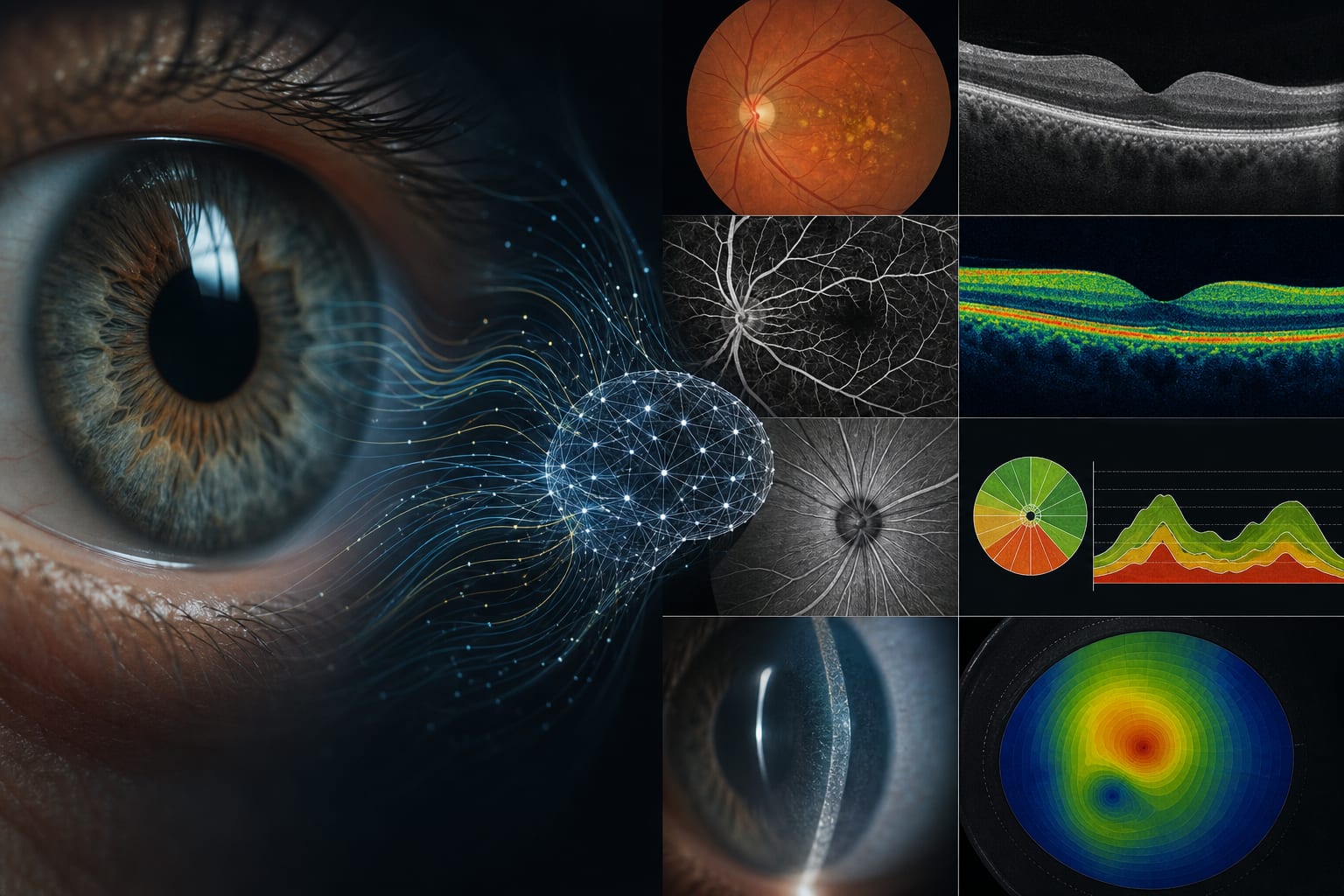
Ophthalmic imaging has evolved significantly, integrating advanced technologies like OCT and AI to enhance the diagnosis and management of ocular disorders. This editorial highlights the shift from traditional imaging methods to multimodal approaches that improve diagnostic accuracy and facilitate systemic disease assessment.
Background
The integration of advanced imaging techniques in ophthalmology is crucial for the early detection and management of various ocular diseases. Innovations such as OCT and OCTA have transformed the diagnostic landscape, allowing for more precise evaluations of conditions like diabetic retinopathy and glaucoma. Understanding these advancements is essential for optimizing patient care and outcomes.
Data Highlights
No specific numerical data provided in the source material.
Key Findings
- Ophthalmic imaging has transitioned from structural depiction to functional integration.
- Multimodal imaging strategies improve diagnostic accuracy compared to single modalities.
- AI integration in imaging enhances the identification of early lesions and treatment response predictions.
- Ophthalmic imaging serves as a biomarker for systemic diseases, reflecting broader pathophysiological changes.
- Imaging techniques are now integral to perioperative management in ophthalmic care.
Clinical Implications
Healthcare professionals should leverage advanced imaging techniques to enhance diagnostic accuracy and patient management in ophthalmology. The integration of AI and multimodal imaging can provide deeper insights into both ocular and systemic health, facilitating better treatment planning and outcomes.
Conclusion
The evolution of ophthalmic imaging represents a significant advancement in the field, offering new opportunities for improved diagnosis and management of ocular disorders. Continued exploration of these technologies will further enhance clinical practice.
Related Resources & Content
- Optometric Management, 2010 -- Advances in Ocular Imaging Technology
- Retinal Physician, 2021 -- The Importance of Imaging in Diagnosis
- Ophthalmology Management, 2021 -- WHAT ARE THE ESSENTIAL RETINA DIAGNOSTIC TECHNOLOGIES?
- Ophthalmology Management, 2019 -- The latest retina diagnostic tools
- PMC, 2026 -- OCTA in age-related macular degeneration: consensus on practical guidelines for optimal imaging strategies across different clinical scenarios
- npj Digital Medicine, 2026 -- Clinical setting-dependent diagnostic accuracy of artificial intelligence and store-and-forward diabetic retinopathy screening: a systematic review and meta-analysis
- Ophthalmology, 2021 -- Primary Open-Angle Glaucoma Preferred Practice Pattern®
- OCTA in age-related macular degeneration: consensus on practical guidelines for optimal imaging strategies across different clinical scenarios - PMC
- Clinical setting-dependent diagnostic accuracy of artificial intelligence and store-and-forward diabetic retinopathy screening: a systematic review and meta-analysis | npj Digital Medicine
- Primary Open-Angle Glaucoma Preferred Practice Pattern® - Ophthalmology
Based on findings from:
Editorial: Imaging in the diagnosis and treatment of eye diseases
Weihua Yang, Yalin Zheng, Shujun Wang. Frontiers In Ophthalmology, 2026.
https://www.frontiersin.org/journals/ophthalmology/articles/10.3389/fopht.2026.1899308/full
This content is an AI-generated, fully rewritten summary based on a published scholarly article. It does not reproduce the original text and is not a substitute for the original publication. Readers are encouraged to consult the source for full context, data, and methodology.