Performance of Deep Learning in Classifying Age-Related Macular Degeneration From Images: Systematic Review and Meta-Analysis - Report - MDSpire

Performance of Deep Learning in Classifying Age-Related Macular Degeneration From Images: Systematic Review and Meta-Analysis

  • By

  • Yu Zhu

  • Yue Niu

  • Shangye Sun

  • Wei Liu

  • Ying Dou

  • Yu Guo

  • June 15, 2026

  • 0 min

Share

Clinical Report: Evaluating Deep Learning Techniques for AMD Classification

Overview

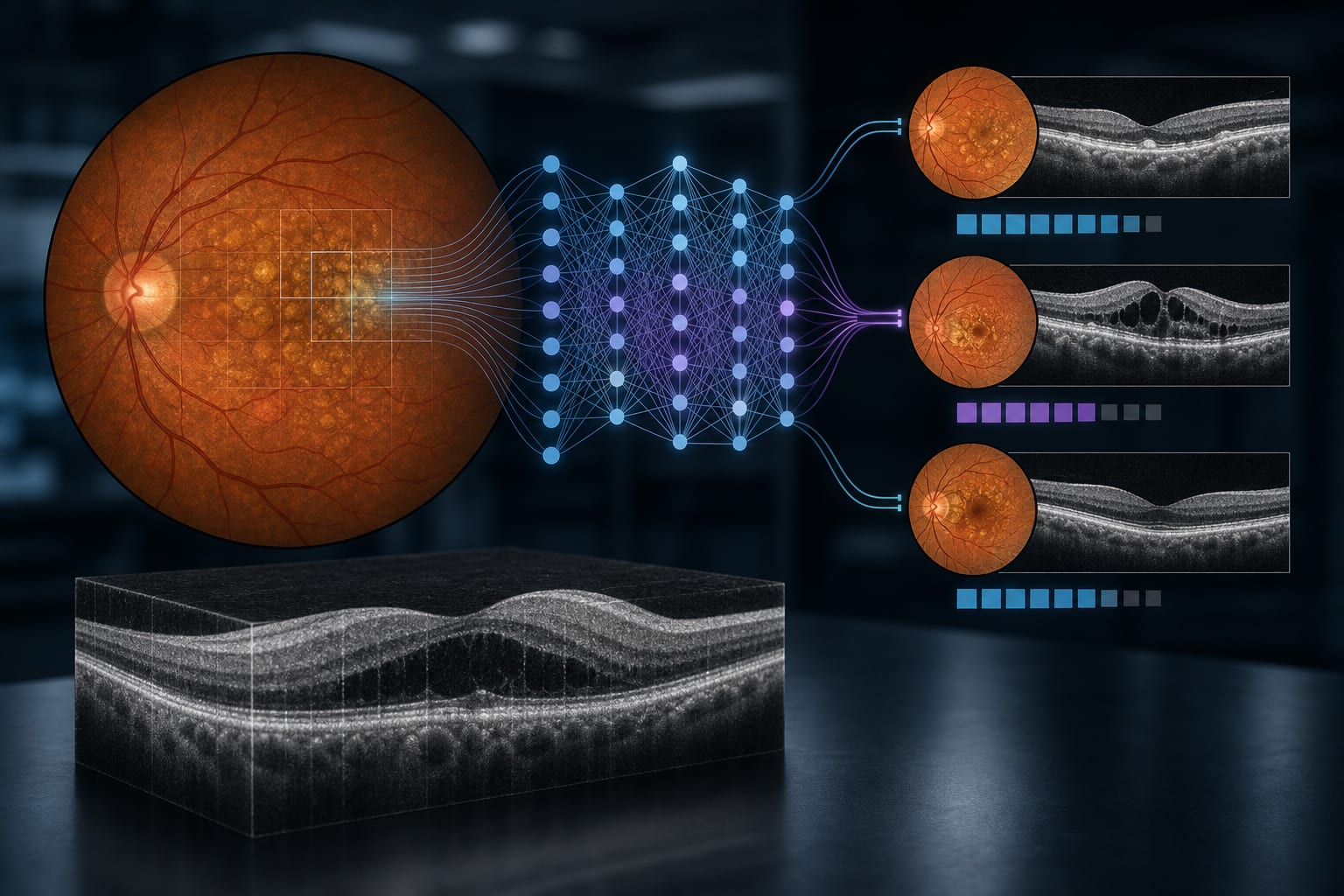
This systematic review and meta-analysis evaluates the performance of deep learning (DL) algorithms in classifying age-related macular degeneration (AMD) and compares it with ophthalmologists of varying expertise. The findings highlight significant heterogeneity in DL performance and the importance of stratifying comparisons based on clinician experience and imaging modalities.

Background

Age-related macular degeneration (AMD) is a leading cause of irreversible blindness, with its prevalence expected to rise significantly as the population ages. Early and accurate diagnosis is crucial for timely intervention, yet traditional imaging methods face limitations. Deep learning techniques present a promising alternative for automated classification, but their effectiveness compared to human experts remains unclear.

Data Highlights

No numerical data available in the provided source material.

Key Findings

  • Deep learning algorithms show potential for automated classification of AMD but exhibit performance variability.
  • Previous meta-analyses reported high sensitivity and specificity for DL algorithms, but lacked comprehensive comparisons with ophthalmologists.
  • This review stratifies DL performance comparisons by clinician experience level, addressing a critical gap in the literature.
  • Classification of wet AMD versus dry AMD is evaluated separately, highlighting its therapeutic implications.
  • The use of the PROBAST+AI tool provides a more tailored assessment of bias in AI prediction models.

Clinical Implications

Clinicians should consider the varying performance of deep learning algorithms when integrating them into AMD screening protocols. Understanding the influence of clinician experience and imaging modalities on diagnostic accuracy can enhance decision-making in patient care.

Conclusion

This review underscores the need for further research to standardize deep learning applications in AMD classification and improve their integration into clinical practice.

Related Resources & Content

  1. Author(s)/Org, Source, Year -- Title
  2. Nicole Ross, Optometric Management, 2025 -- Imaging and Treatments for Dry Age-Related Macular Degeneration Recommendations
  3. Conexiant, 2025 -- Retinal Age Model Tied to Disease Risk
  4. Journal of Medical Internet Research (JMIR), 2026 -- Image-Based Deep Learning for Cataract Diagnosis: Systematic Review and Meta-Analysis
  5. Age-Related Macular Degeneration Preferred Practice Pattern® - PubMed, 2023
  6. Age-Related Macular Degeneration Preferred Practice Pattern® - PubMed
  7. Intravitreal aflibercept 8 mg in neovascular age-related macular degeneration (PULSAR): 48-week results from a randomised, double-masked, non-inferiority, phase 3 trial - PubMed
  8. Efficacy of Continuous Pegcetacoplan Treatment for Subfoveal Geographic Atrophy in Age-Related Macular Degeneration: 36-Month Results from OAKS, DERBY, and GALE Open-Label Extension - PubMed
  9. Avacincaptad Pegol for Geographic Atrophy Secondary to Age-Related Macular Degeneration: Two-Year Efficacy and Safety Results from the GATHER2 Phase 3 Trial - PubMed
  10. Efficacy and safety of complement inhibitors in patients with geographic atrophy associated with age-related macular degeneration: a network meta-analysis of randomized controlled trials - PubMed
  11. The effect of complement C3 or C5 inhibition on geographic atrophy secondary to age-related macular degeneration: A living systematic review and meta-analysis - PubMed
  12. Ocular Adverse Events Associated with Pegcetacoplan and Avacincaptad Pegol for Geographic Atrophy: A Population-Based Pharmacovigilance Study - ScienceDirect
  13. Retinal Vasculitis After Intravitreal Pegcetacoplan: Report From the ASRS Research and Safety in Therapeutics (ReST) Committee - PMC

Original Source(s)

Related Content