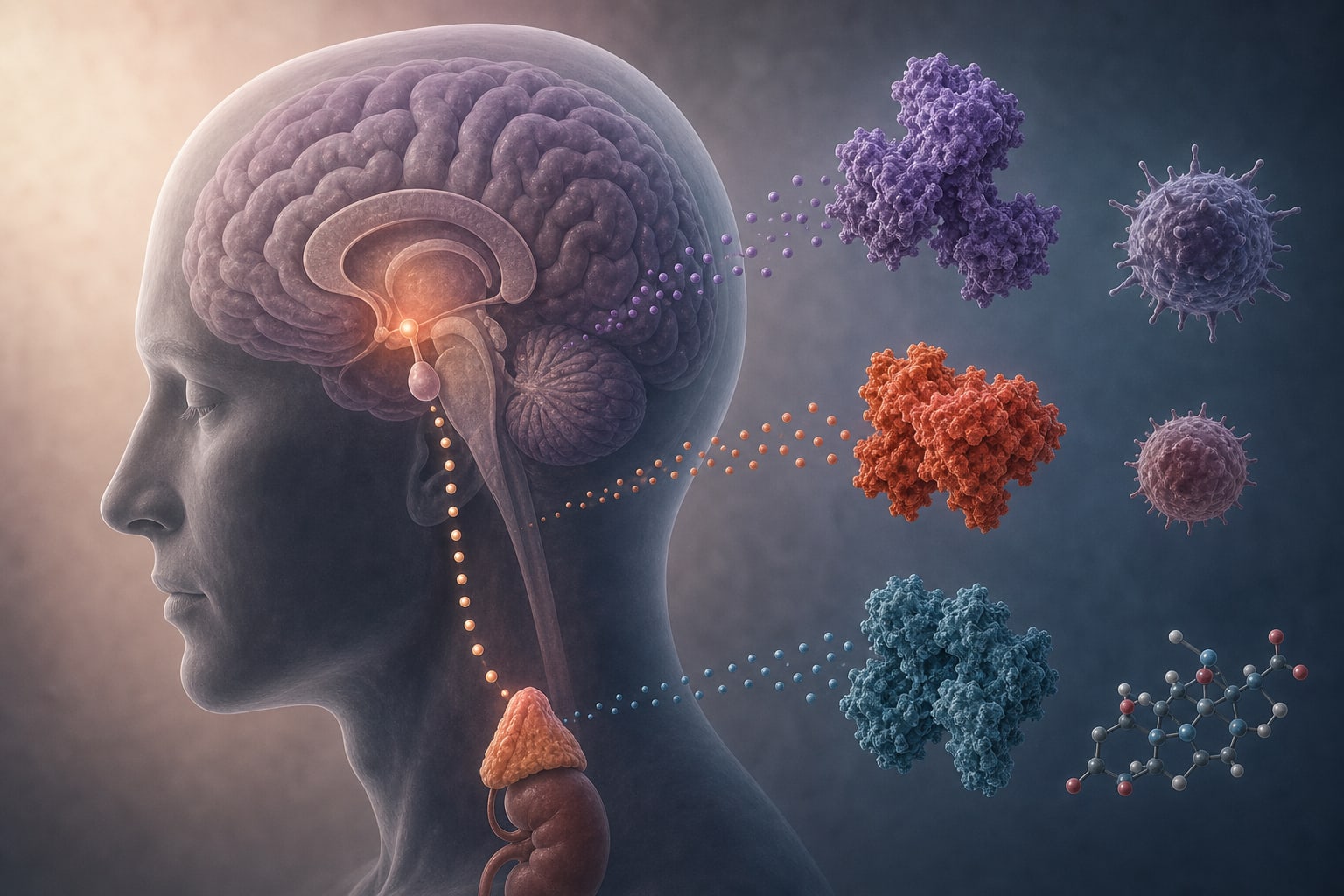
Epigenetic Factors in Bipolar Disorder: A Bibliometric Overview and Visualization Study
-
By
-
Lan Xiong
-
Haixia Fan
-
Jie Gao
-
Minmin Lei
-
June 5, 2026
Clinical Report: Epigenetic Factors in Bipolar Disorder: A Bibliometric Overview
Overview
This bibliometric study analyzes the evolving landscape of epigenetic research in bipolar disorder (BD), highlighting significant trends and influential contributors. Key findings indicate a shift towards understanding dynamic regulatory networks and potential biomarkers for BD.
Background
Bipolar disorder is a chronic psychiatric condition with a global prevalence of 1.5% to 2.4%, significantly impacting public health. The role of epigenetics in BD pathogenesis is gaining attention, as it may reveal novel biomarkers and therapeutic targets. Understanding these mechanisms is crucial for advancing clinical care and treatment strategies.
Data Highlights
{'format': 'Ensure the table is properly formatted in the final document.'}Key Findings
- The United States is the most productive country in epigenetic BD research.
- Harvard University is identified as the leading institution in this field.
- Kato T is the most prolific author, while Nöthen MM is the most highly co-cited scientist.
- Molecular Psychiatry has the highest publication volume and citation frequency.
- Current research focuses on histone modifications, HDAC inhibitors, and long noncoding RNAs.
- There is a notable interplay between genetic variants and epigenetic regulation in BD.
Clinical Implications
The findings underscore the importance of epigenetic mechanisms in understanding bipolar disorder, which may lead to the identification of novel biomarkers for diagnosis and treatment. Clinicians should remain informed about the evolving research landscape to integrate potential epigenetic insights into future therapeutic strategies.
Conclusion
This bibliometric overview highlights the significant advancements in epigenetic research related to bipolar disorder, emphasizing the need for continued exploration of these mechanisms to enhance clinical outcomes.
Related Resources & Content
- Frontiers in Psychiatry, 2026 -- Revisiting the prevalence of bipolar disorder: implications of a broader spectrum model
- BMC Psychiatry (Springer), 2025 -- Investigating seasonal metabolic variations in bipolar disorder: a targeted metabolomics study
- Frontiers in Neurology, 2026 -- Bipolar disorder and subsequent Parkinson's disease: a meta-analysis of cohort studies
- VA DoD CPG for Management of Bipolar Disorder
- The CANMAT and ISBD Guidelines for the Treatment of Bipolar Disorder: Summary and a 2023 Update of Evidence | Focus
- Overview | Bipolar disorder: assessment and management | Guidance | NICE
- BMC Psychiatry (Springer) — Neuroendocrine abnormalities as predictors of suicidal ideation in bipolar disorder patients during depressive episodes: a cross-sectional study
- Lithium response in bipolar disorder: Epigenome-wide DNA methylation signatures and epigenetic aging
- VA DoD CPG for Management of Bipolar Disorder
- The CANMAT and ISBD Guidelines for the Treatment of Bipolar Disorder: Summary and a 2023 Update of Evidence | Focus
- Overview | Bipolar disorder: assessment and management | Guidance | NICE
- www.nature.com/tp
- A perspective on epigenomic aging processes in the human brain and their plasticity in patients with mental disorders – a systematic review | Neurogenetics | Springer Nature Link
- Evaluating Oxidative Stress Markers in At-Risk Individuals for Bipolar Disorder: A Systematic Review and Meta-Analysis - PubMed
- Epigenetic Neuropharmacology: Drugs Affecting the Epigenome in the Brain - PMC
Based on findings from:
Epigenetics of bipolar disorder: a bibliometric landscape and visualization analysis
Lan Xiong, Haixia Fan, Jie Gao, Minmin Lei. Frontiers In Psychiatry, 2026.
https://www.frontiersin.org/journals/psychiatry/articles/10.3389/fpsyt.2026.1804155/full
This content is an AI-generated, fully rewritten summary based on a published scholarly article. It does not reproduce the original text and is not a substitute for the original publication. Readers are encouraged to consult the source for full context, data, and methodology.