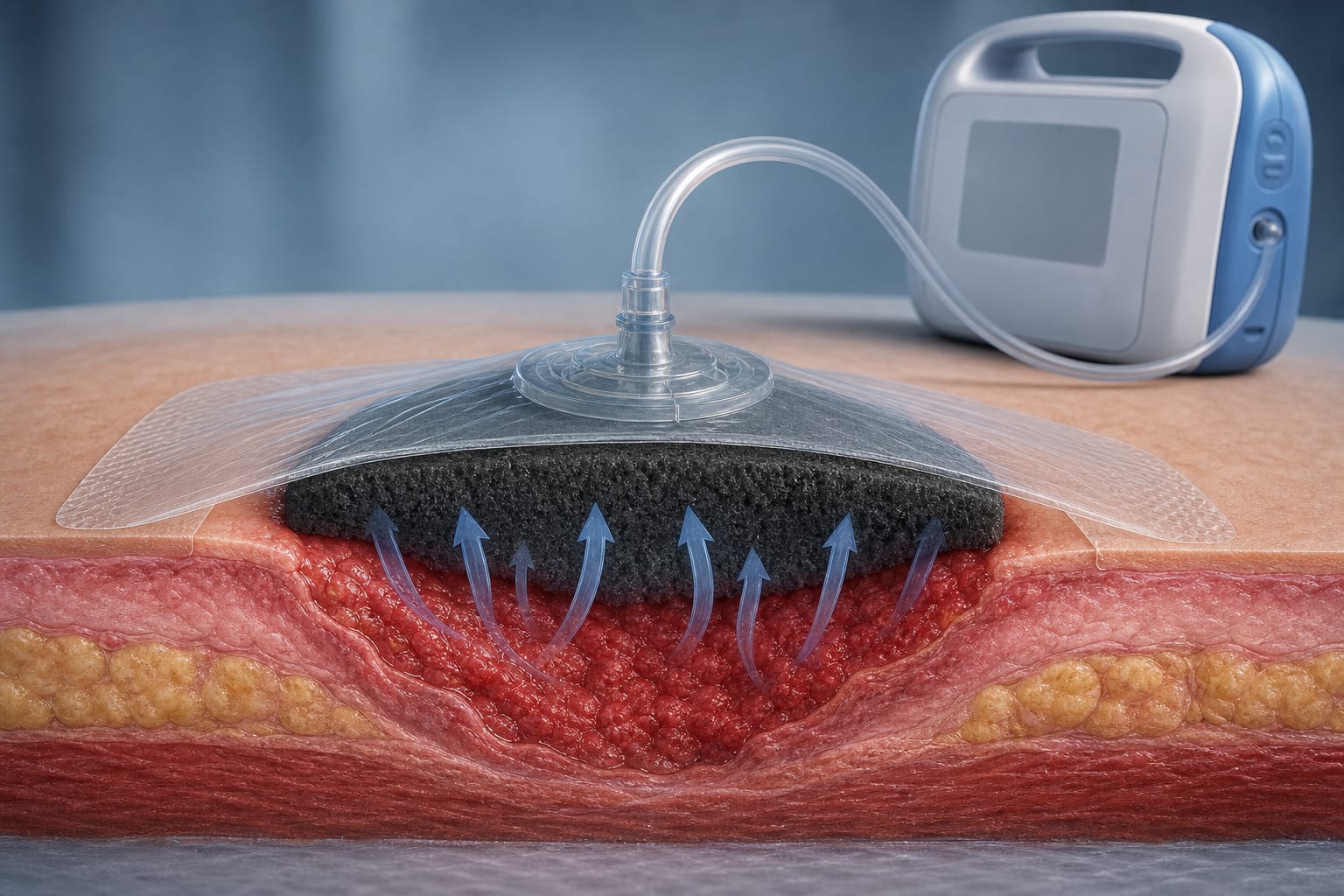
Clinical Report: Comparative Analysis of Various Negative Pressure Wound Therapy Techniques
Overview
This systematic review compares the effects of continuous, intermittent, and dynamic negative pressure wound therapy (NPWT) modes on wound healing outcomes. Evidence regarding the advantages of non-continuous modes in specific healing parameters is limited.
Background
Wound management is a critical healthcare challenge, with millions affected by chronic wounds. Negative pressure wound therapy (NPWT) has been widely adopted for its efficacy in promoting wound healing. The optimal NPWT mode—continuous, intermittent, or dynamic—requires further investigation.
Data Highlights
The review included ten clinical studies and 15 animal studies, focusing on various wound types and outcomes related to NPWT.
Key Findings
Continuous NPWT, intermittent NPWT, and dynamic NPWT each influence wound healing differently.
Intermittent NPWT and dynamic NPWT have been associated with improved wound healing speed and tissue perfusion compared to continuous NPWT.
Current evidence does not provide a definitive ranking of NPWT modes or optimal treatment parameters.
Heterogeneity in study designs and outcome measures complicates comparisons across studies.
Future research should focus on large-scale, multicenter studies with standardized parameters.
Clinical Implications
Clinicians should consider the specific characteristics of wounds when selecting NPWT modes, as different modes yield varying outcomes.
Conclusion
The review indicates a need for more rigorous studies to clarify the effects of different NPWT modes on wound healing outcomes.