FOXC1 as a Biomarker for Predicting Resolution of Peritumoral Edema After Meningioma Surgery
Overview
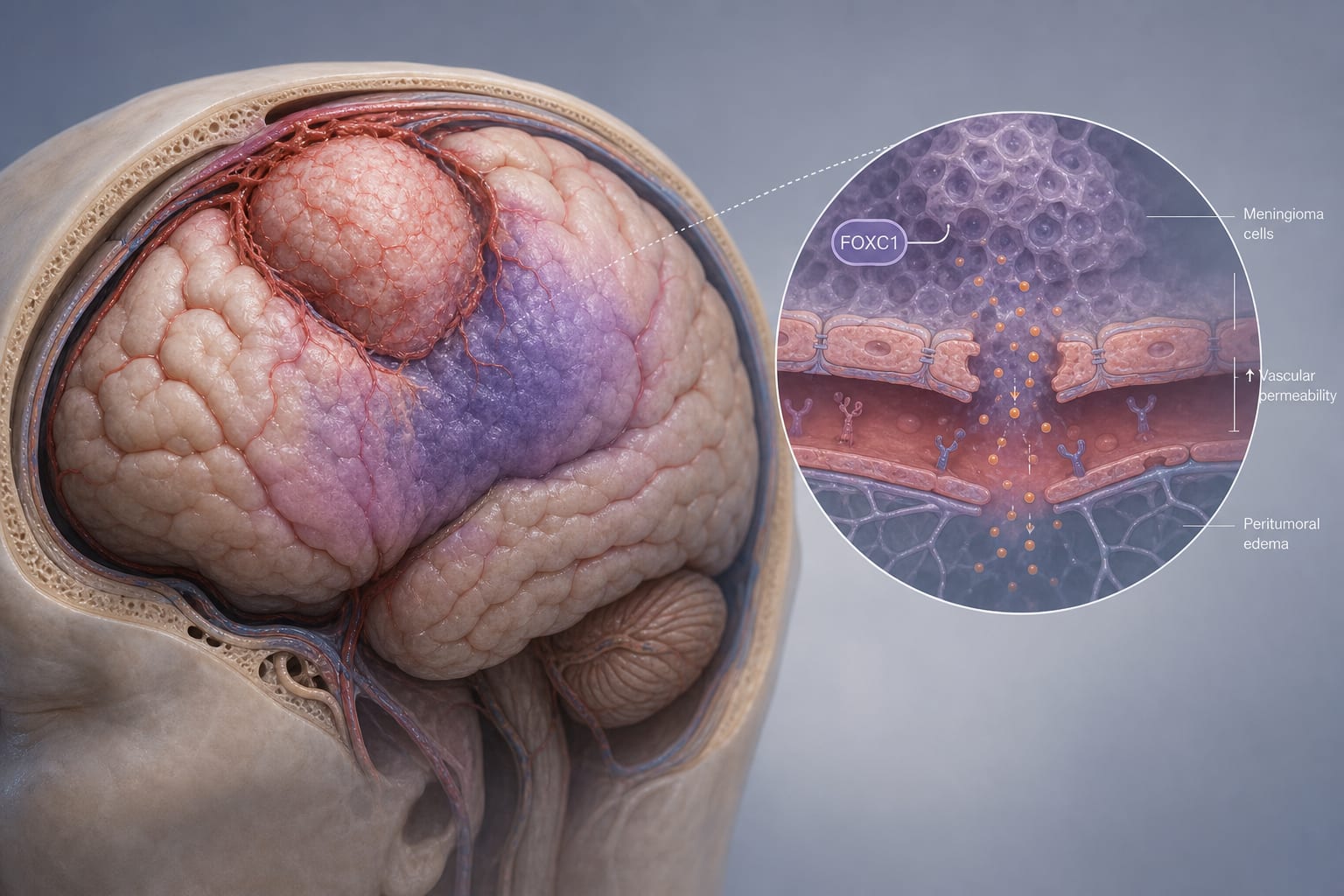
This study investigates the role of FOXC1 expression as a biomarker for predicting the resolution of peritumoral brain edema (PTBE) following meningioma surgery. Findings suggest that low FOXC1 expression is associated with preoperative PTBE and may influence postoperative edema dynamics.
Background
Meningiomas are the most common primary intracranial tumors in adults, often accompanied by PTBE, which can lead to significant clinical complications. Understanding the factors influencing PTBE resolution is crucial for optimizing postoperative care and improving patient outcomes. FOXC1, a transcription factor involved in vascular permeability, may serve as a valuable molecular marker in this context.
Data Highlights
No numerical data or trial data provided in the article.
Key Findings
FOXC1 expression is linked to vascular permeability and blood-brain barrier dysfunction in meningiomas.
Low FOXC1 expression correlates with the presence of preoperative PTBE in meningioma patients.
The study aims to evaluate the association between FOXC1 levels and postoperative PTBE resolution.
PTBE is prevalent in meningiomas and can significantly impact surgical outcomes and recovery.
Understanding molecular markers like FOXC1 may enhance predictive capabilities regarding edema dynamics post-surgery.
Clinical Implications
Clinicians should consider FOXC1 expression levels when assessing meningioma patients for potential PTBE and its resolution postoperatively. This molecular insight may guide perioperative management strategies and improve patient prognostication.
Conclusion
FOXC1 may serve as a promising biomarker for predicting PTBE resolution after meningioma surgery, highlighting the importance of molecular profiling in clinical decision-making.