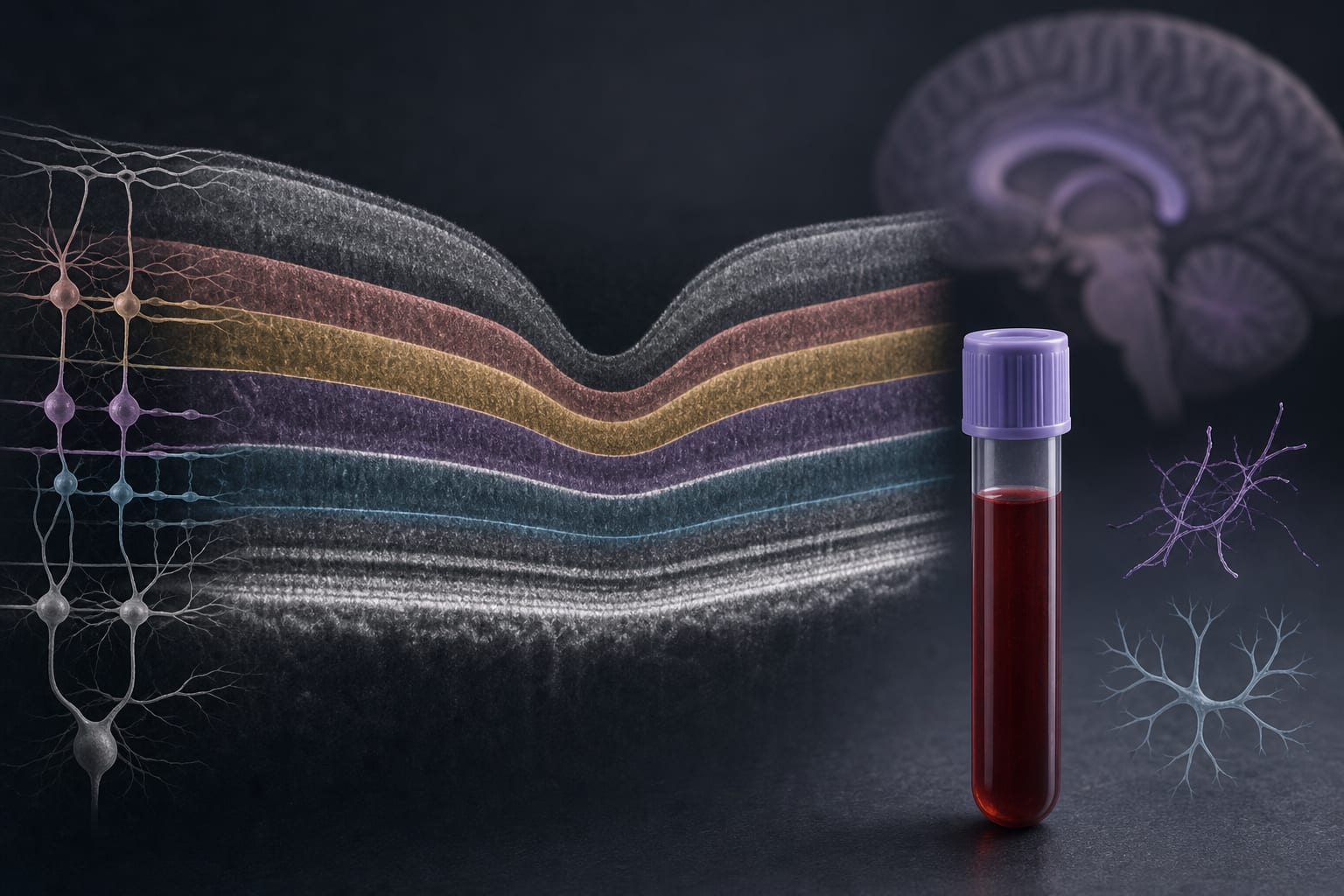
Clinical Report: Pig Semen-Derived Exosomes as Eye Drop Carriers
Overview
Investigators have developed a novel eye drop formulation using pig semen-derived exosomes that effectively penetrate the cornea and deliver therapeutic agents to the retina. This approach demonstrated significant tumor inhibition in retinoblastoma models while maintaining retinal function and exhibiting minimal toxicity.
Background
The delivery of therapeutics to the retina remains a significant challenge in ophthalmology, primarily relying on invasive methods such as intravitreal injections. Recent advancements in noninvasive drug delivery systems are crucial for improving patient compliance and treatment outcomes. The innovative use of exosomes derived from pig semen presents a unique solution to enhance drug delivery to the ocular tissues.
Data Highlights
{'format': 'Ensure the table is properly formatted with clear headings and units.'}
Key Findings
Pig semen-derived exosomes can effectively penetrate the cornea, achieving 14% penetration compared to 2% for free drug.
The engineered eye drops demonstrated 83% tumor cell inhibition in vitro.
In vivo studies showed a reduction of retinoblastoma burden to 2.35% of control levels.
Treatment induced mechanisms of oxidative stress, ferroptosis, autophagy overload, and apoptosis in tumor cells.
The eye drops exhibited minimal toxicity and inflammation, clearing within 24 hours.
Clinical Implications
This novel delivery system could revolutionize treatment approaches for retinal diseases, particularly retinoblastoma, by providing a noninvasive alternative to traditional intravitreal injections. Clinicians should consider the potential of exosome-based therapies in their treatment protocols for ocular conditions.
Conclusion
The use of pig semen-derived exosomes as eye drop carriers represents a promising advancement in ocular drug delivery, with significant implications for the treatment of retinal diseases. Further clinical studies are warranted to validate these findings in human populations.