Effects of enteral immunonutrition enriched with multiple immunonutrients on clinical outcomes of patients who underwent gastric cancer surgery: a systematic review and meta-analysis - Report - MDSpire
Advertisement
Effects of enteral immunonutrition enriched with multiple immunonutrients on clinical outcomes of patients who underwent gastric cancer surgery: a systematic review and meta-analysis
Clinical Report: Impact of Multi-Immunonutrient-Enriched Enteral Immunonutrition
Overview
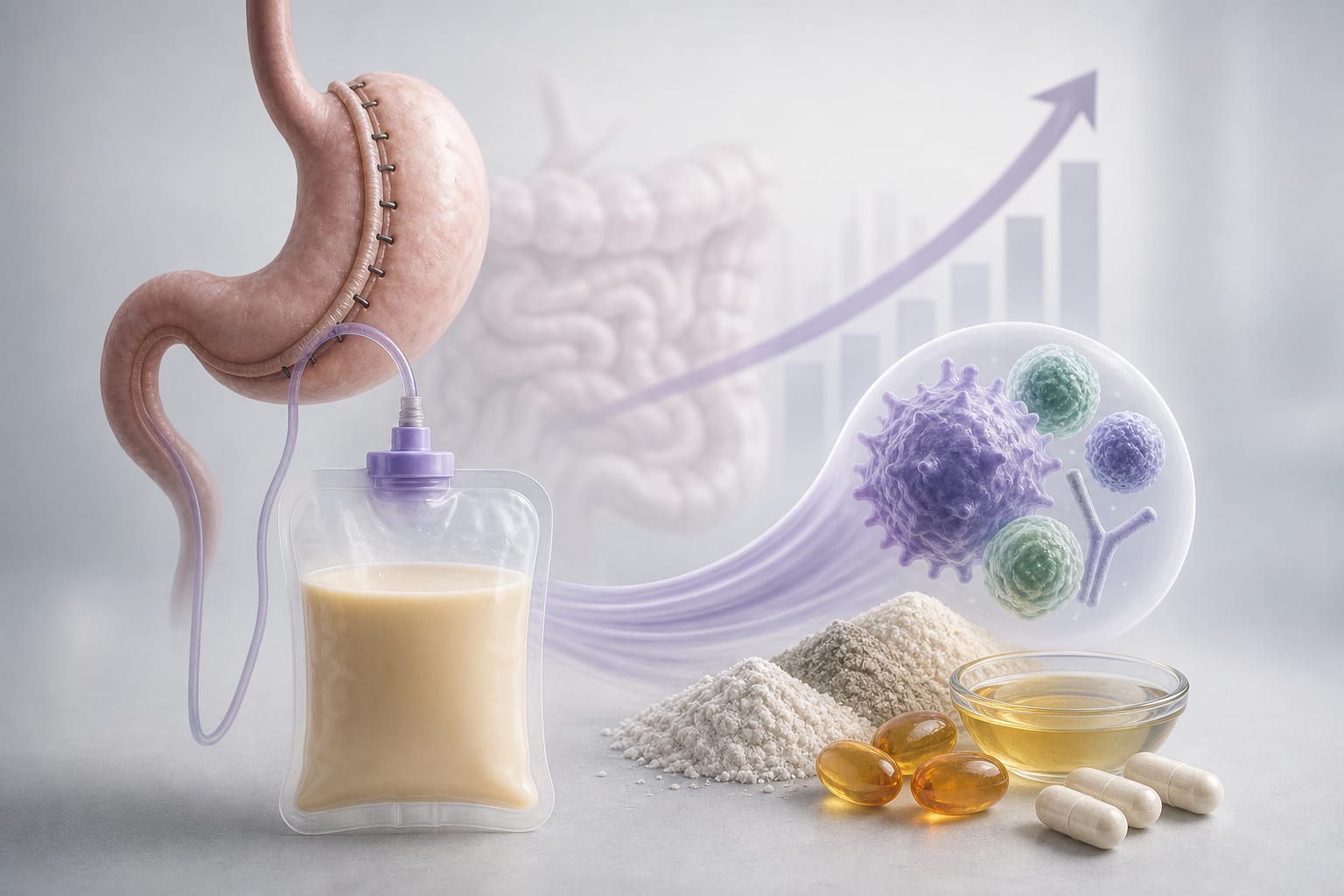
This systematic review and meta-analysis evaluated the efficacy of enteral immunonutrition (EIN) versus standard enteral nutrition (EN) in patients post-gastric cancer surgery. Findings indicate that EIN significantly reduces infectious complications, total complications, and length of hospital stay while improving immune parameters.
Background
Gastric cancer is a prevalent malignancy associated with high morbidity and mortality rates. Patients often experience malnutrition due to the disease and surgical interventions, which can exacerbate postoperative complications. Enteral immunonutrition, which includes immunomodulatory nutrients, may enhance recovery and improve clinical outcomes in this vulnerable population.
Data Highlights
Outcome
EIN
EN
Effect Size
Infectious complications
Reduced
Higher
OR = 0.48
Length of hospital stay
Shorter
Longer
MD = −1.24 days
Gastrointestinal intolerance
Reduced
Higher
N/A
Key Findings
EIN significantly reduced the incidence of infectious complications (OR = 0.48).
EIN shortened the length of hospital stay by an average of 1.24 days (MD = −1.24 days).
Improved immune parameters were observed with EIN, including increased levels of IgG, IgM, and IgA.
Subgroup analysis indicated that perioperative administration of EIN yielded the most significant benefits.
Intervention durations greater than 7 days showed superior outcomes.
Clinical Implications
Perioperative enteral immunonutrition may be beneficial for patients undergoing gastric cancer surgery, particularly those at nutritional risk. Individualized assessment is essential to determine the appropriateness of EIN in clinical practice.
Conclusion
The findings suggest that perioperative EIN can lead to improved clinical outcomes in gastric cancer surgery patients, warranting further investigation in larger trials.
The Lank Center for Genitourinary Oncology at Dana-Farber Cancer Institute presents a succinct summary of all the renal cell carcinoma clinical updates you need to know from AACR 2026.