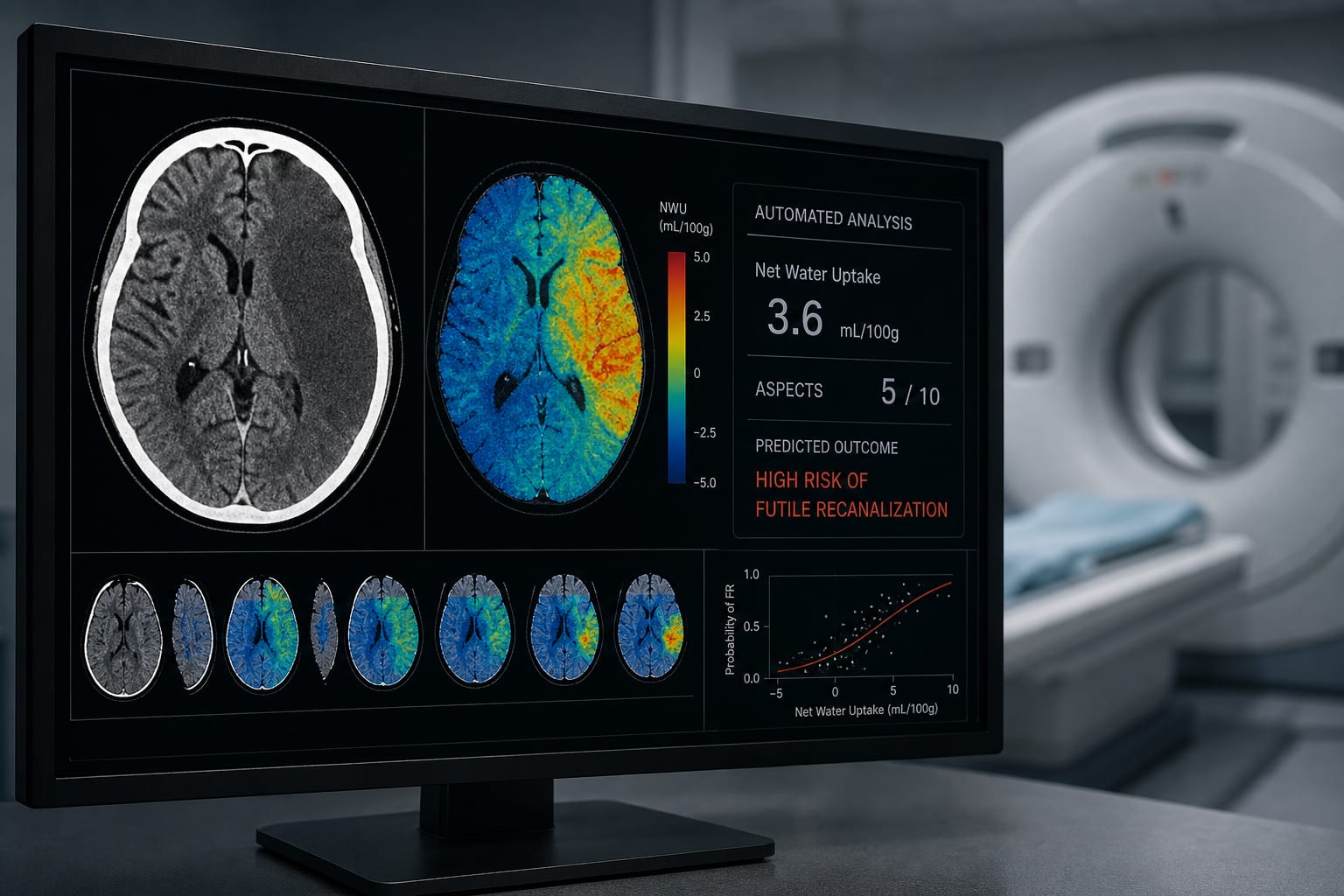
Editorial: Diffusion-weighted imaging: advances and implementations in neurology
-
By
-
Daniele Corbo
-
Kevin M. Koch
-
Kyle C. Kern
-
May 28, 2026
Clinical Report: Progress and Applications of Diffusion-Weighted Imaging in Neurology
Overview
Diffusion-Weighted Imaging (DWI) has advanced significantly, enhancing the understanding of neurological diseases and improving diagnostic capabilities. Recent methodological improvements and harmonization techniques have addressed variability in multi-site studies, leading to more reliable clinical applications.
Background
DWI is a critical imaging modality in neurology, initially used for detecting cytotoxic edema in acute ischemic stroke. Its evolving applications now include assessing microstructural changes in various neurological conditions, which can lead to earlier diagnosis and improved patient management. Understanding these advancements is essential for clinicians aiming to leverage DWI in practice.
Data Highlights
No numerical data available in the source material.
Key Findings
- Recent methodological advancements in DWI have improved its application in clinical trials and diagnostics.
- Harmonization methods like NeuroCombat and LongCombat reduce variability in diffusion metrics across different scanners.
- Multi-spectral metal artifact suppression enhances DWI signal in patients with spinal instrumentation.
- DWI can detect subtle microstructural changes in multiple sclerosis, aiding in earlier diagnosis.
- DTI and NODDI-based histogram analysis can differentiate between high-grade gliomas and primary CNS lymphoma.
Clinical Implications
Clinicians should consider implementing harmonization techniques when conducting multi-site DWI studies to ensure consistency in results. Additionally, leveraging advanced DWI methodologies can enhance diagnostic accuracy and monitoring of neurological diseases, ultimately improving patient outcomes.
Conclusion
The advancements in DWI technology and methodology represent a significant step forward in neurological imaging, offering clinicians powerful tools for diagnosis and treatment monitoring. Continued exploration and application of these techniques will further enhance patient care in neurology.
Related Resources & Content
- Lee et al., Journal of Neuro-Oncology, 2014 -- Diffusion weighted MRI is a promising imaging biomarker in brain metastases
- European Radiology, 2025 -- Key Recommendations for Diffusion-Weighted MRI: Insights from the European Society for Magnetic Resonance in Medicine and Biology
- Progress in MRI Techniques for Glioma: Essential Insights for Neurosurgeons, 2025
- ACR Appropriateness Criteria® Cerebrovascular Diseases-Stroke and Stroke-Related Conditions, 2024
- RANO 2.0: Update to the Response Assessment in Neuro-Oncology Criteria for High- and Low-Grade Gliomas in Adults, 2023
- European Radiology — Future Directions in Advanced Breast Diffusion-Weighted Imaging: Insights from the EUSOBI International Working Group
- ACR Appropriateness Criteria® Cerebrovascular Diseases-Stroke and Stroke-Related Conditions - PubMed
- RANO 2.0: Update to the Response Assessment in Neuro-Oncology Criteria for High- and Low-Grade Gliomas in Adults - PMC
- 2024 MAGNIMS–CMSC–NAIMS consensus recommendations on the use of MRI for the diagnosis of multiple sclerosis - ScienceDirect
This content is an AI-generated, fully rewritten summary based on a published scholarly article. It does not reproduce the original text and is not a substitute for the original publication. Readers are encouraged to consult the source for full context, data, and methodology.