Immune-dominated cellular heterogeneity and stromal plasticity in keloid infiltrating and hypercellular zones revealed by single-cell RNA sequencing - Report - MDSpire
Advertisement
Immune-dominated cellular heterogeneity and stromal plasticity in keloid infiltrating and hypercellular zones revealed by single-cell RNA sequencing
Clinical Report: Characterization of Immune-Driven Cellular Diversity in Keloids
Overview
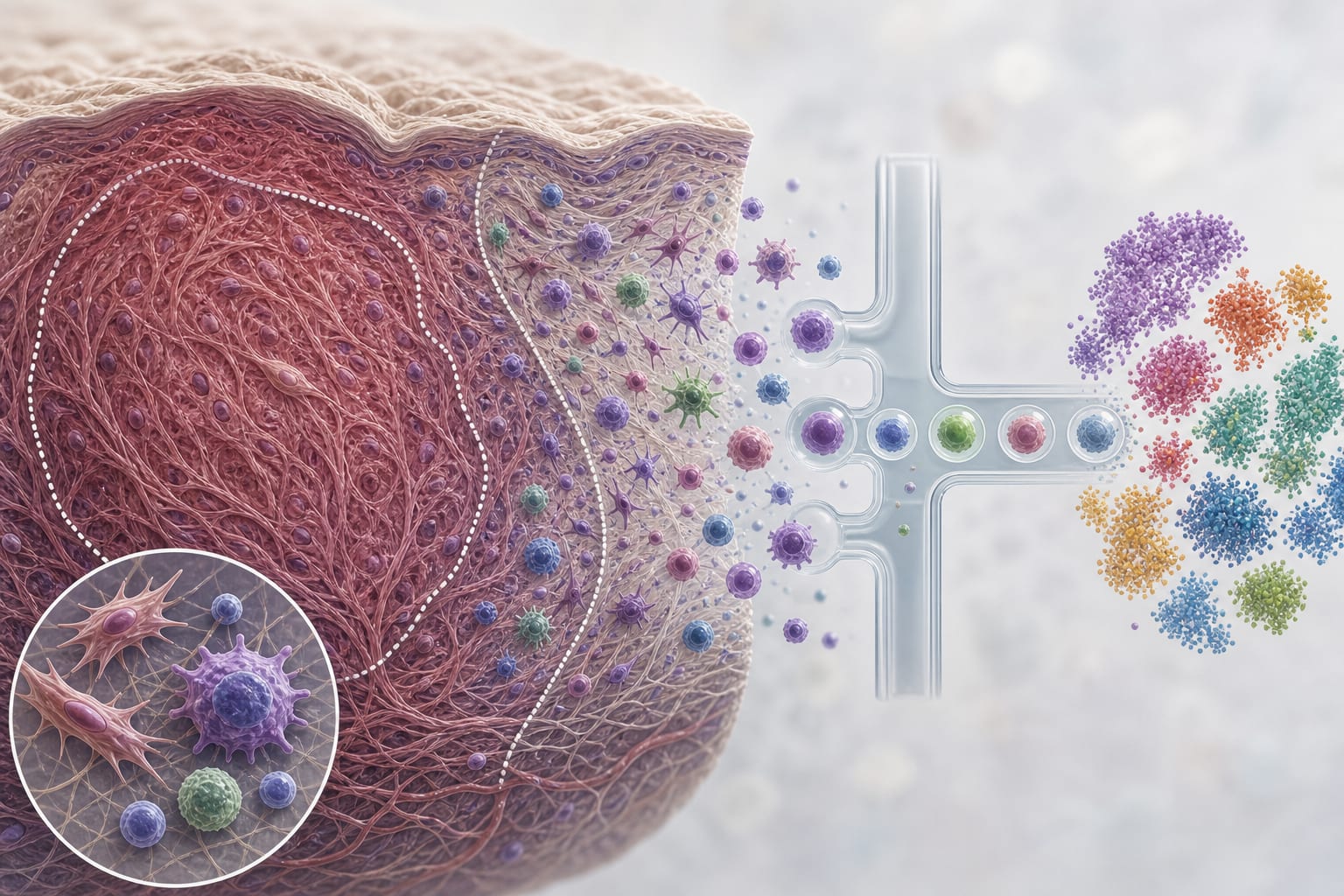
This study utilizes single-cell RNA sequencing to explore the cellular diversity and immune interactions in keloid tissue. It identifies distinct cellular compositions in hypercellular and infiltrating zones.
Background
Keloids represent a significant clinical challenge due to their aggressive fibroproliferative nature and high recurrence rates following treatment. Understanding the cellular and molecular mechanisms driving keloid formation is important. This study employs advanced single-cell RNA sequencing to dissect the immune and stromal interactions within keloid tissue.
Data Highlights
No numerical data provided in the source material.
Key Findings
The hypercellular zone is primarily composed of extracellular matrix-producing myofibroblasts.
The infiltrating zone contains a higher proportion of mononuclear phagocytes and endothelial cells.
Infiltrating zone fibroblasts exhibit an immunomodulatory, inflammatory cancer-associated fibroblast-like phenotype.
Macrophages in the infiltrating zone show a type I interferon signature, indicating a chronic inflammatory state.
Langerhans cells undergo a three-stage developmental trajectory, influencing neutrophil and Th17 cell recruitment.
Endothelial cells at the keloid margin display endothelial-to-mesenchymal transition.
Clinical Implications
The findings indicate that keloid pathogenesis may be influenced by immune interactions.
Conclusion
This study redefines the keloid margin as an immunology-dominated niche.