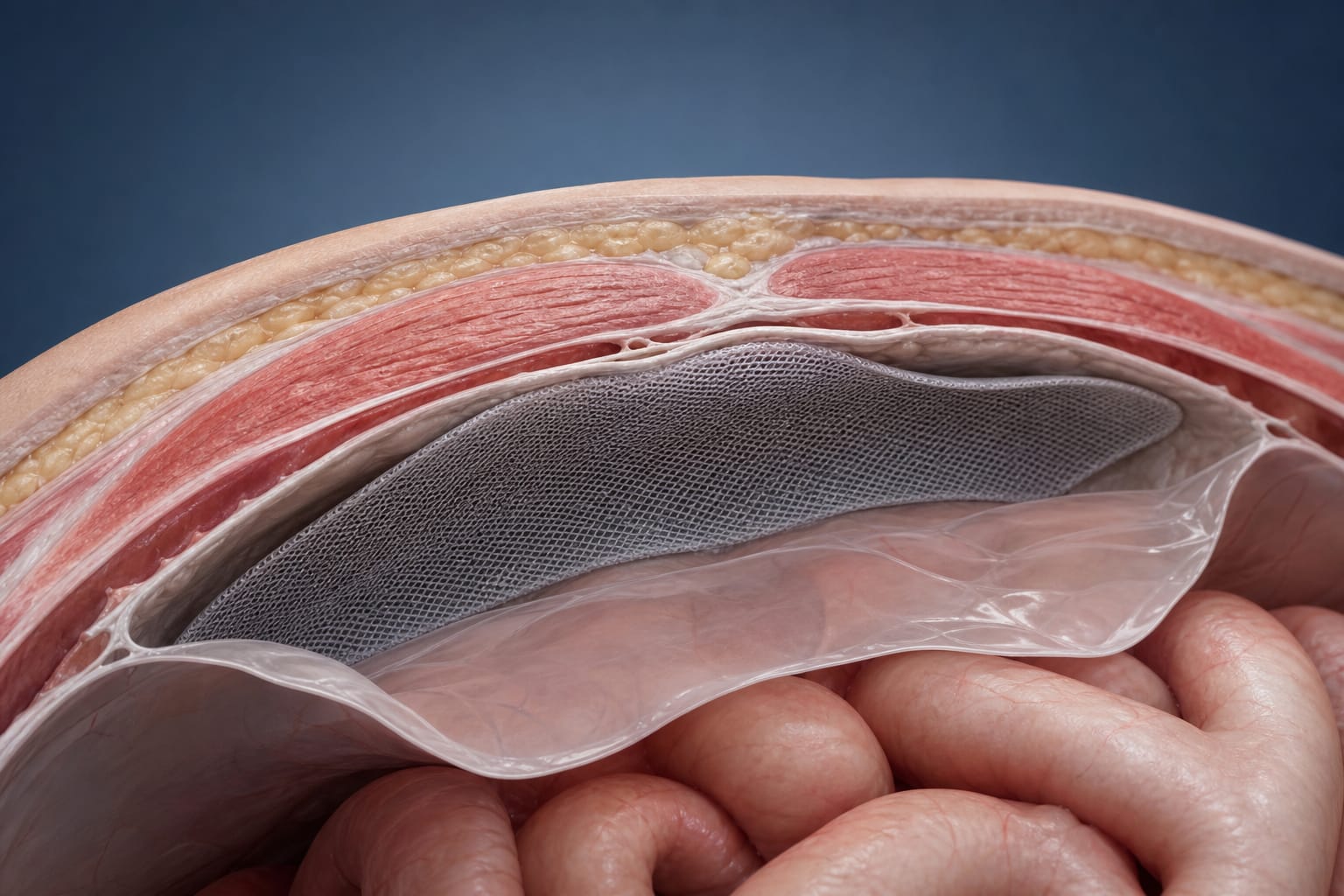
Enhanced view/extended totally extraperitoneal plasty (eTEP) Rives–Stoppa repair versus open Rives–Stoppa repair: a single-center retrospective propensity score-matched cohort study - Report - MDSpire
Advertisement
Enhanced view/extended totally extraperitoneal plasty (eTEP) Rives–Stoppa repair versus open Rives–Stoppa repair: a single-center retrospective propensity score-matched cohort study
Comparison of eTEP Rives–Stoppa Repair and Traditional Open Repair
Overview
This study compares the enhanced view extended totally extraperitoneal plasty (eTEP) Rives–Stoppa repair with the traditional open Rives–Stoppa repair in ventral hernia surgery. Findings are based on the study's analysis of outcomes related to recurrence and complications.
Background
Ventral and incisional hernias represent a significant healthcare challenge, with a notable incidence following laparotomies. Traditional surgical techniques have evolved, with the Rives–Stoppa method becoming a gold standard. Recent advancements in minimally invasive techniques, particularly eTEP-RS, aim to improve patient outcomes by reducing complications associated with traditional methods, as supported by existing literature.
Data Highlights
No numerical data provided in the source material.
Key Findings
eTEP-RS has been established as a feasible and safe technique for medium to large ventral hernias.
Retrospective analyses suggest that eTEP-RS offers better long-term results compared to laparoscopic IPOM repair.
Open-RS remains the standard treatment for larger hernias, while eTEP-RS is indicated for medium-sized defects.
The study cohort included 581 patients treated with either Open-RS or eTEP-RS.
Clinical Implications
The findings indicate the use of eTEP-RS in ventral hernia repair, particularly for medium-sized hernias, based on the study's results.
Conclusion
The study indicates that eTEP-RS may improve outcomes for ventral hernia repair compared to traditional open methods.