Clinical Report: Real-World Assessment of Disitamab Vedotin's Efficacy and Safety
Overview
Disitamab vedotin (RC48) demonstrates a 10.3% objective response rate and a manageable safety profile in patients with HER2-expressing advanced gastric cancer. The disease control rate was notably higher in patients receiving RC48 as third-line therapy.
Background
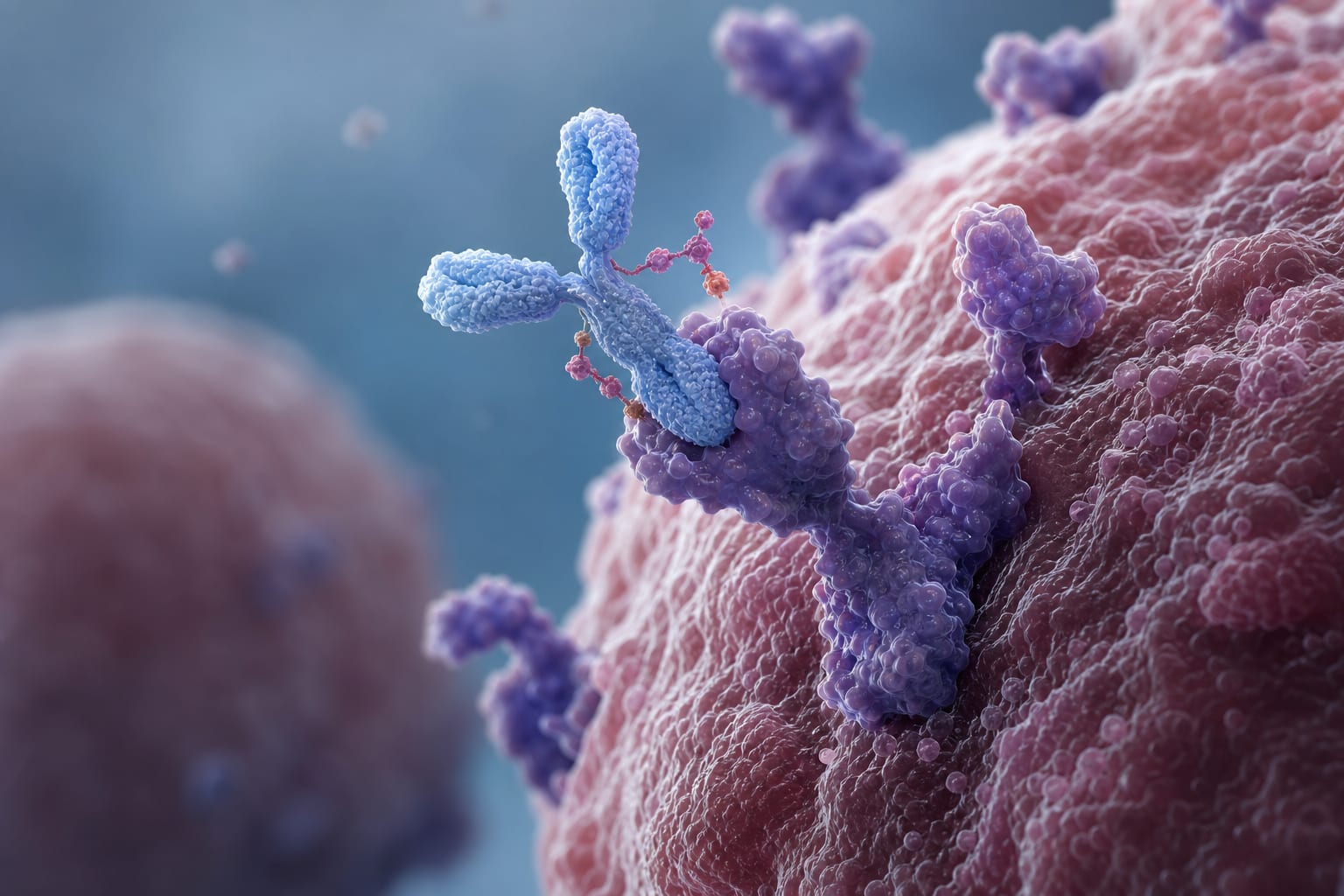
Gastric cancer is a prevalent malignancy with significant morbidity and mortality, particularly in regions like China. HER2-targeted therapies have emerged as crucial treatment options for HER2-positive gastric cancer, yet existing therapies like trastuzumab have limitations. Disitamab vedotin represents a novel antibody-drug conjugate aimed at improving outcomes in this challenging patient population.
Data Highlights
Parameter
Value
Objective Response Rate (ORR)
10.3%
Disease Control Rate (DCR)
63.8%
Median Progression-Free Survival (mPFS)
4.2 months
1-Year Progression-Free Survival Rate
13.0%
Grade III or Higher Adverse Drug Reactions (ADRs)
17.2%
Key Findings
The objective response rate (ORR) for disitamab vedotin was 10.3%.
The disease control rate (DCR) was 63.8%, with higher rates in third-line therapy (75.0%) compared to later lines (50.0%).
Median progression-free survival (mPFS) was 4.2 months, with male patients showing longer mPFS than female patients (4.9 vs. 2.6 months).
Common adverse drug reactions included neutropenia, hemoglobin reduction, and liver impairment.
17.2% of patients experienced grade III or higher adverse drug reactions.
Clinical Implications
The findings suggest that disitamab vedotin may be a viable option for patients with HER2-expressing advanced gastric cancer, particularly in the third-line setting. Clinicians should be aware of the manageable safety profile and monitor for common adverse events during treatment.
Conclusion
Disitamab vedotin shows potential efficacy and a manageable safety profile in real-world settings for advanced gastric cancer, warranting further exploration in clinical practice.