Comparison of the association and discriminatory ability of CVAI, LAP, CI, and AVI for type 2 diabetes in Chinese adults aged ≥ 50 years: a sex-specific analysis - Report - MDSpire
Advertisement
Comparison of the association and discriminatory ability of CVAI, LAP, CI, and AVI for type 2 diabetes in Chinese adults aged ≥ 50 years: a sex-specific analysis
Clinical Report: Evaluation of CVAI, LAP, CI, and AVI in Predicting T2DM
Overview
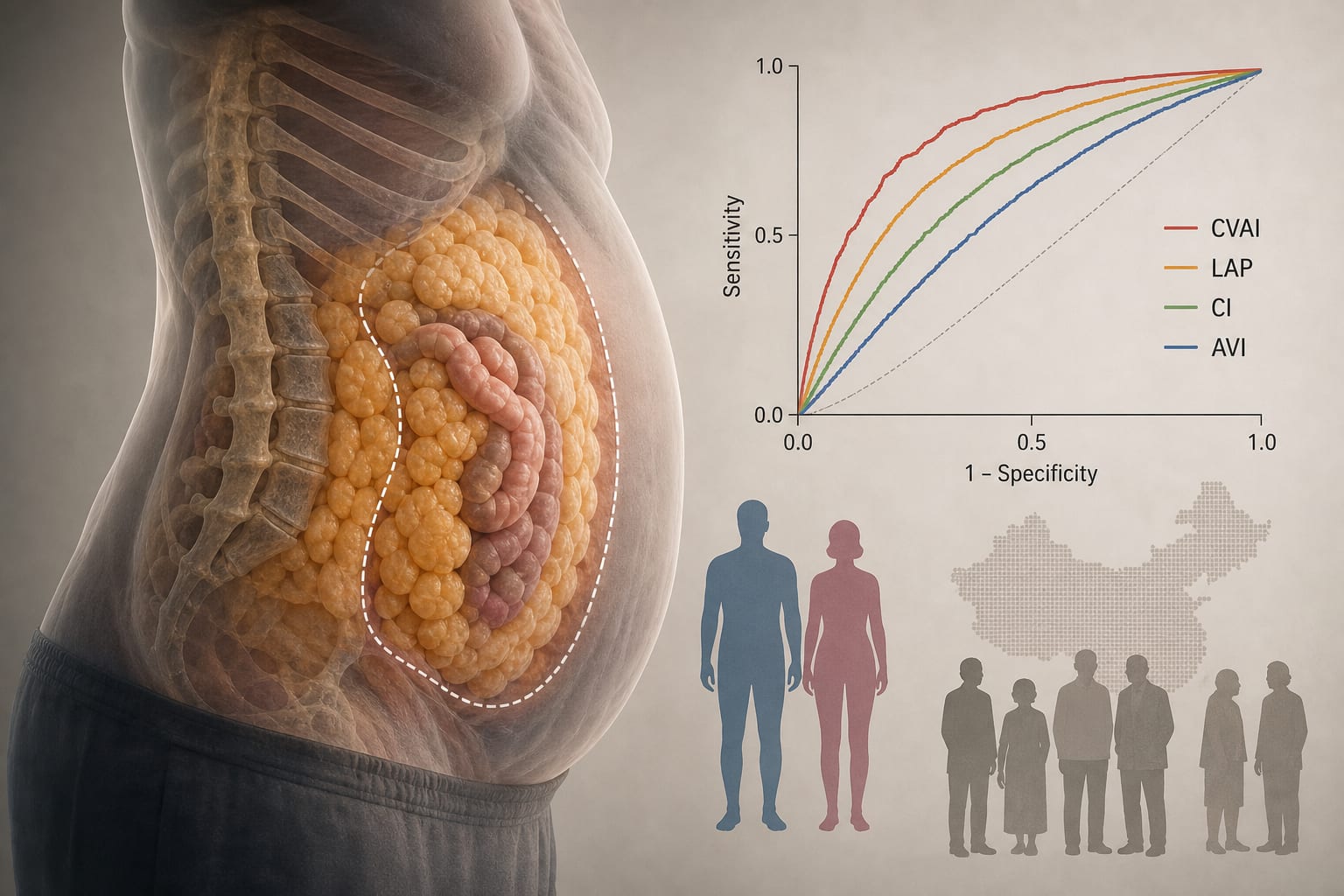
This study evaluates the associations of four visceral adiposity indices with type 2 diabetes mellitus (T2DM) in Chinese adults aged 50 and older, revealing significant sex differences in their predictive power. The Chinese visceral adiposity index (CVAI) demonstrated the highest discriminatory ability overall, while the lipid accumulation product (LAP) was more predictive in females.
Background
Type 2 diabetes mellitus (T2DM) poses a significant public health challenge, particularly among older adults who exhibit unique fat distribution patterns. The increasing prevalence of diabetes in China necessitates effective risk evaluation tools. This study investigates the utility of various visceral adiposity indices in predicting T2DM, considering the impact of sex on these associations.
Data Highlights
Index
AUC (Overall)
AUC (Males)
AUC (Females)
CVAI
0.634
0.658
-
LAP
0.633
-
0.642
AVI
0.612
-
-
CI
0.591
-
-
Key Findings
All four indices (CVAI, LAP, CI, AVI) were positively associated with prevalent T2DM after full adjustment.
CVAI and CI showed significant associations across Q2-Q4, while LAP and AVI were significant only in Q3-Q4.
CVAI had the highest AUC in the overall population (0.634) and in males (0.658).
LAP demonstrated a stronger association and higher discriminatory ability in females (AUC 0.642).
Sex differences were evident, with CVAI, CI, and AVI showing stronger associations in males.
Clinical Implications
Healthcare professionals should consider the use of visceral adiposity indices, particularly CVAI and LAP, for assessing T2DM risk in older adults. The findings underscore the importance of sex-specific approaches in diabetes risk evaluation and management.
Conclusion
The study highlights the independent associations of visceral adiposity indices with T2DM in older adults, emphasizing the need for sex-specific assessments in clinical practice. Further prospective studies are warranted to validate these findings.