Optimizing the Ocular Surface Before and After Cataract Surgery
-
By
-
Justin Schweitzer
-
April 8, 2026
-
5 min
Clinical Report: Optimizing the Ocular Surface Before and After Cataract Surgery
Overview
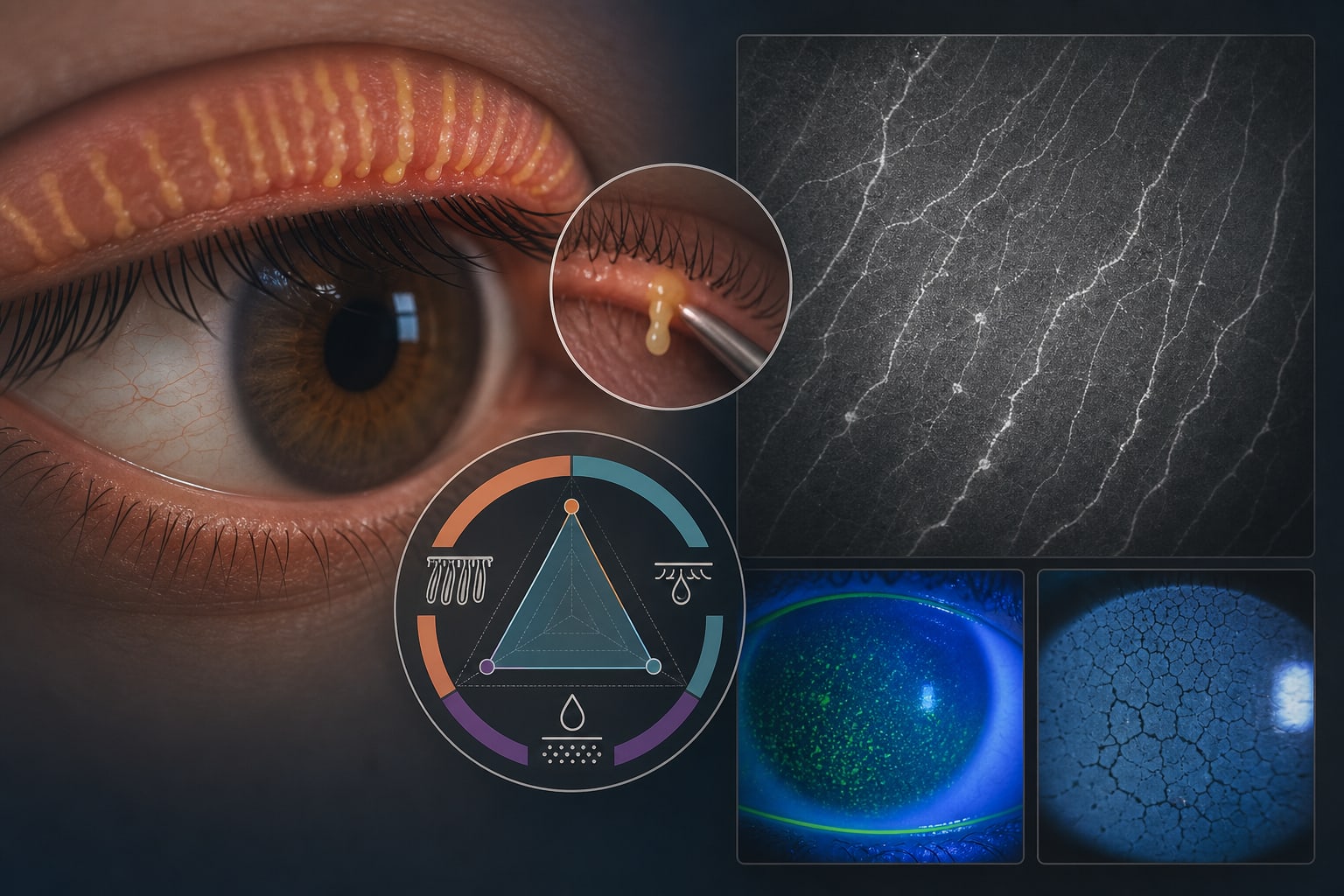
This study evaluates the impact of perfluorohexyloctane ophthalmic solution (PFHO) on dry eye disease in cataract surgery patients. Findings indicate that PFHO treatment improves ocular surface health and does not compromise refractive outcomes, enhancing both preoperative and postoperative care.
Background
Dry eye disease (DED) is a prevalent issue that can significantly affect the outcomes of cataract surgery. A stable ocular surface is crucial for accurate preoperative measurements and optimal visual results. Addressing DED effectively can lead to improved patient satisfaction and surgical success.
Data Highlights
| Measurement | Baseline | Final Visit |
|---|---|---|
| Corneal fluorescein staining | 5.0 | 1.3 |
| Central corneal staining | 0.9 | 0.2 |
| Eye dryness score | 62.3 | 25.9 |
| OSDI score | 51.9 | 11.9 |
| BCVA 20/20 or better | 86% | 92% |
Key Findings
- PFHO treatment did not negatively affect refractive outcomes; 82.6% of patients were within ±0.50 diopters of predicted refraction after treatment.
- Total corneal fluorescein staining improved significantly from a baseline score of 5.0 to 1.3.
- 75.8% of patients had no central corneal staining after 30 days of preoperative PFHO therapy.
- Eye dryness scores improved from 62.3 to 25.9, and OSDI scores normalized by the end of the study.
- 84% of patients were within ±0.5 diopters for IOL calculations after PFHO treatment, compared to 72% at baseline.
- Continued improvement in BCVA was observed, with 92% achieving 20/20 or better at the final visit.
Clinical Implications
Clinicians should consider aggressive management of dry eye disease with PFHO before and after cataract surgery to enhance ocular surface health and improve surgical outcomes. This approach can lead to better refractive accuracy and increased patient satisfaction.
Conclusion
The use of PFHO in managing dry eye disease demonstrates significant benefits for patients undergoing cataract surgery, reinforcing the importance of ocular surface optimization throughout the surgical process.
Related Resources & Content
- Bret L. Fisher, MD, Ophthalmology Management, 2021 -- Postoperative care for modern cataract surgery
- Nicole Fram, MD, Ophthalmology Management, 2024 -- OPTIMIZE YOUR POSTOPERATIVE OUTCOMES
- Cathleen M. McCabe, MD, Ophthalmology Management, 2025 -- Optimizing IOL Outcomes
- AAO Dry Eye Syndrome Guideline Summary 2024 Preferred Practice Pattern - Guideline Central
- Dry eye post-cataract surgery: a systematic review and meta-analysis - PMC
- Frontiers | Perfluorohexyloctane ophthalmic solution for dry eye disease: pooled analysis of two phase 3 clinical trials
- Ophthalmology Management — Prioritize Perioperative Dry Eye Management for Cataract Surgery
- AAO Dry Eye Syndrome Guideline Summary 2024 Preferred Practice Pattern - Guideline Central
- Dry eye post-cataract surgery: a systematic review and meta-analysis - PMC
- Frontiers | Perfluorohexyloctane ophthalmic solution for dry eye disease: pooled analysis of two phase 3 clinical trials
Based on findings from:
Optimizing the Ocular Surface Before and After Cataract Surgery
Justin Schweitzer. The Ophthalmologist, 2026.
https://www.theophthalmologist.com/issues/2026/articles/april/optimizing-the-ocular-surface-before-and-after-cataract-surgery/
This content is an AI-generated, fully rewritten summary based on a published scholarly article. It does not reproduce the original text and is not a substitute for the original publication. Readers are encouraged to consult the source for full context, data, and methodology.