Clinical Report: Robotic Lung Resection Following Neoadjuvant Treatment
Overview
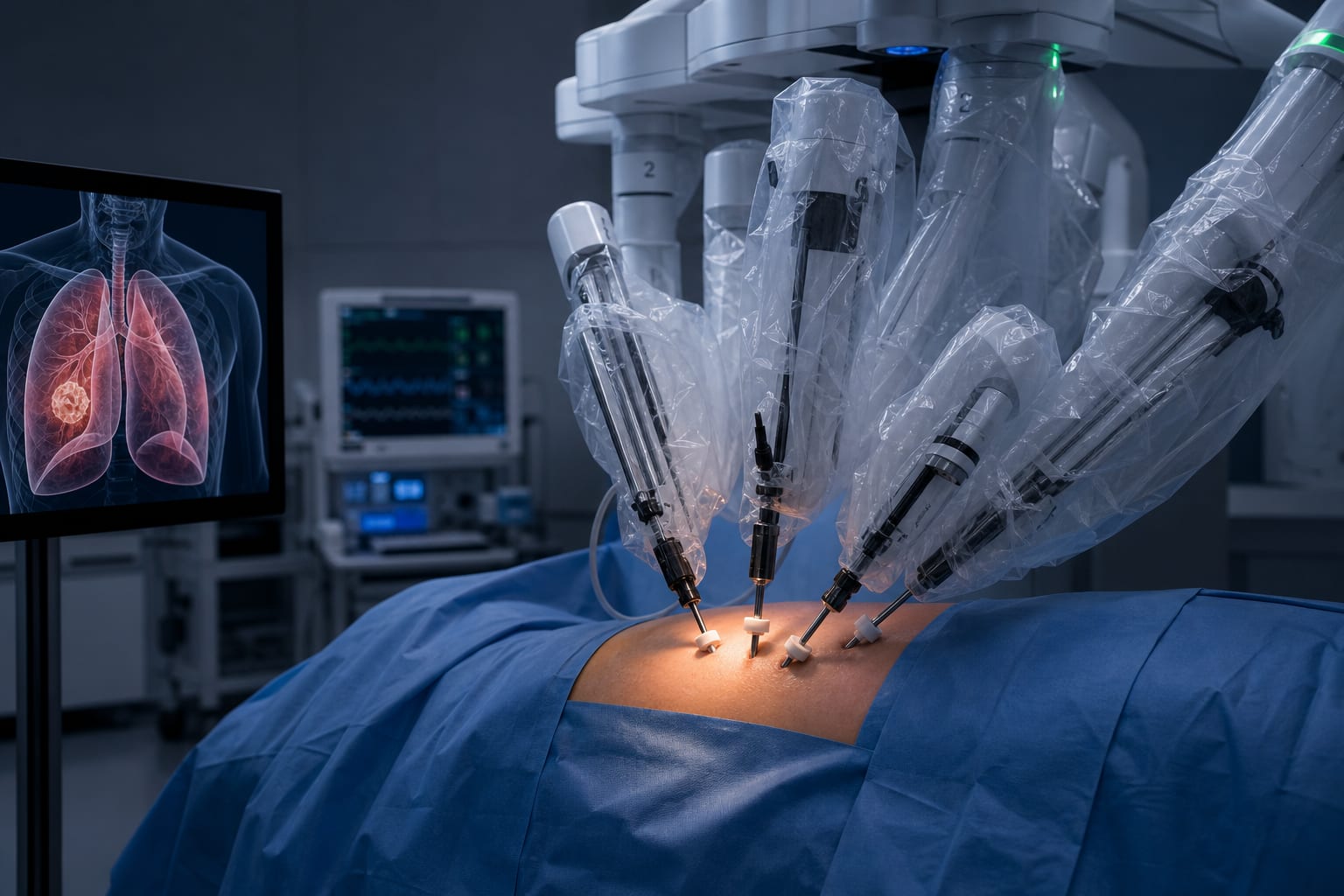
This study evaluates the safety and outcomes of robotic lung resections in patients with non-small cell lung cancer (NSCLC) following neoadjuvant therapy. The findings indicate low conversion rates and minimal mortality, supporting the feasibility of this approach.
Background
Neoadjuvant therapy is increasingly utilized in NSCLC to enhance surgical outcomes by reducing tumor size and minimizing recurrence. However, surgical resection post-neoadjuvant therapy presents technical challenges due to inflammatory changes. Understanding the safety and efficacy of robotic approaches in this context is crucial for optimizing patient management.
Data Highlights
Parameter
Value
Number of Patients
150
Median Age
67 years
Median Operative Time
152 min
Median Blood Loss
20 mL
Length of Stay
1 day
30-Day Mortality
0%
90-Day Mortality
1.3%
Key Findings
Robotic lobectomy and pneumonectomy can be performed safely after neoadjuvant therapy.
Conversion rates to open thoracotomy were less than 1%.
28% of patients had chest tubes removed on the day of surgery.
Clavien-Dindo grade III complications occurred in 14% of patients, primarily due to atrial fibrillation and effusion.
The median postoperative survival was 513 days with a follow-up of 19 months.
Clinical Implications
The study supports the use of robotic techniques for lung resection after neoadjuvant therapy, highlighting their safety and low complication rates. Clinicians should consider robotic surgery as a viable option for patients with NSCLC who have undergone neoadjuvant treatment.
Conclusion
Robotic lung resection following neoadjuvant therapy is a safe and effective surgical option, with favorable outcomes and minimal mortality. These findings contribute to the growing body of evidence supporting minimally invasive approaches in thoracic surgery.