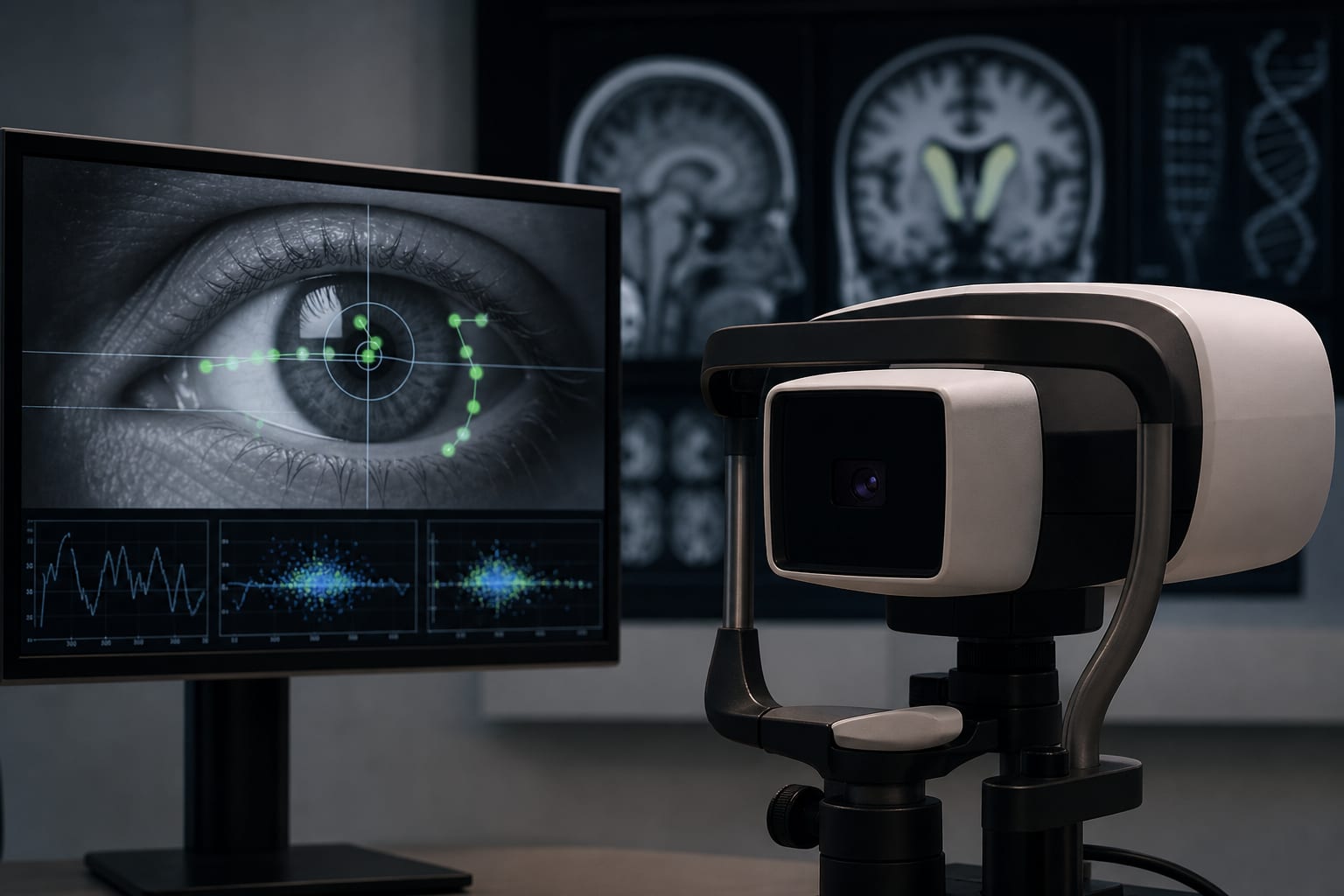
Clinical Report: Evaluating the Predictive Significance of Early Oculomotor Dysfunction in Huntington's Disease
Overview
This study investigates the predictive value of oculomotor dysfunction in Huntington's disease (HD) using data from large observational studies. Key findings indicate that specific oculomotor tasks can serve as significant predictors for the progression to motor manifest disease and functional decline.
Background
Huntington's disease is a neurodegenerative disorder characterized by progressive motor, cognitive, and psychiatric symptoms. Early detection of motor symptoms is crucial for timely intervention and clinical trial design. Oculomotor deficits, which can appear before clinical motor diagnosis, may provide valuable biomarkers for tracking disease progression.
Data Highlights
Oculomotor Task
Significance
Saccade Velocity
Significant predictor of progression
Vertical Smooth Pursuit
Significant predictor of progression
Horizontal Saccade Initiation
Significant predictor of progression
Key Findings
Vertical eye movements were more affected than horizontal movements before motor diagnosis.
Saccade velocity, vertical smooth pursuit, and horizontal saccade initiation were identified as independent predictors of progression to motor manifest HD.
Data were analyzed from the Enroll-HD (N = 4,775) and PREDICT-HD (N = 969) studies.
Oculomotor abnormalities can emerge in presymptomatic gene carriers of HD.
Understanding oculomotor progression is essential for developing digital eye tracking as a biomarker in HD research.
Clinical Implications
The identification of specific oculomotor tasks as predictors of disease progression may enhance early diagnosis and intervention strategies in Huntington's disease. Clinicians should consider integrating eye movement assessments into routine evaluations for at-risk populations.
Conclusion
Oculomotor dysfunction presents a distinct pattern in early Huntington's disease, highlighting its potential as a biomarker for disease progression. Future studies should focus on standardizing eye tracking methods for clinical application.
Plasma proteomic models of more than 40 cell types were associated with incident Alzheimer's disease, amyotrophic lateral sclerosis, cancer, and mortality across three large cohorts.