Anthropometry, sex, and age at diagnosis affect pulmonary blood volume quantification from computed tomography pulmonary angiography in pulmonary hypertension assessment - Report - MDSpire
Conexiant’s news site is now MDSpire News. Learn more
Advertisement
Impact of Anthropometric Factors, Gender, and Age at Diagnosis on Pulmonary Blood Volume Measurement via Computed Tomography Pulmonary Angiography in Evaluating Pulmonary Hypertension
Impact of Anthropometric Factors, Gender, and Age at Diagnosis on PBV Measurement
Overview
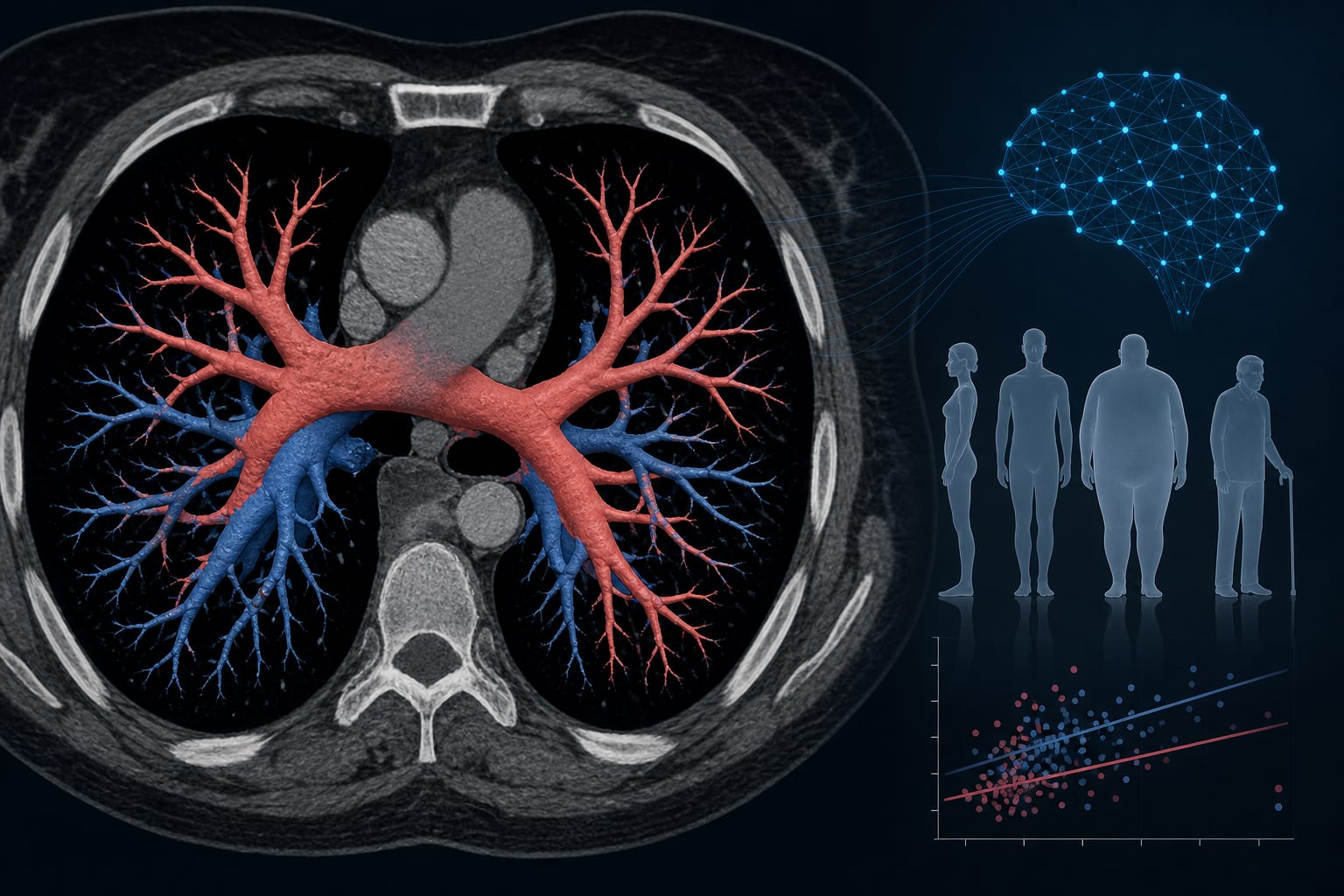
This study investigates how anthropometric factors, gender, and age at diagnosis influence AI-derived pulmonary blood volume (PBV) measurements from computed tomography pulmonary angiography (CTPA) in patients with pulmonary hypertension (PH). The findings suggest that these factors significantly affect PBV and its predictive value for pulmonary vascular resistance and cardiac output.
Background
Understanding the determinants of pulmonary blood volume is crucial for improving the accuracy of pulmonary hypertension diagnosis and management. Anthropometric factors, such as height and weight, along with demographic variables like gender and age, may influence the interpretation of imaging results. This study provides insights into how these factors can be integrated into predictive models for PH.
Data Highlights
Variable
Association
Height
Increased pulmonary artery volume (p<0.001)
Weight
Increased pulmonary artery and vein volume (p<0.001)
Body Mass Index (BMI)
Increased pulmonary artery volume (p<0.001)
Body Surface Area (BSA)
Improved prediction of PVR and CO (p<0.001)
Age at Diagnosis
Larger pulmonary artery volume (p<0.001)
Key Findings
376 patients were analyzed, with a median age of 60 years and 57% female.
Pulmonary artery volume increased significantly with height, weight, BMI, and BSA (all p<0.001).
Older age at diagnosis correlated with larger pulmonary artery volume, especially in patients with higher weight and BMI (all p<0.001).
Normalization of PBV to anthropometrics reduced sex-related differences (p<0.001).
Larger pulmonary artery volume was associated with higher pulmonary vascular resistance (PVR), while larger pulmonary vein volume correlated with higher cardiac output (CO) (all p<0.001).
Clinical Implications
Clinicians should consider anthropometric factors when interpreting pulmonary blood volume measurements from CTPA to enhance the accuracy of pulmonary hypertension assessments. Incorporating these variables into predictive models may improve patient stratification and management strategies.
Conclusion
The study highlights the importance of accounting for anthropometric factors, gender, and age at diagnosis in the evaluation of pulmonary blood volume, which is essential for refining pulmonary hypertension prediction models.