PD-1/PD-L1 inhibitors plus chemotherapy as first-line therapy for advanced or metastatic endometrial cancer: a systematic review and meta-analysis of randomized controlled trials - Report - MDSpire
Advertisement
PD-1/PD-L1 inhibitors plus chemotherapy as first-line therapy for advanced or metastatic endometrial cancer: a systematic review and meta-analysis of randomized controlled trials
Clinical Report: PD-1/PD-L1 Inhibitors and Chemotherapy for Endometrial Cancer
Overview
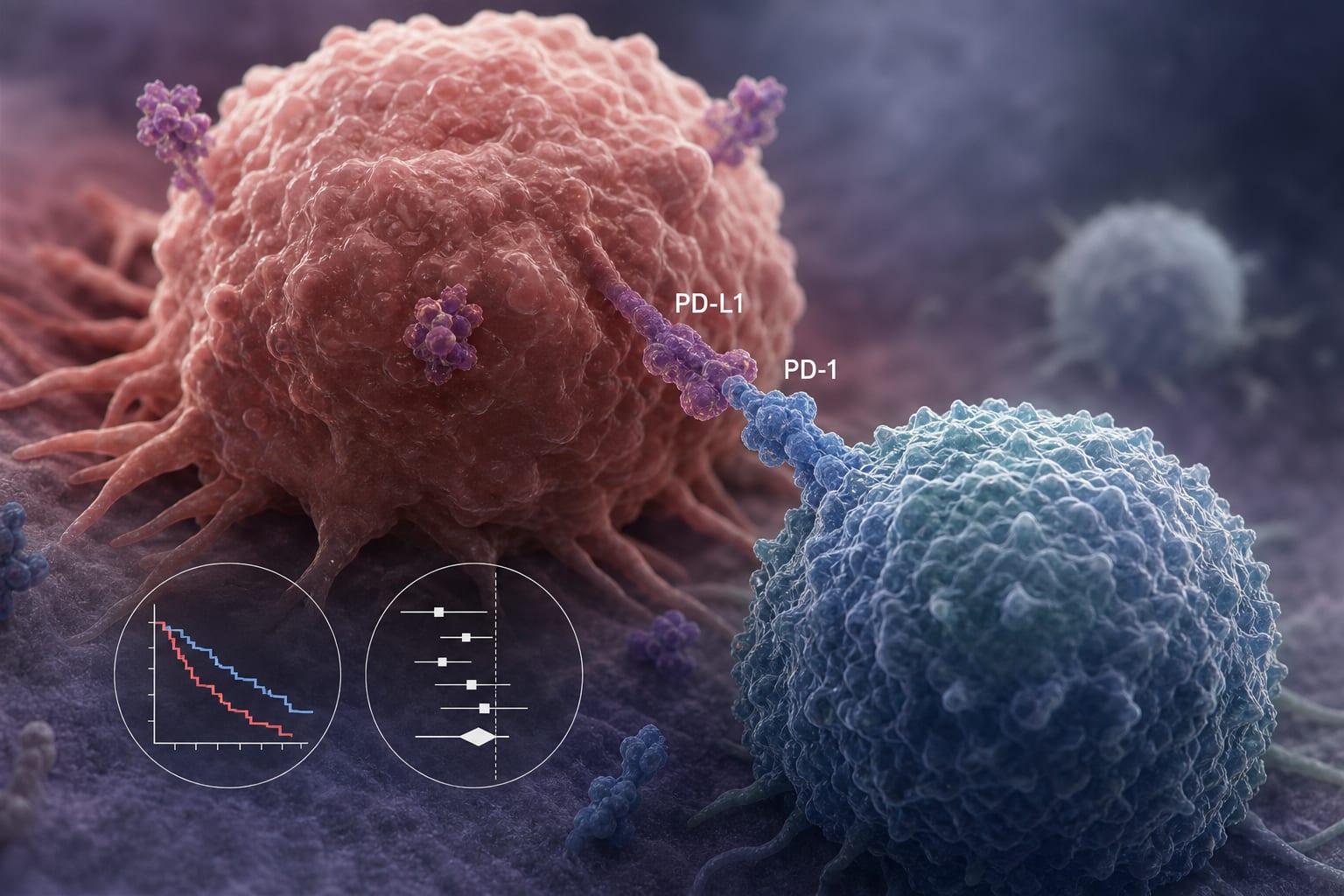
This systematic review and meta-analysis evaluates the efficacy and safety of PD-1/PD-L1 inhibitors combined with chemotherapy as first-line treatment for advanced or metastatic endometrial cancer. The findings indicate significant improvements in overall survival and progression-free survival compared to chemotherapy alone.
Background
Endometrial cancer is a significant global health issue, with rising incidence rates and suboptimal outcomes from current standard therapies. The integration of immune checkpoint inhibitors, particularly PD-1/PD-L1 inhibitors, represents a promising advancement in treatment strategies for this malignancy, especially in specific molecular subtypes.
Data Highlights
Outcome
Combination Arm
Chemotherapy Alone
Median Overall Survival (months)
43.7
29.1
Median Progression-Free Survival (months)
14.6
10.2
Complete Response RR (95% CI)
1.60 (1.25–2.05)
-
Partial Response RR (95% CI)
0.99 (0.88–1.12)
-
Stable Disease RR (95% CI)
0.68 (0.54–0.86)
-
Progressive Disease RR (95% CI)
0.69 (0.45–1.06)
-
Objective Response Rate RR (95% CI)
1.10 (1.02–1.18)
-
Key Findings
The addition of PD-1/PD-L1 inhibitors significantly prolonged median overall survival (43.7 vs. 29.1 months).
Median progression-free survival was also significantly improved (14.6 vs. 10.2 months).
Complete response rates showed a relative risk of 1.60 (95% CI: 1.25–2.05).
Stable disease rates had a relative risk of 0.68 (95% CI: 0.54–0.86).
The most common treatment-related adverse events included fatigue, alopecia, and nausea.
Significant OS benefit was observed in dMMR tumors, while pMMR tumors showed PFS benefit without OS benefit.
Clinical Implications
The findings support the use of PD-1/PD-L1 inhibitors in combination with chemotherapy as a first-line treatment option for advanced or metastatic endometrial cancer. Clinicians should consider the molecular subtype of the tumor when evaluating treatment strategies.
Conclusion
The combination of PD-1/PD-L1 inhibitors and chemotherapy offers a significant survival advantage for patients with advanced or metastatic endometrial cancer, highlighting the importance of personalized treatment approaches.