Editorial: Transforming dementia caregiving through assistive technologies
-
By
-
Quan Zhang
-
Yijin Wu
-
May 14, 2026
-
0 min
Clinical Report: Enhancing Dementia Caregiving with Assistive Technologies
Overview
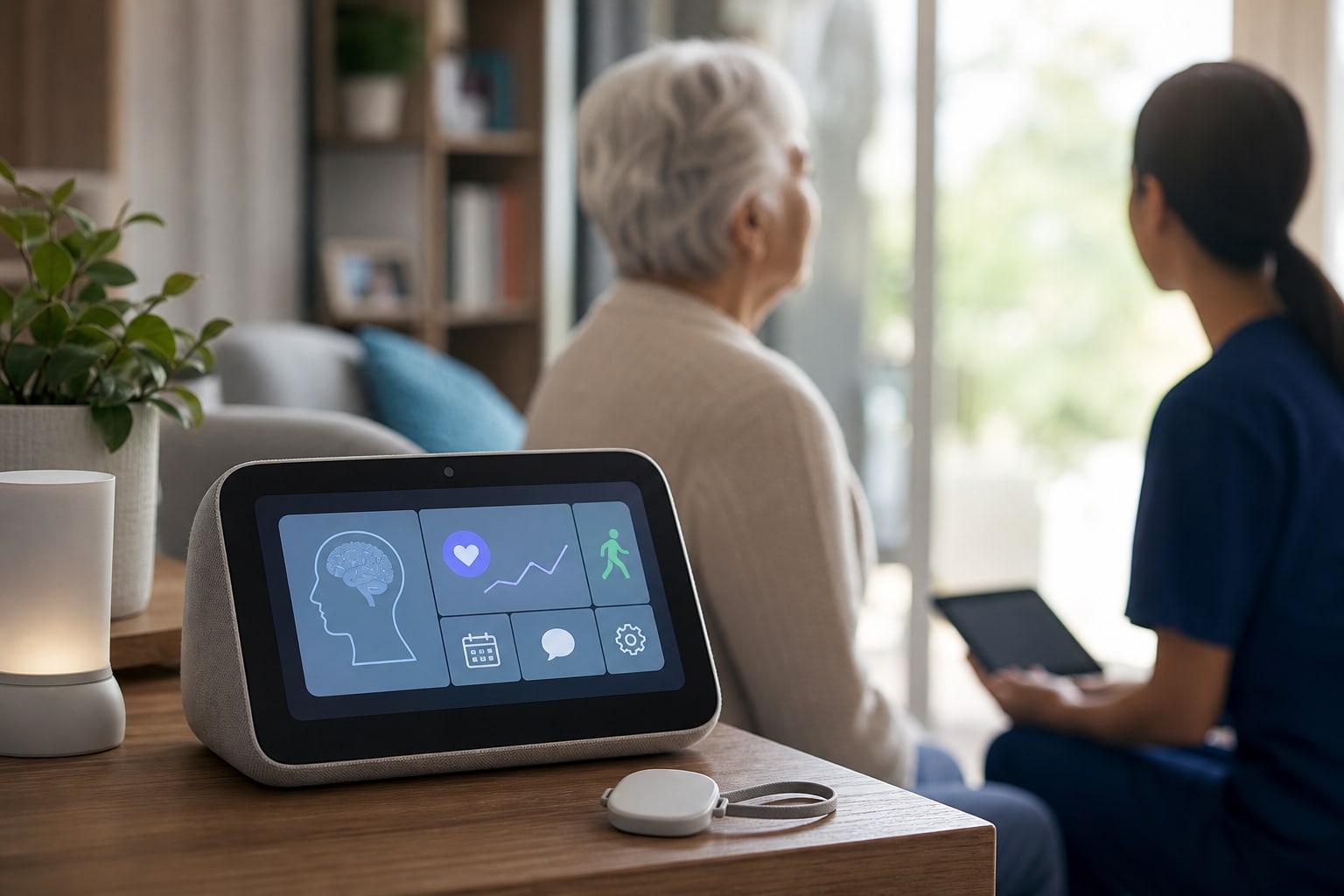
This editorial discusses the integration of assistive technologies in dementia caregiving, highlighting their potential to improve patient outcomes and alleviate caregiver strain. The advancements in technology offer new avenues for monitoring, engagement, and support for both individuals with dementia and their caregivers.
Background
Dementia is a growing healthcare challenge as populations age, necessitating effective caregiving strategies. Assistive technologies have emerged as valuable tools to enhance traditional care, providing support for monitoring and engagement. Research indicates that these technologies can improve quality of life and safety for patients while reducing the burden on caregivers.
Data Highlights
No specific numerical data or trial results were provided in the editorial.
Key Findings
- Wearable sensor systems can monitor agitation in real time using machine learning.
- Deep learning techniques improve the accuracy of early Alzheimer's disease diagnosis.
- Integrated care frameworks that include assistive technologies enhance patient outcomes and reduce caregiver stress.
- Video-guided multimodal programs can decrease eating disturbances in dementia patients.
- Mobile-optimized e-learning platforms are needed to support informal caregivers.
Clinical Implications
Healthcare professionals should consider incorporating assistive technologies into dementia care plans to enhance patient support and caregiver education. Tailoring these technologies to individual needs can lead to better management of dementia symptoms and improved caregiver well-being.
Conclusion
The integration of assistive technologies into dementia caregiving represents a promising advancement in enhancing care quality and supporting caregivers. Continued research and implementation are essential for maximizing these benefits.
Related Resources & Content
- Alzheimer's Association, PubMed, 2024 -- Clinical Practice Guidelines for Alzheimer's Disease
- Health System, Community-Based, or Usual Dementia Care for Persons With Dementia and Caregivers: The D-CARE Randomized Clinical Trial, JAMA, 2025
- Frontiers in Psychiatry — Editorial: The Role of Human-Computer Interaction and Human Factors in the Future of Digital Therapeutics for Mental Health
- DIGITAL HEALTH — Balancing benefits and challenges of eHealth for family caregivers of people with Parkinson’s disease – A qualitative study
- DIGITAL HEALTH — Unveiling the potential of digital twins in homecare: A reflexive thematic analysis of older adults’ views
- The ASCO Post — Lessons of 2 Decades' Experience with CHESS
- The Role of Human-Computer Interaction and Human Factors in Digital Therapeutics, Frontiers in Psychiatry
- Balancing Benefits and Challenges of eHealth for Family Caregivers, DIGITAL HEALTH
- Unveiling the Potential of Digital Twins in Homecare, DIGITAL HEALTH
- Alzheimer's Association clinical practice guideline for the Diagnostic Evaluation, Testing, Counseling, and Disclosure of Suspected Alzheimer's Disease and Related Disorders (DETeCD-ADRD): Executive summary of recommendations for primary care - PubMed
- Health System, Community-Based, or Usual Dementia Care for Persons With Dementia and Caregivers: The D-CARE Randomized Clinical Trial | Trials | JAMA | JAMA Network
- Frontiers | Understanding and guiding technology use in dementia: a pan-European mapping and consensus study
This content is an AI-generated, fully rewritten summary based on a published scholarly article. It does not reproduce the original text and is not a substitute for the original publication. Readers are encouraged to consult the source for full context, data, and methodology.