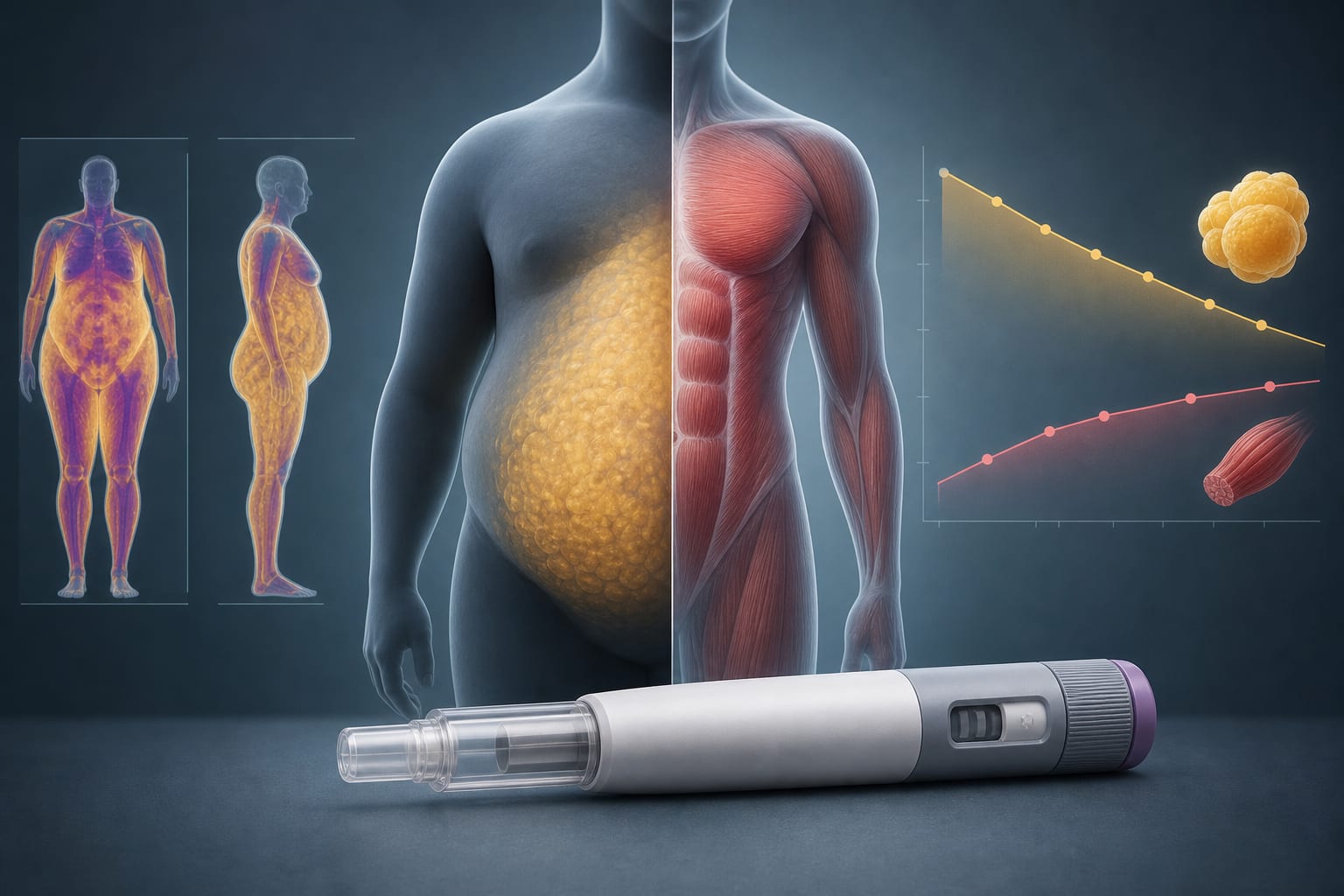
Clinical Report: Impact of Tirzepatide Treatment on Weight and Body Composition
Overview
This study evaluates the effects of tirzepatide on body weight and composition in adults with obesity. Significant reductions in body weight, BMI, and body fat percentage were observed.
Background
Obesity is a significant public health issue linked to chronic diseases such as type 2 diabetes and cardiovascular disease. While lifestyle modifications are essential, pharmacologic therapies like GLP-1 receptor agonists, including tirzepatide, are recognized for their role in weight management.
Data Highlights
Measure
Change
Percentage Change
Body Weight
-31.1 kg
-27.8%
BMI
-10.4 kg/m²
-27.8%
Body Fat Percentage
-16.2%
-37.6%
Fat Mass
-26.4 kg
-54.2%
Fat-Free Mass
-4.5 kg
-7.3%
Skeletal Muscle Mass
-2.8 kg
-8.3%
Total Body Water
-3.5 kg
-7.7%
Key Findings
Tirzepatide resulted in significant reductions in body weight and BMI.
Weight loss was predominantly from fat mass, comprising 85.7% of total weight loss.
Females experienced greater percentage reductions in fat mass and total body water compared to males.
Participants with higher baseline BMI showed greater percentage reductions in weight and body fat percentage.
Fluid distribution indices did not change significantly over time.
Clinical Implications
The findings indicate that tirzepatide induces significant weight loss and changes in body composition in adults with obesity.
Conclusion
Tirzepatide demonstrates efficacy in weight reduction and body composition improvement among adults with obesity.
National survey findings suggest many US adults report making health decisions based on social media despite widespread concerns about the accuracy of health information shared to the platforms.