Clinical Report: Post-operative CRP Levels Serve as Superior Indicators of DAIR Failure
Overview
This study evaluates the efficacy of post-operative C-reactive protein (CRP) levels as predictors of failure in debridement, antibiotics, and implant retention (DAIR) surgery for total knee periprosthetic joint infection (PJI).
Background
Periprosthetic joint infection (PJI) is a significant complication following total knee arthroplasty, often leading to reoperation. The ability to accurately predict DAIR failure is crucial for optimizing treatment strategies. Current predictive scoring systems have variable efficacy.
Data Highlights
No numerical data provided in the source material.
Key Findings
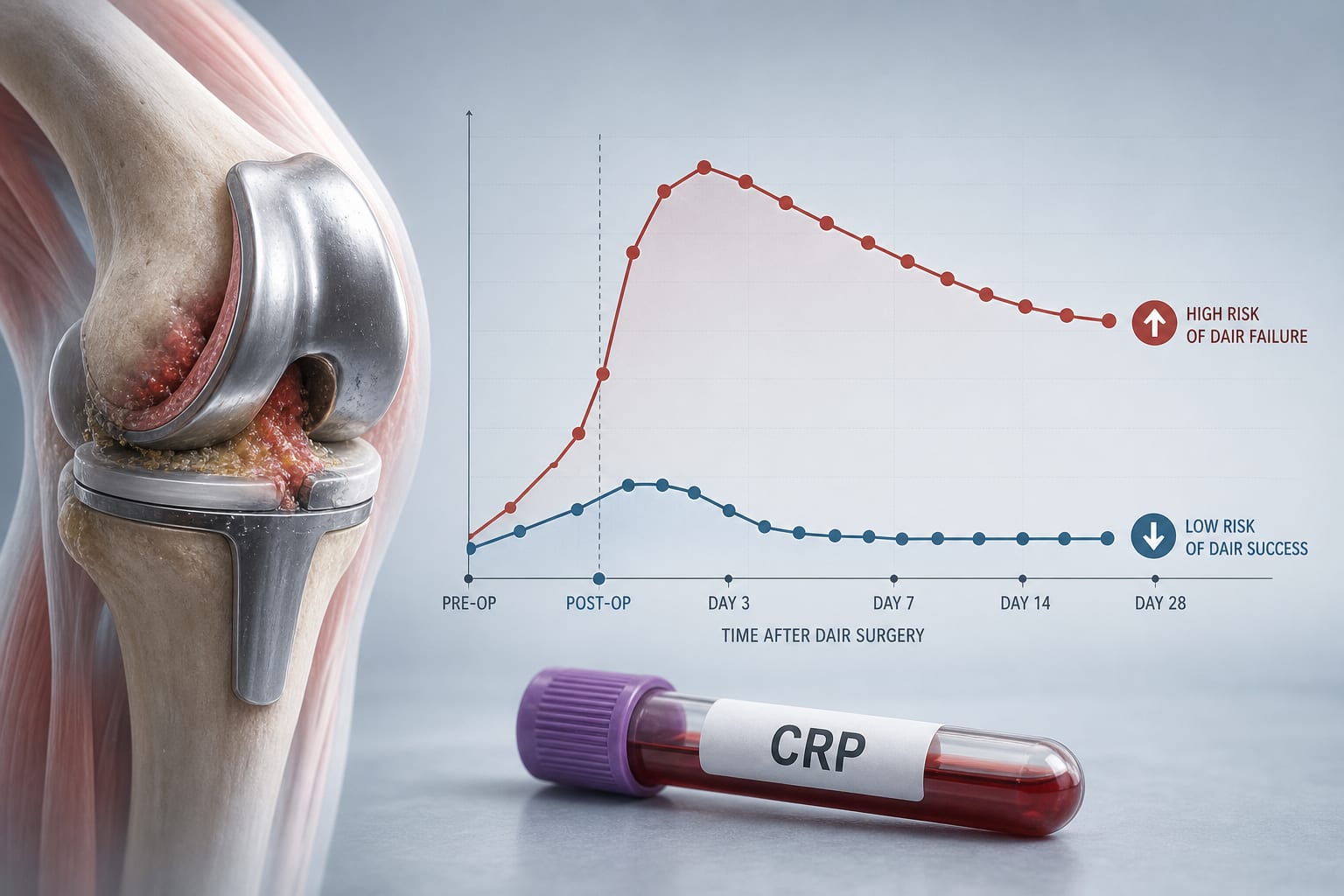
Post-operative CRP levels were found to be superior indicators of DAIR failure compared to pre-operative levels.
DAIR surgery is a common first-line treatment for PJI, with reported success rates ranging from 20% to 85%.
CRP is a low-cost and accessible biomarker for diagnosing and monitoring PJI.
Current scoring systems for predicting DAIR failure have variable efficacy.
Patients with higher post-operative CRP levels are at increased risk for DAIR failure.
Clinical Implications
Monitoring post-operative CRP levels may enhance decision-making in the early post-operative period for patients undergoing DAIR surgery.
Conclusion
Post-operative CRP levels provide insights into the likelihood of DAIR failure in total knee PJI.