Mechanopriming by vascular stiffness and phenotypic reprogramming by disturbed flow: mechanobiology and clinical translation in atherosclerosis - Report - MDSpire
Advertisement
Mechanopriming by vascular stiffness and phenotypic reprogramming by disturbed flow: mechanobiology and clinical translation in atherosclerosis
Vascular Stiffness and Disturbed Flow-Induced Phenotypic Reprogramming
Overview
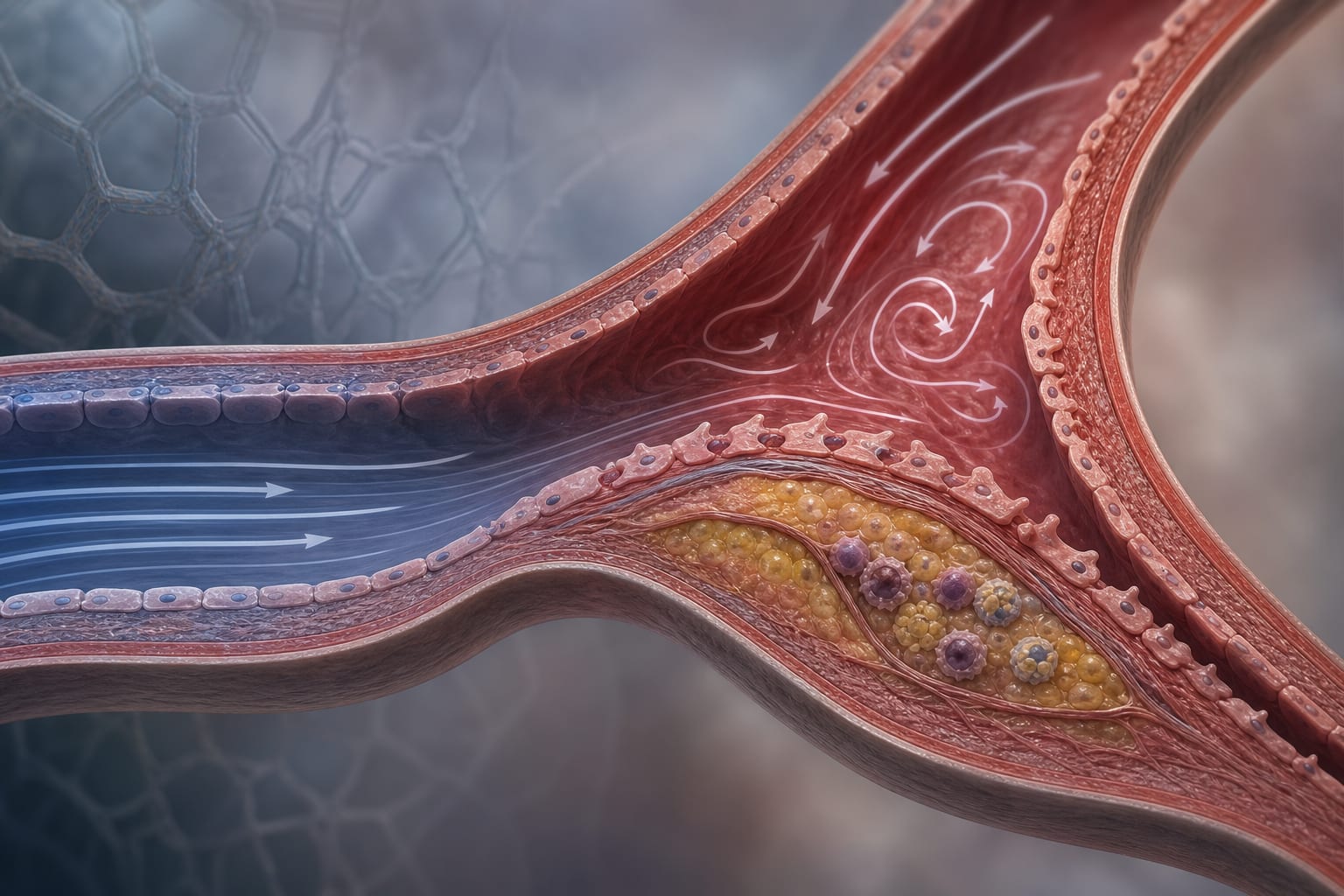
This review discusses the role of disturbed flow and vascular stiffness in atherosclerosis, emphasizing their impact on endothelial cell reprogramming and plaque progression. It highlights the molecular mechanisms involved.
Background
Atherosclerosis is a leading cause of cardiovascular morbidity and mortality, characterized by localized plaque formation at arterial bifurcations and curvatures. Understanding the mechanical factors, such as fluid shear stress and vascular stiffness, is crucial for elucidating the disease's pathogenesis.
Data Highlights
No numerical data presented in the article.
Key Findings
Fluid shear stress and vascular wall stiffness are critical in atherosclerotic plaque progression.
Disturbed flow (DF) and oscillatory shear stress (OSS) lead to pathological reprogramming of endothelial cells.
Mechanisms include cGAS-STING-mediated senescence, NLRP3-driven pyroptosis, and endothelial-to-mesenchymal transition (EndoMT).
The Piezo1 ion channel and 5-HT1B receptor act as coincidence detectors for shear stress and matrix stiffness signals.
Emerging imaging techniques and computational fluid dynamics enhance the assessment of wall shear stress in vivo.
Potential therapeutic strategies include mechanodrugs and hemodynamic stent optimization.
Clinical Implications
The findings indicate that localized hemodynamic parameters should be integrated into clinical risk stratification models for atherosclerosis.
Conclusion
This review discusses mechanical factors in atherosclerosis.
A review of cardiogenic shock studies suggests serial lactate measurements provide more prognostic information than isolated values and may better reflect treatment response.