Link Between Endogenous Hypercortisolism and Hepatic Hemangiomas in Cushing's Disease
Overview
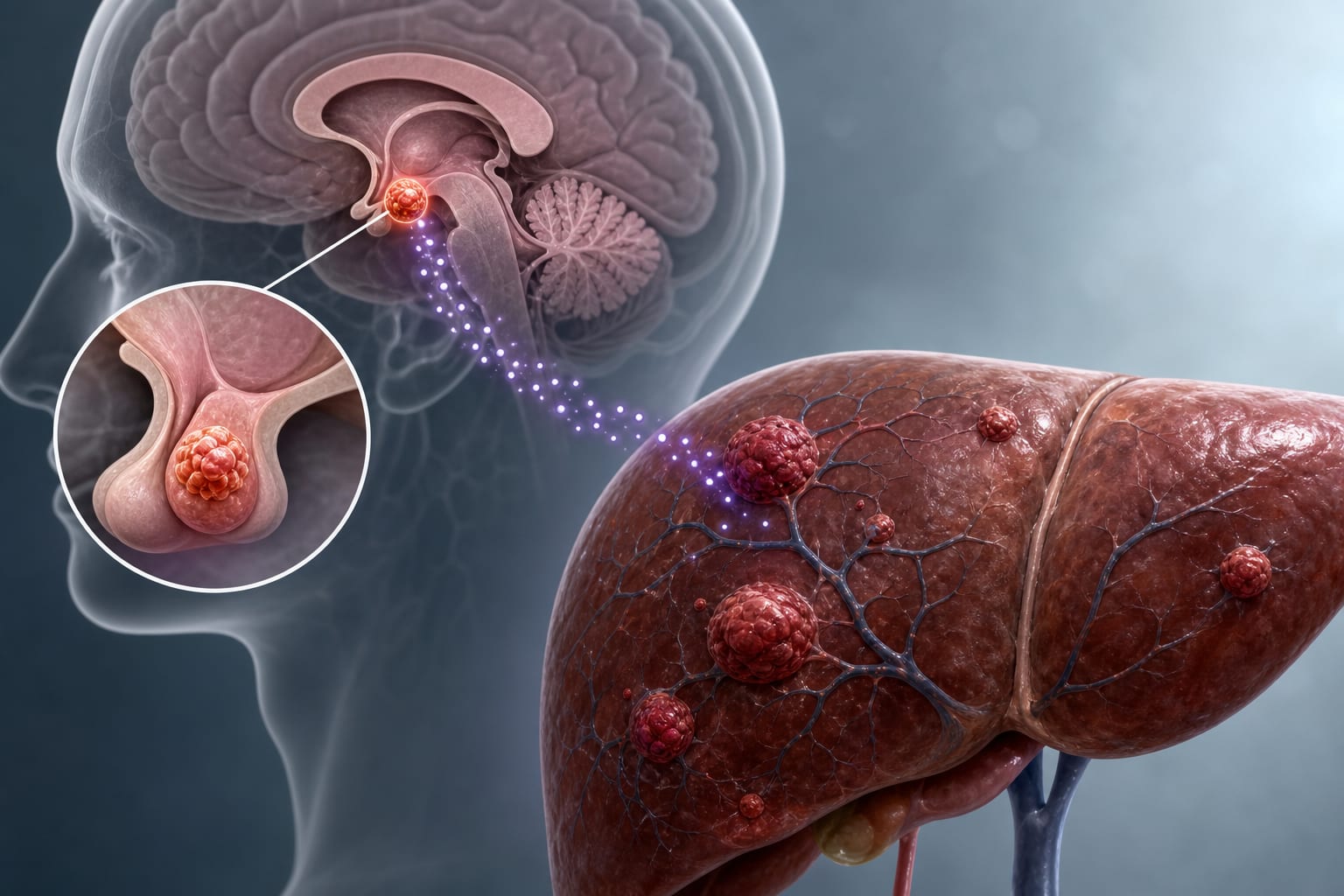
This study investigates the prevalence of hepatic hemangiomas (HH) in patients with Cushing's disease (CD) and identifies associated risk factors.
Background
Cushing's disease, caused by ACTH-secreting pituitary tumors, leads to excessive cortisol levels and various complications, including cardiovascular risks. Hepatic hemangiomas are the most common benign liver tumors, often asymptomatic but potentially serious when large. Understanding the relationship between endogenous hypercortisolism and HH is crucial for managing patients with CD.
Data Highlights
This study included 315 patients with ACTH-PitNETs, with 96 diagnosed with Cushing's disease. Among these, 18 patients had hepatic hemangiomas, indicating a significant prevalence in this cohort.
Key Findings
The study identified 18 out of 96 patients with Cushing's disease having hepatic hemangiomas.
Previous case reports suggest that exogenous glucocorticoids may promote HH progression.
Risk factors for HH in CD patients were analyzed using various statistical methods, including logistic regression.
The relationship between endogenous cortisol levels and HH has not been systematically investigated prior to this study.
Clinical Implications
The findings highlight the need for clinicians to consider the potential presence of hepatic hemangiomas in patients with Cushing's disease. Early identification and management of HH may be necessary to prevent complications.
Conclusion
This study provides evidence of a significant prevalence of hepatic hemangiomas in patients with Cushing's disease, emphasizing the importance of monitoring for this condition in clinical practice.