Clinical Report: The Prognostic Role of Tumor Siglec-15 Expression in Solid Tumors
Overview
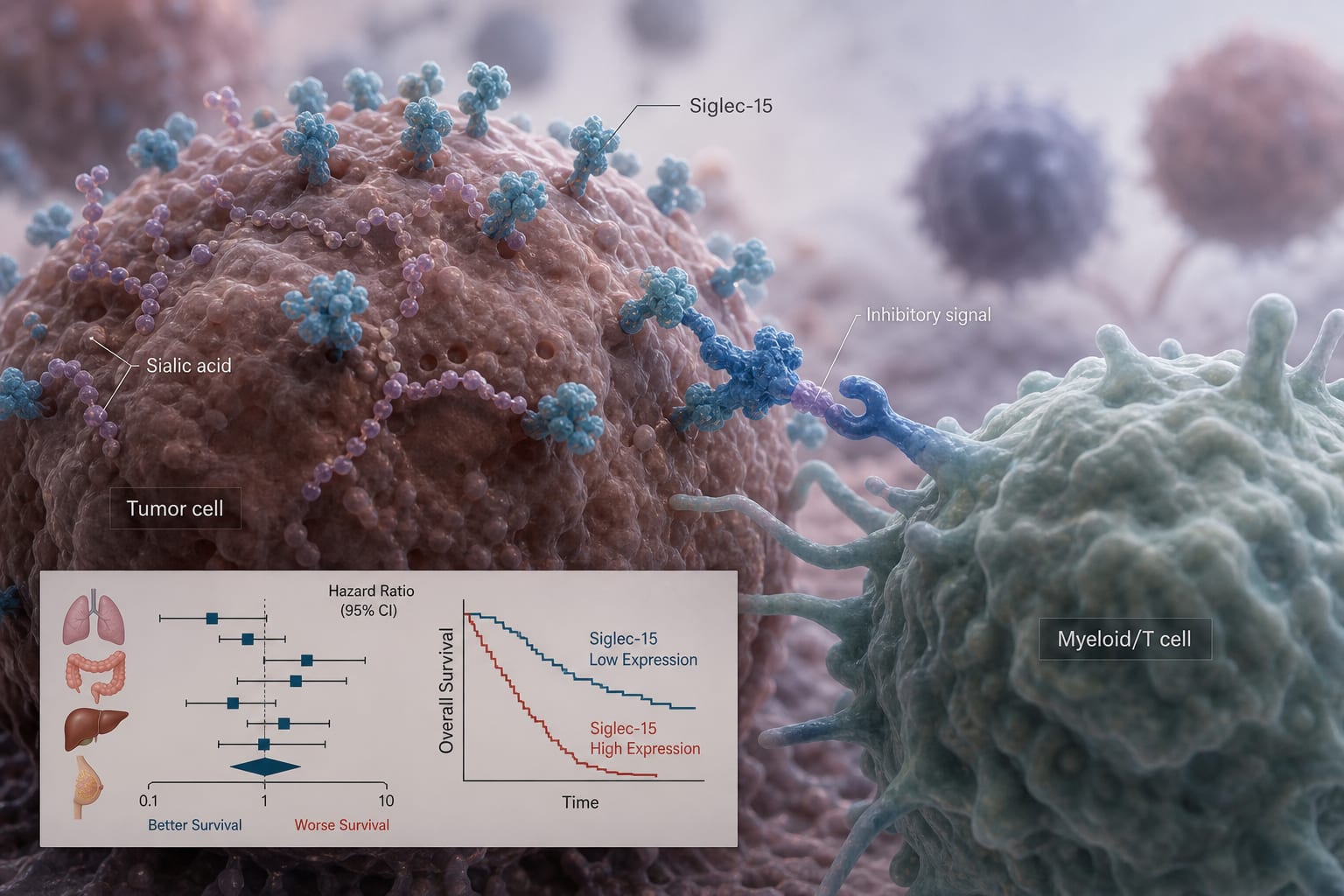
This meta-analysis evaluates the prognostic significance of tumoral Siglec-15 expression in solid tumors, revealing a significant association with poorer overall and disease-free survival.
Background
Siglec-15 is an immune checkpoint molecule implicated in tumor immune evasion and has been observed in various cancers. Understanding its role in prognosis can aid in identifying patients who may benefit from targeted therapies.
Data Highlights
Outcome
Hazard Ratio (HR)
95% Confidence Interval (CI)
P-value
Overall Survival (OS)
1.53
1.25-1.86
<0.001
Disease-Free/Recurrence-Free Survival (DFS/RFS)
1.30
1.09-1.55
0.004
Progression-Free Survival
1.03
0.67-1.56
0.903
Disease-Specific Survival (DSS)
0.66
0.43-1.00
0.050
Key Findings
High tumoral Siglec-15 expression is associated with poorer overall survival (OS) and disease-free/recurrence-free survival (DFS/RFS).
No significant association was found between Siglec-15 expression and progression-free survival.
Colorectal cancer, gastric cancer, and osteosarcoma showed significantly worse OS with high Siglec-15 expression.
Breast cancer exhibited a non-significant association with improved survival in relation to Siglec-15 expression.
High Siglec-15 expression is inversely associated with PD-L1 positivity.
Further studies are needed to validate these findings and establish standardized assessment strategies.
Clinical Implications
Further studies are needed to validate these findings and establish standardized assessment strategies.
Conclusion
Elevated tumoral Siglec-15 expression correlates with unfavorable survival outcomes in solid tumors.