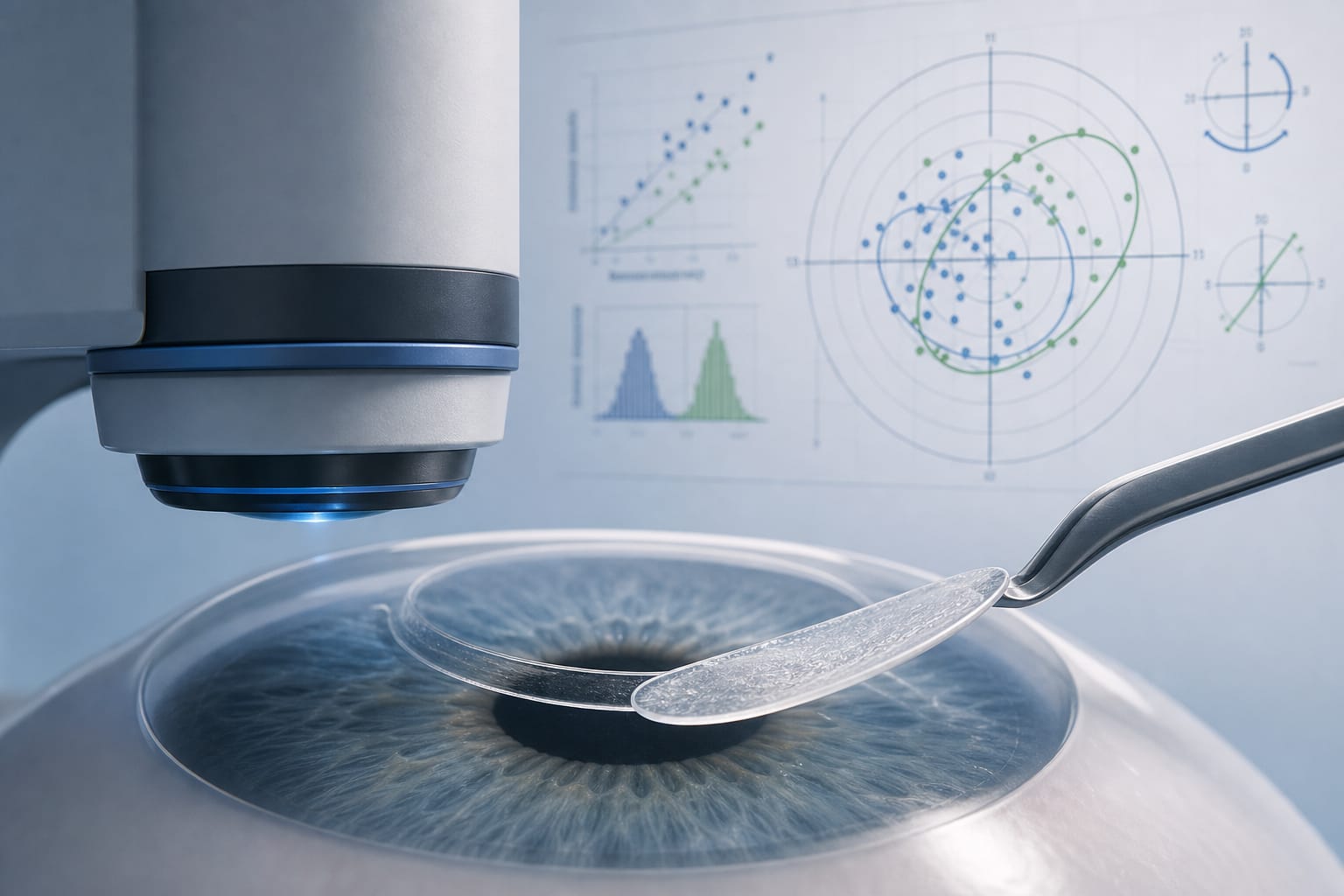
Clinical Report: Reconstruction Results Following Mohs Surgery for Periocular Skin Cancers
Overview
This study analyzes post-Mohs reconstruction outcomes for periocular skin cancers, highlighting the challenges and solutions in reconstructive surgery. Key findings include a high rate of full eyelid function and acceptable cosmetic appearance, with specific complications noted.
Background
Periocular skin cancers, particularly basal cell carcinoma, are prevalent and require careful management due to their location and potential impact on eyelid function and aesthetics. Mohs micrographic surgery is the preferred treatment method, necessitating effective reconstruction strategies to optimize patient outcomes. Understanding the outcomes of these reconstructive procedures is essential for improving surgical techniques and patient care.
Data Highlights
Parameter
Value
Mean Age
67.7 years
Common Malignancy
Basal Cell Carcinoma (70.6%)
Location
Lower Lid (56.7%)
Reconstruction Type
Modified Hughes Tarsoconjunctival Flap (24.7%)
Post-operative Complications
Healing Issues (6.7%), Ectropion (6.2%)
Full Eyelid Function
93.3%
Acceptable Cosmetic Appearance
94.8%
Key Findings
The most common periocular malignancy was basal cell carcinoma (70.6%).
Lower lid was the most frequent location for malignancies (56.7%).
Modified Hughes tarsoconjunctival flap was the most utilized reconstruction method (24.7%).
Post-operative complications included healing issues (6.7%) and ectropion (6.2%).
93.3% of patients achieved full eyelid function post-surgery.
Adjuvant chemotherapy was linked to decreased cure rates (p = 0.0010) and recurrence (p = 0.0174).
Clinical Implications
Surgeons should consider the specific characteristics of periocular malignancies, such as location and defect size, when planning reconstruction after Mohs surgery. Awareness of potential complications, particularly ectropion and healing issues, is crucial for postoperative management and patient counseling.
Conclusion
Highlight the importance of researching factors affecting reconstruction outcomes.
The promise of robotic cataract surgery has been floating through the halls of ophthalmology meetings for years, and it appears the promise is now on its way to reality.
From the promise of tailored drug delivery to augmented reality and continuous health monitoring, there have been numerous avenues of research investigating the high-tech contact lenses of the future.