Minimally invasive stabilisation of anterior pelvic ring injuries through anterior infix versus percutaneous anterior retrograde pubic screw: a prospective comparative cohort study - Report - MDSpire
Conexiant’s news site is now MDSpire News. Learn more
Advertisement
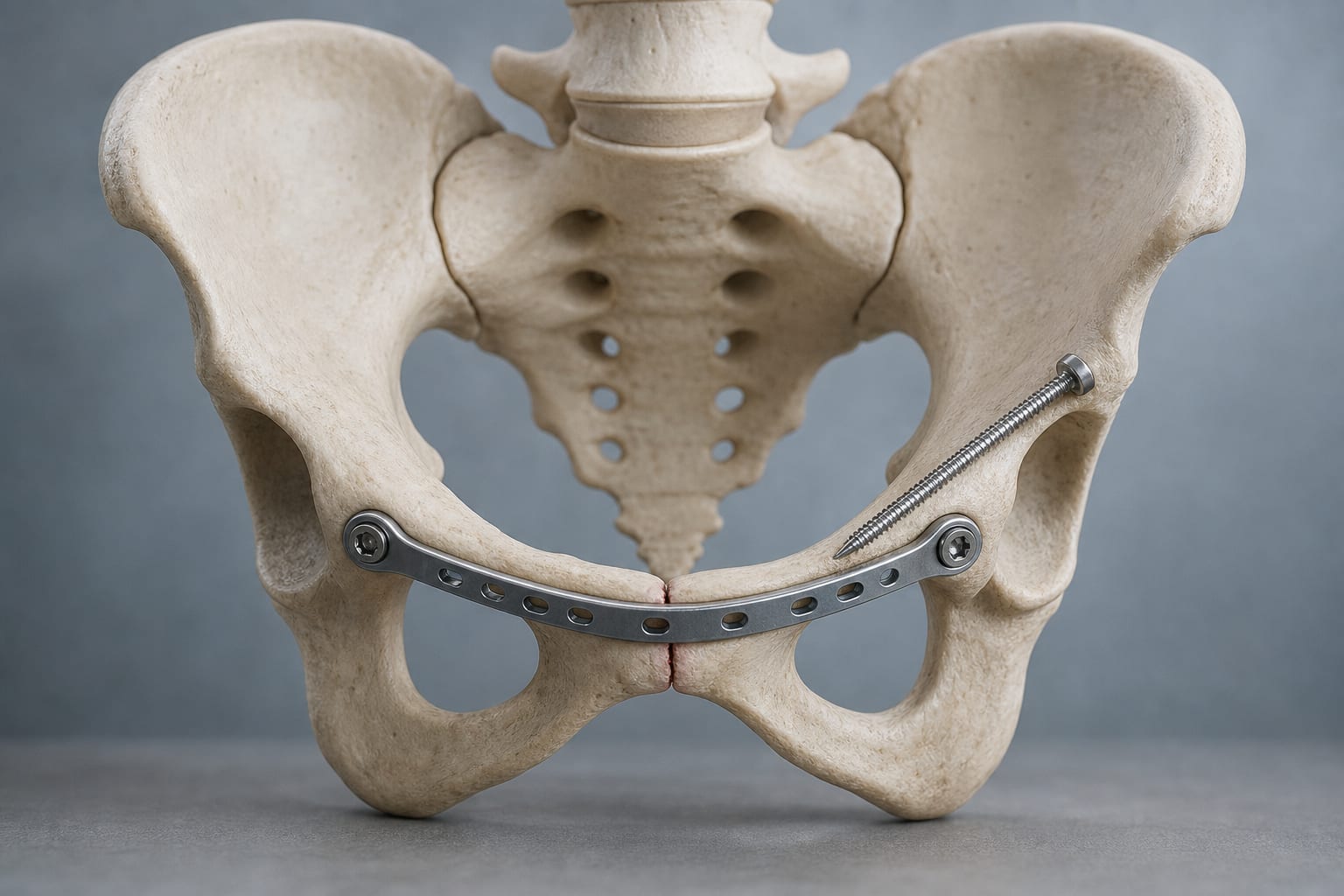
Comparative Analysis of Anterior Infix and Percutaneous Anterior Retrograde Pubic Screw for Minimally Invasive Stabilization of Anterior Pelvic Ring Injuries: A Prospective Cohort Study
Clinical Report: Comparative Analysis of Anterior Infix and Percutaneous Anterior Retrograde Pubic Screw
Overview
This study compares the outcomes of anterior infix fixation and percutaneous anterior retrograde pubic screw fixation for managing unstable anterior pelvic ring injuries. The evaluation focuses on primary outcomes using the Pelvic Outcome Score and secondary outcomes including the Matta and Majeed scores.
Background
Pelvic ring fractures account for about 3% of adult fractures and can lead to significant morbidity and mortality, particularly in unstable anterior pelvic ring injuries. This study addresses the comparative effectiveness of two minimally invasive surgical techniques in managing such fractures.
Data Highlights
No numerical data provided in the source material.
Key Findings
Anterior infix fixation is a minimally invasive technique that provides satisfactory reduction and reliable fracture healing.
Complications associated with the infix technique include nerve palsy and surgical site infections.
Percutaneous retrograde pubic ramus screw fixation offers minimal blood loss and lower rates of complications compared to traditional methods.
Both techniques were assessed for intra-operative parameters and radiological outcomes.
Clinical Implications
Understanding the comparative outcomes of these fixation techniques can guide orthopedic surgeons in selecting appropriate methods for stabilizing anterior pelvic ring injuries. The findings may influence surgical decision-making in clinical practice.
Conclusion
The study evaluates two minimally invasive techniques for anterior pelvic ring injuries.
Teriparatide followed by zoledronic acid increased bone mineral density but did not reduce fracture risk compared with standard care in adults with osteogenesis imperfecta.