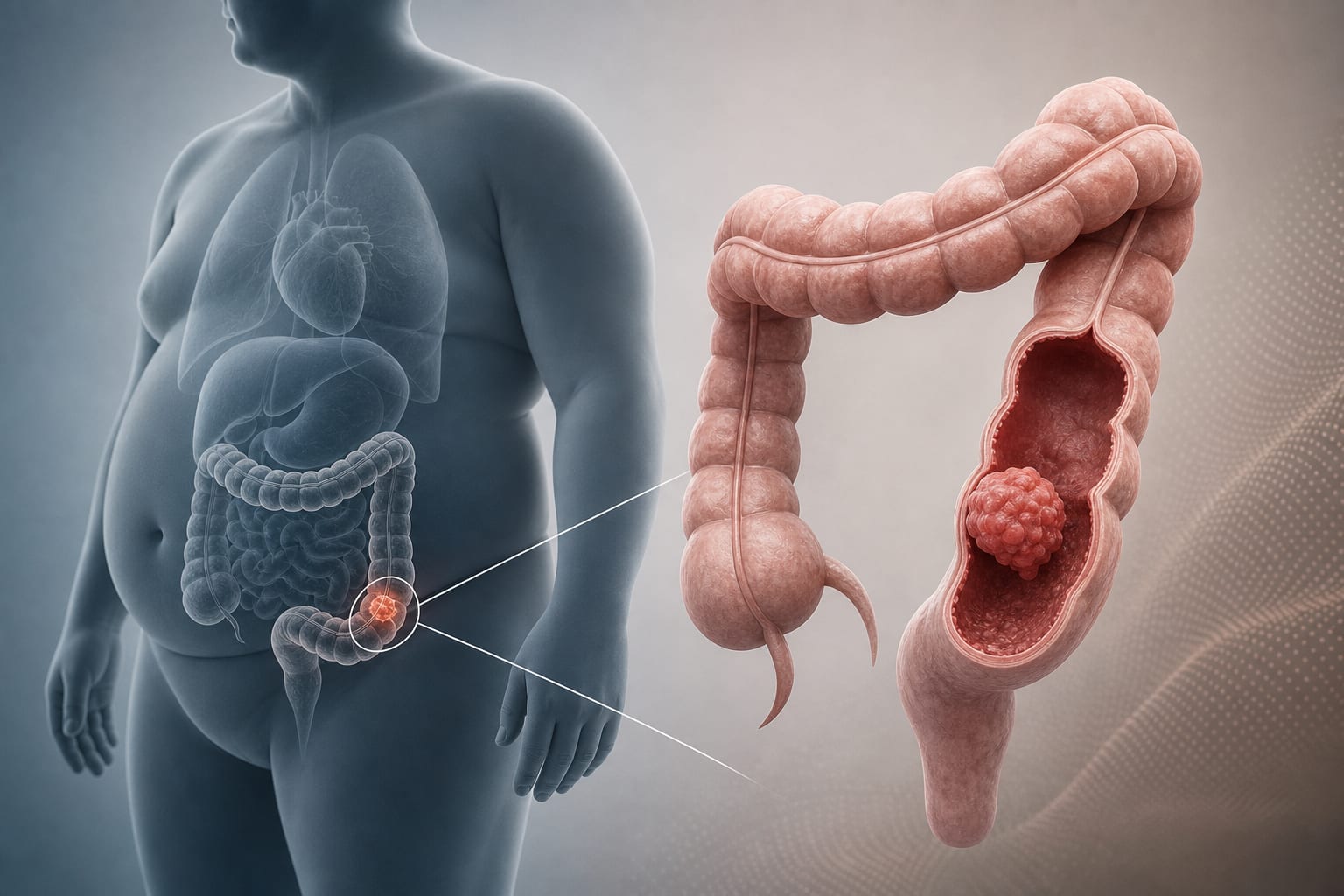
Impact of Surgery Delay on Long-Term Disease-Free Survival in Colorectal Cancer
Overview
This cohort study of 602 colorectal cancer patients assessed the effect of wait list time (WLT) from diagnosis to surgery on long-term disease-free survival (DFS). Median WLT was 28 days, with 2-year and 5-year DFS rates of 86.5% and 83.1%, respectively, showing no significant adverse impact of surgery delays up to 6 weeks.
Background
Colorectal cancer is a leading gastrointestinal malignancy worldwide, with high incidence and mortality rates. Timely surgical intervention is critical, yet waiting lists often cause treatment delays. Previous studies have shown conflicting evidence regarding the impact of treatment delays on survival, with some suggesting an ideal treatment window of 3–6 weeks. The COVID-19 pandemic exacerbated delays, prompting evaluation of how postponing curative surgery affects long-term outcomes.
Data Highlights
Variable
Median (Range) or n (%)
Patients included
602
Median age
73 years (range 71)
Male sex
364 (60.5%)
Median follow-up
51.5 months (range 98)
Median WLT
28 days (range 99)
Tumor location - colon
471 (78.2%)
Tumor location - rectum
131 (21.7%)
Laparoscopic surgery
454 (75.4%)
2-year DFS
521 (86.5%)
5-year DFS
500 (83.1%)
Key Findings
Median wait list time (WLT) from diagnosis to surgery was 28 days.
Two-year disease-free survival (DFS) was 86.5%, and five-year DFS was 83.1%.
No significant difference in DFS was observed across 2-week interval groups up to 6 weeks of WLT.
Patients with WLT beyond 6 weeks were grouped together due to small numbers, limiting subgroup analysis.
Standard multimodal care and surgical approaches (laparoscopic or open) were applied consistently.
Postoperative mortality within 30 days was excluded from DFS analysis to focus on long-term outcomes.
Clinical Implications
Delays in curative colorectal cancer surgery up to 6 weeks from diagnosis do not appear to compromise long-term disease-free survival. This finding supports flexible surgical scheduling during healthcare crises such as the COVID-19 pandemic, allowing prioritization of urgent cases without adversely affecting outcomes for early-stage patients. Clinicians can consider safely deferring surgery within this timeframe when necessary.
Conclusion
In this prospective cohort, postponing colorectal cancer surgery up to 6 weeks did not negatively impact long-term disease-free survival, providing evidence to guide surgical triage during resource-limited periods.
References
Gort et al. 3-year DFS and treatment timing in rectal cancer
Yun et al. Treatment delays and survival in gastrointestinal cancers
Italian, Spanish, UK colorectal societies COVID-19 guidelines