Correction: Clinical utility of a host-protein test for suspected infection in the pediatric emergency department: a pragmatic pre-/post-implementation study - Report - MDSpire
Conexiant’s news site is now MDSpire News. Learn more
Advertisement
Correction: Evaluating the Clinical Application of a Host-Protein Assay for Suspected Infections in Pediatric Emergency Settings: A Pragmatic Pre-/Post-Implementation Analysis
Correction: Evaluating the Clinical Application of a Host-Protein Assay
Overview
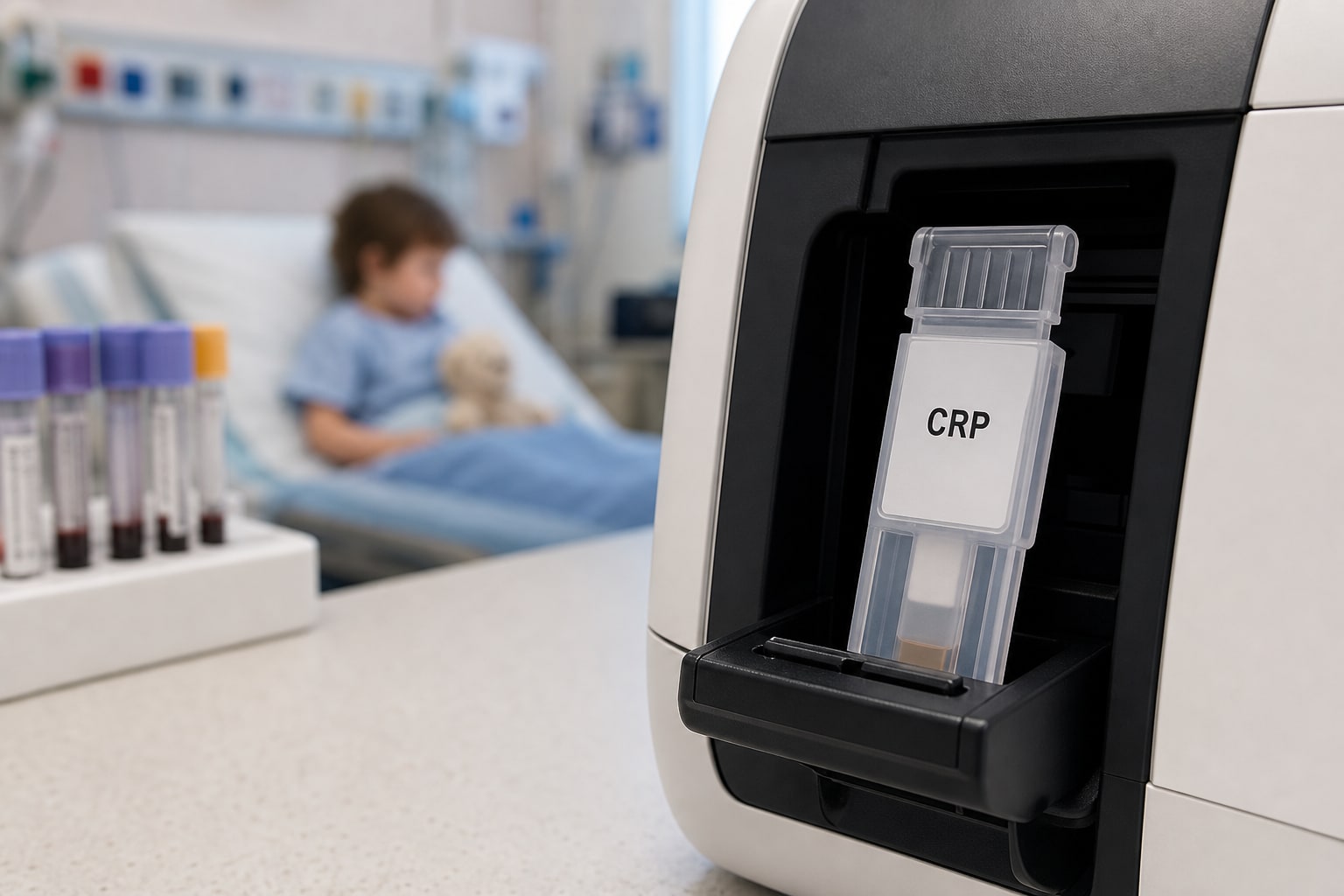
This report corrects errors in the previously published table regarding the clinical utility of a host-protein assay, MeMed BV, in pediatric emergency settings. The corrected data highlights the assay's role in reducing inappropriate antibiotic use and improving patient outcomes.
Background
Accurate diagnosis of infections in pediatric emergency departments is crucial to avoid unnecessary antibiotic prescriptions. The MeMed BV assay aims to differentiate between bacterial and viral infections, potentially guiding more appropriate treatment. Understanding its real-world application can enhance clinical decision-making and patient care in emergency settings.
Data Highlights
The original Table 1 contained inaccuracies regarding patient demographics and clinical characteristics. The corrected table provides accurate data on inpatient and outpatient populations, stratified by various clinical factors.
Key Findings
The MeMed BV assay effectively distinguishes between bacterial and viral infections in pediatric patients.
Post-implementation, antibiotic prescribing for outpatients with viral BV scores decreased significantly from 20.3% to 7.5% (p=0.007).
In a lower respiratory tract infection subcohort, antibiotic prescribing decreased from 84.0% to 67.9% (p=0.002).
Despite more severe presentations in the post-implementation group, the mean hospital length of stay decreased from 3.6 to 3.1 days (p<0.001).
The corrected data in Table 1 clarifies previous inaccuracies regarding patient demographics and clinical characteristics.
Clinical Implications
The corrected findings underscore the importance of accurate diagnostic tools like the MeMed BV assay in pediatric emergency care. By reducing unnecessary antibiotic use, clinicians can improve patient outcomes and contribute to antibiotic stewardship efforts.
Conclusion
The correction of data in the study reinforces the clinical utility of the MeMed BV assay in pediatric emergency settings, highlighting its potential to optimize treatment decisions and enhance patient care.
by Vered Nir, Vered Schichter Konfino, Naama Kuchinski Cohen, Esther Levy, Noa Kremer, Yosef Or Shamia, Amir Nakar, Boris Lebedenko, Jeroen Stas, Tanya M. Gottlieb, Ma’anit Shapira, Michal Stein, Adi Klein