Costimulation via Fusion Proteins in Modified T Cells: From Internal Signaling Pathways to Alterations in the Tumor Microenvironment
Overview
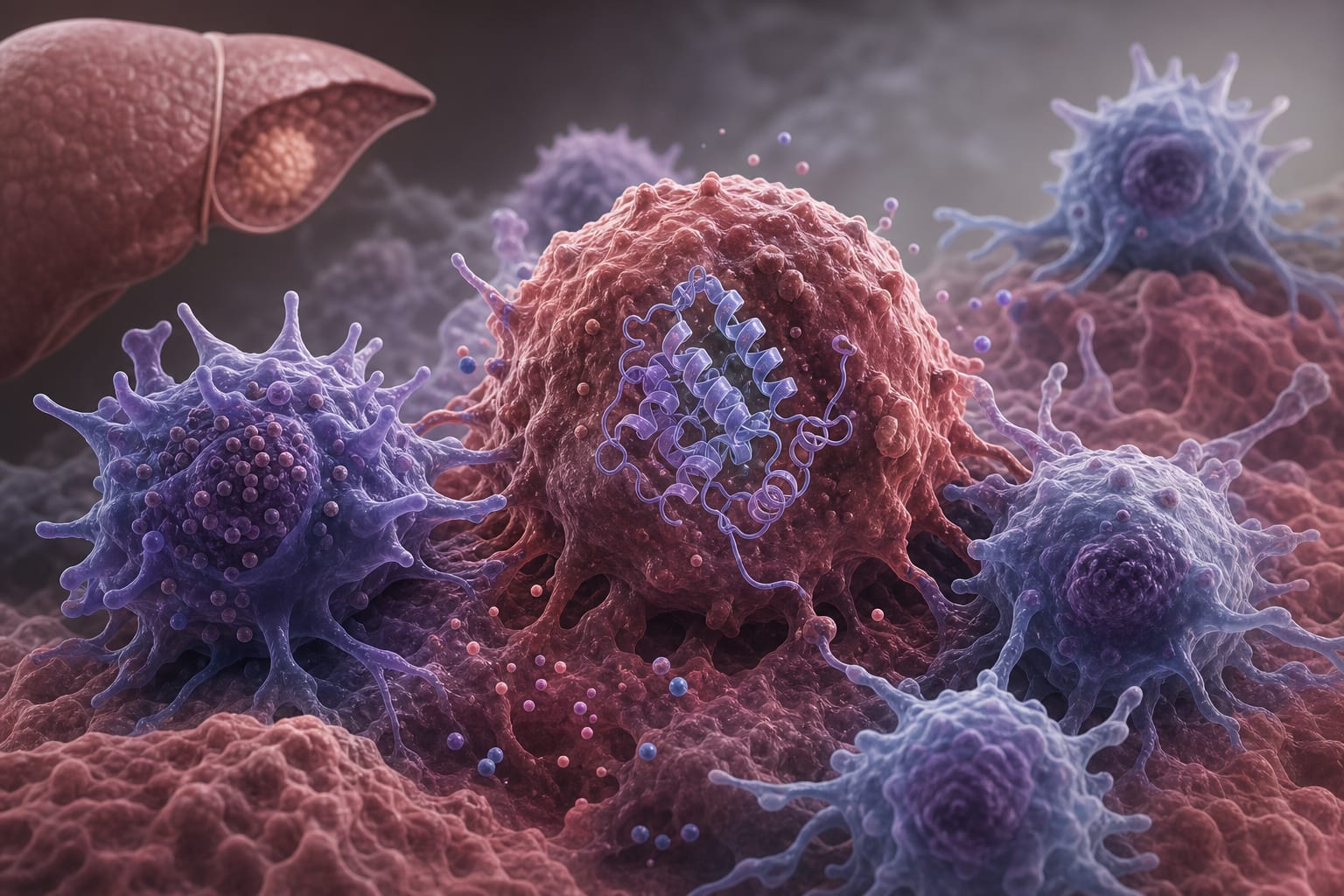
This review discusses the development of fusion protein-based costimulatory strategies that enhance T cell function and remodel the tumor microenvironment (TME) to improve the efficacy of adoptive T cell therapies in solid tumors. It highlights the challenges posed by the TME and how engineered T cells can overcome these barriers.
Background
Adoptive T cell therapies have shown significant promise in treating hematologic malignancies, but their effectiveness in solid tumors is often limited by the hostile TME. Factors such as suppressive immune cells, antigen heterogeneity, and metabolic challenges hinder T cell persistence and function. Understanding and addressing these barriers is crucial for expanding the therapeutic potential of engineered T cell therapies in solid tumors.
Data Highlights
No numerical data or trial data provided in the source material.
Key Findings
Fusion protein-based costimulatory strategies can enhance T cell activation and function within the TME.
Conventional and non-canonical costimulatory modules can be incorporated into CAR and TCR architectures to improve T cell differentiation.
Engineered T cells can activate dendritic cells and reprogram myeloid cells to create a more favorable TME.
Strategies that reshape the TME may expand the repertoire of targetable antigens and improve CAR-T cell design.
Initial approaches to deplete suppressive immune populations faced challenges, leading to a focus on TME remodeling instead.
Clinical Implications
Clinicians should consider the potential of fusion protein-based strategies to enhance the effectiveness of adoptive T cell therapies in solid tumors. Understanding the mechanisms by which these strategies can remodel the TME may inform treatment planning and patient selection.
Conclusion
The integration of fusion protein-based costimulatory strategies represents a promising advancement in the field of adoptive T cell therapy, potentially overcoming significant barriers posed by the tumor microenvironment.