Impact of low-level sex chromosome mosaicism (<10%) on clinical outcomes of first fresh embryo transfer: a propensity score-matched retrospective cohort study - Report - MDSpire
Advertisement
Impact of low-level sex chromosome mosaicism (<10%) on clinical outcomes of first fresh embryo transfer: a propensity score-matched retrospective cohort study
Clinical Report: Effects of Low-Level Sex Chromosome Mosaicism on ART Outcomes
Overview
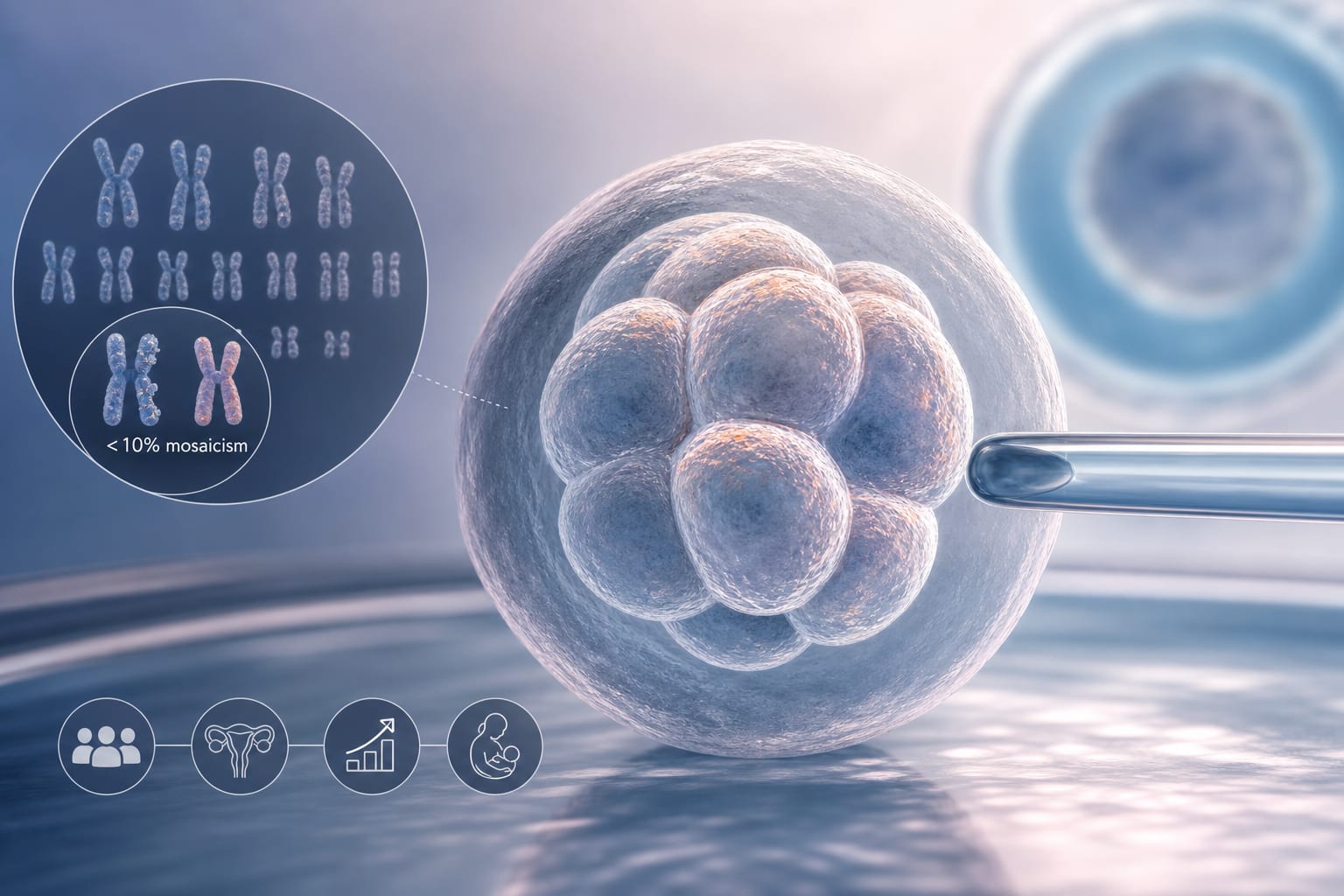
This study investigates the impact of low-level sex chromosome mosaicism (SCM) on clinical outcomes in the first fresh embryo transfer cycle. Findings indicate that low-level SCM does not significantly affect live birth rates, clinical pregnancy rates, or early miscarriage rates.
Background
Low-level sex chromosome mosaicism is increasingly identified in infertility evaluations, yet its clinical significance in assisted reproductive technology (ART) remains debated. This study aims to clarify the relationship between low-level SCM and ART outcomes.
Data Highlights
Outcome
SCM Group
Control Group
Live Birth Rate
34.39%
40.75%
Clinical Pregnancy Rate
45.25%
49.72%
Early Miscarriage Rate
20.00%
16.44%
Key Findings
No significant difference in live birth rates between SCM and control groups (34.39% vs. 40.75%).
No significant difference in clinical pregnancy rates (45.25% vs. 49.72%).
No significant difference in early miscarriage rates (20.00% vs. 16.44%).
Female age was a significant predictor of ART outcomes, with each additional year reducing live birth odds by 12.8%.
Age-stratified analysis showed consistent null results across all age groups.
Clinical Implications
Clinicians should consider female age as a significant factor influencing ART success rates.
Conclusion
Low-level sex chromosome mosaicism does not significantly impact ART outcomes.