p53-associated regulation of COX17 enhances elesclomol-induced copper-associated cytotoxicity and suppresses gastric cancer growth - Report - MDSpire

p53-associated regulation of COX17 enhances elesclomol-induced copper-associated cytotoxicity and suppresses gastric cancer growth

  • By

  • Qianling Li

  • Xiaoyin Dong

  • Yu Zhao

  • Yun Shen

  • Chenyang Yang

  • Yu Xi

  • June 15, 2026

  • 0 min

Share

Regulation of COX17 by p53 Enhances Copper-Dependent Cytotoxicity

Overview

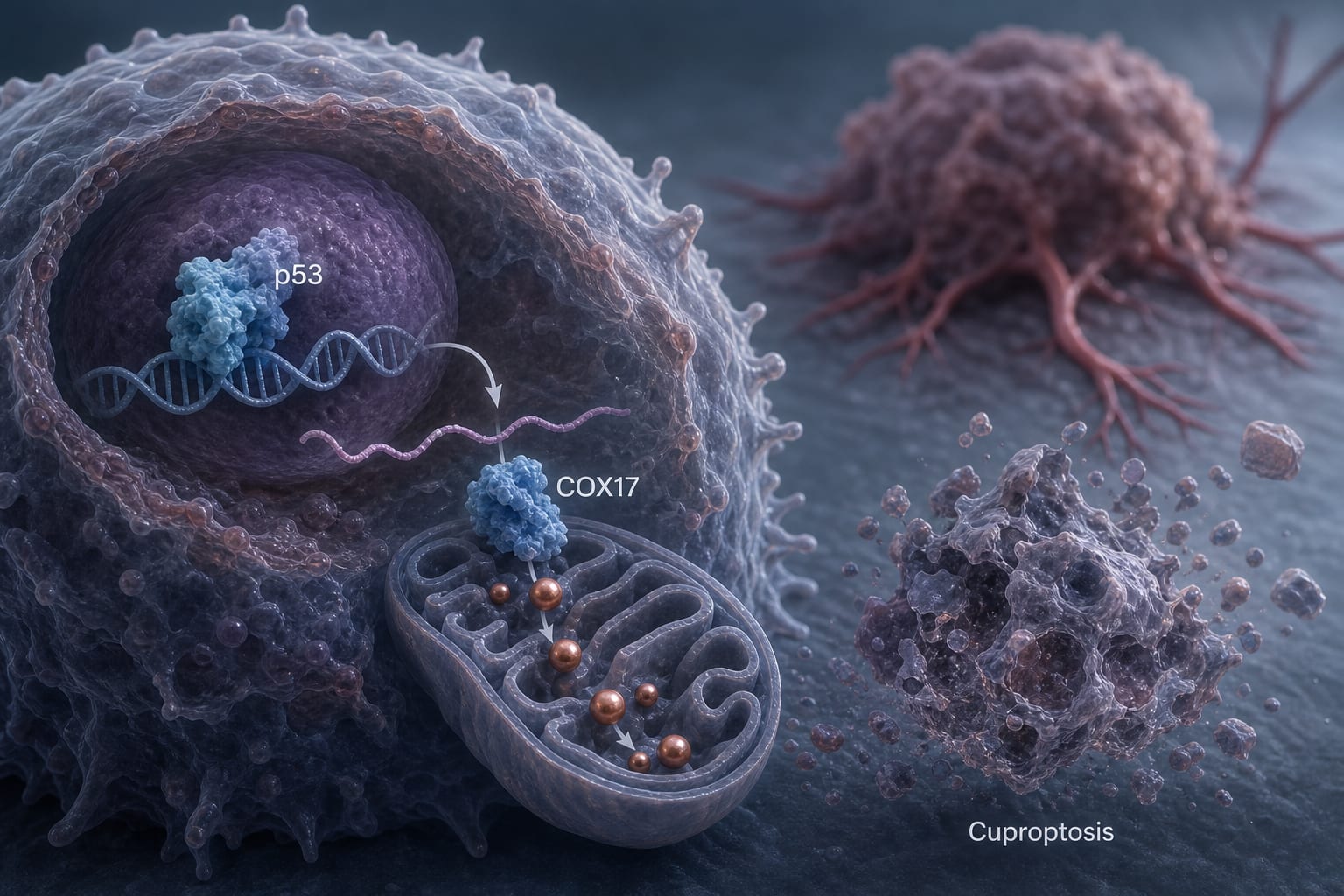
This study reveals that COX17, regulated by p53, significantly enhances the sensitivity of gastric cancer cells to elesclomol-induced copper cytotoxicity. The findings suggest a potential therapeutic avenue by targeting the p53–COX17 axis in gastric cancer treatment.

Background

Gastric cancer remains a leading cause of cancer-related mortality, with limited treatment efficacy in advanced stages. Understanding the mechanisms of copper metabolism and its role in cancer cell death, particularly through cuproptosis, is crucial for developing novel therapeutic strategies. The interplay between p53 signaling and copper metabolism may provide insights into new treatment modalities for gastric cancer.

Data Highlights

ExperimentOutcome
COX17 modulationIncreased sensitivity to elesclomol
p53 overexpressionIncreased COX17 expression
In vivo xenograft modelReduced tumor growth with elesclomol

Key Findings

  • COX17 enhances copper accumulation and sensitivity to elesclomol in AGS cells.
  • p53 overexpression increases COX17 expression and suppresses malignant phenotypes.
  • ChIP-qPCR indicates p53 directly regulates COX17 transcription.
  • Conditioned media from COX17-overexpressing cells inhibits angiogenesis in HUVECs.
  • COX17 modulation affects expression of copper transporters SLC31A1 and ATP7A.

Clinical Implications

Targeting the p53–COX17 axis may enhance the efficacy of copper-based therapies like elesclomol in gastric cancer. Understanding the role of copper metabolism in tumor biology could lead to innovative treatment strategies for patients with advanced gastric cancer.

Conclusion

The findings underscore the importance of the p53–COX17 pathway in mediating copper-dependent cytotoxicity, suggesting a novel target for therapeutic intervention in gastric cancer.

Related Resources & Content

  1. The ASCO Post, 2014 -- New p53-Dependent Gene Cooperates With p53 in Tumor-Suppressor Functions
  2. The ASCO Post, 2024 -- Adding COX-2 Inhibition to Chemotherapy in PIK3CA-Activated Stage III Colon Cancer
  3. The ASCO Post, 2012 -- Impact of p53 Status on Cancer Treatment Selection
  4. Immunotherapy and Targeted Therapy for Advanced Gastroesophageal Cancer: ASCO Guideline Update | Journal of Clinical Oncology
  5. The molecular mechanism and therapeutic landscape of copper and cuproptosis in cancer | Signal Transduction and Targeted Therapy
  6. Abstract 553: Selective induction of cuproptosis in vivo by a soluble Elesclomol analog. | Cancer Research
  7. The ASCO Post — Impact of p53 Status on Cancer Treatment Selection
  8. Immunotherapy and Targeted Therapy for Advanced Gastroesophageal Cancer: ASCO Guideline Update | Journal of Clinical Oncology
  9. The molecular mechanism and therapeutic landscape of copper and cuproptosis in cancer | Signal Transduction and Targeted Therapy
  10. Abstract 553: Selective induction of cuproptosis in vivo by a soluble Elesclomol analog. | Cancer Research | American Association for Cancer Research

Original Source(s)

Related Content