Delayed hepatic artery pseudoaneurysm with arterioportal fistula after penetrating liver trauma successfully treated with coil embolization: a case report and focused literature review - Report - MDSpire

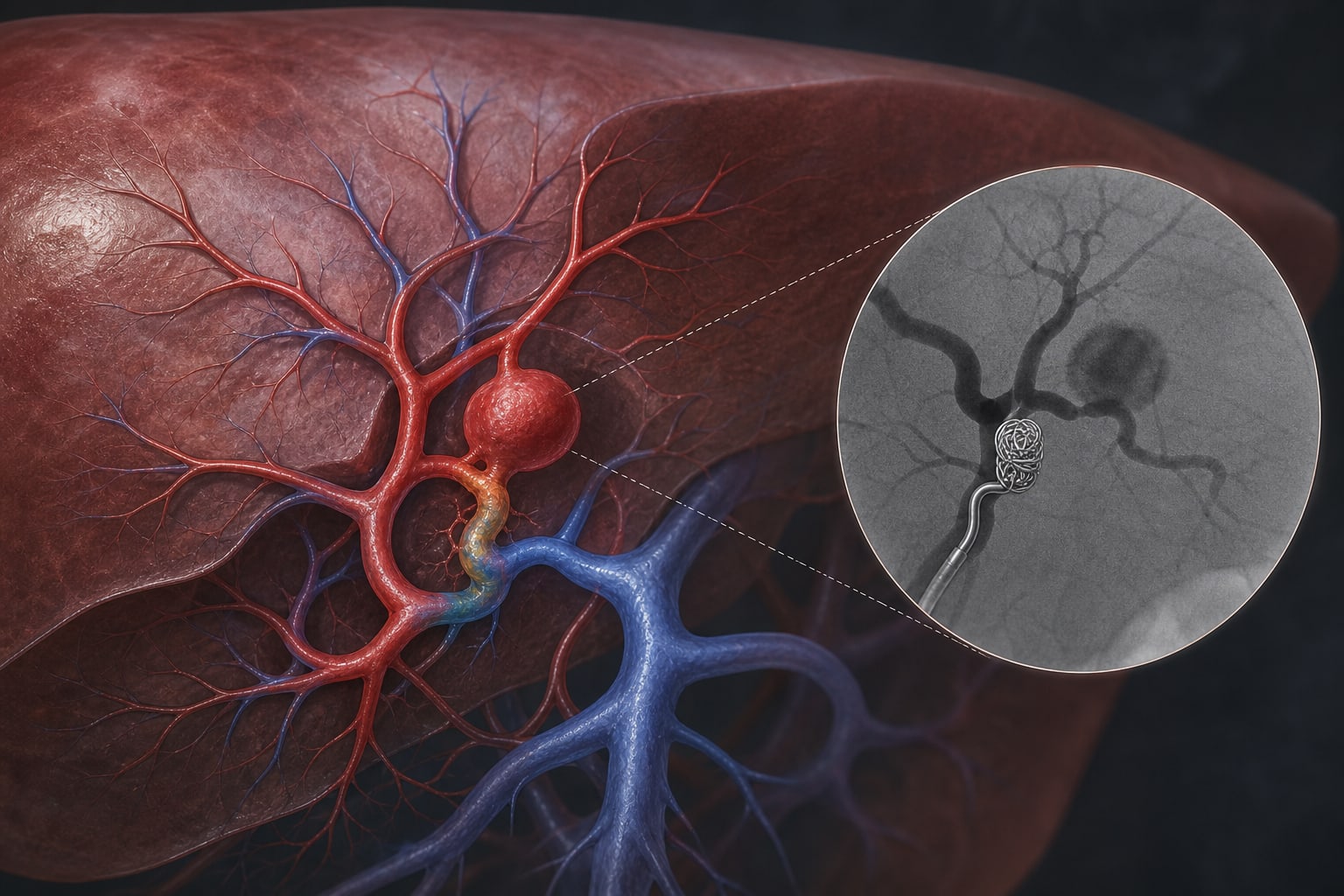
Delayed hepatic artery pseudoaneurysm with arterioportal fistula after penetrating liver trauma successfully treated with coil embolization: a case report and focused literature review

  • By

  • Alhareth M. Amro

  • Mohammad Harbi Alfrookh

  • Salahaldeen Deeb

  • Yara Juma

  • Rahaf Masri

  • Baraa M. AbuMandil

  • Waled Sabarna

  • Rajai Alhusseini

  • July 14, 2026

Share

Management of Delayed Hepatic Artery Pseudoaneurysm with Arterioportal Fistula

Background

Hepatic artery pseudoaneurysm (HAP) is a rare but serious complication of liver trauma, often leading to severe outcomes if not identified and managed promptly. This case highlights the need for vigilance in monitoring patients after liver injuries, especially those with penetrating mechanisms.

Data Highlights

No numerical data available.

Key Findings

  • A 25-year-old male developed a hepatic artery pseudoaneurysm after a stab wound.
  • Initial Gelfoam embolization was unsuccessful in managing the pseudoaneurysm.
  • Definitive coil embolization via the femoral artery successfully excluded the lesion.
  • The patient experienced symptomatic improvement and was discharged in stable condition.
  • Delayed vascular complications following penetrating liver trauma require careful monitoring.

Clinical Implications

Healthcare professionals should maintain a high index of suspicion for vascular complications in patients with liver trauma.

Conclusion

This case highlights the importance of recognizing delayed vascular complications in liver trauma.

Related Resources & Content

  1. Gill K., et al., 2026 -- Surveillance of Posttraumatic Abdominal Pseudoaneurysms
  2. CIRSE Standards of Practice for the Endovascular Treatment of Visceral and Renal Artery Aneurysms and Pseudoaneurysms - PMC
  3. Main versus segmental hepatic artery angioembolization in patients with traumatic liver injuries: A Western Trauma Association multicenter study - PubMed
  4. Pediatric Cardiology — The Vulnerable Condition of the Liver Following a Fontan Procedure: Insights from a Multidisciplinary Symposium
  5. Arterial Reconstruction Performed Ex Situ Before Normothermic Machine Perfusion of Liver Grafts
  6. Retention of the round ligament to manage temporary portal hypertension following significant hepatectomy
  7. Utilization of Left Renal Vein Graft and In Situ Hepatic Perfusion During Hepatectomy for Tumors Invading Hepatic Veins: Enhancing Hemodynamics and Surgical Approach
  8. European Society for Vascular Surgery (ESVS) 2025 Clinical Practice Guidelines
  9. CIRSE Standards of Practice for the Endovascular Treatment of Visceral and Renal Artery Aneurysms and Pseudoaneurysms - PMC
  10. Main versus segmental hepatic artery angioembolization in patients with traumatic liver injuries: A Western Trauma Association multicenter study - PubMed
  11. Surveillance of Posttraumatic Abdominal Pseudoaneurysms - Katelyn Gill, Jagnoor Benipal, Hector Ferral, Kaden Knecht, Claudia Leonardi, Alexandra H. Fairchild, Bahri Ustunsoz, Dan F. Laney, John Hunt, Jonathan E. Schoen, Alan Marr, Patrick Greiffenstein, Lance Stuke, Alison A. Smith, 2026
  12. Endovascular and percutaneous embolization of hepatic artery pseudoaneurysm: Etiology, embolic agents and technical success, and experience from a single center - PMC
  13. Hepatic arterioportal fistula after biopsy conditioning portal hypertension: first case in primary biliary cholangitis and a systematic literature review

Original Source(s)

Related Content