Immune Impairment and COVID-19 Vaccine Response in Multiple Myeloma Patients
Overview
Multiple myeloma (MM) patients exhibit profound immune alterations, including significant depletion of B-cell subsets and changes in T-cell and antigen-presenting cell compartments. These immune impairments correlate with reduced immunogenicity to COVID-19 vaccination, highlighting the need for tailored vaccination strategies in this population.
Background
Infection is a leading cause of morbidity and mortality in MM patients, with a sevenfold increased risk compared to controls. The immunosuppressive effects of both the tumor and treatments contribute to this vulnerability. COVID-19 has caused more severe complications and higher mortality in MM patients than in those with solid tumors or the general population. Although vaccines reduce severity and mortality, their immunogenicity is diminished and less durable in MM, necessitating more frequent boosters. Immune profiling may help predict vaccine efficacy and guide individualized vaccination schedules.
Data Highlights
Group
Number of Individuals
Median Age (years)
Immunoparesis Frequency
Treatment Status
Multiple Myeloma (MM)
28
61 (46-85)
88%
Mostly on treatment
B-CLPD
53
Not specified
35%
Generally off treatment
Health Care Practitioners (HCP)
96
>50 years
Not specified
Not applicable
Key Findings
MM patients showed significant alterations in 73% (41/56) of immune cell subsets compared to healthy controls.
The B-cell compartment was most affected, with reductions across all 17 B-cell subsets, including naïve, antigen-experienced, and antibody-secreting cells.
T-cell alterations included reductions in nearly all CD4+ subsets and a shift in CD8+ T cells from naïve to memory phenotypes expressing CD127 and PD-1.
Antigen-presenting cells were altered with decreased plasmacytoid dendritic cells and increased classical and intermediate monocytes.
Neutrophil percentages were reduced in MM patients compared to controls.
These immune changes likely reflect combined tumor and treatment effects leading to impaired vaccine responses.
Clinical Implications
The profound immune dysregulation in MM patients compromises their ability to mount effective responses to COVID-19 vaccination, supporting the need for individualized vaccination schedules and possibly more frequent booster doses. Immune profiling via minimally invasive blood tests could serve as a practical tool to assess vaccine responsiveness and guide clinical decisions. Awareness of altered immune compartments may also inform infection risk management and therapeutic strategies.
Conclusion
Multiple myeloma patients exhibit extensive immune impairment that diminishes COVID-19 vaccine immunogenicity. Tailored vaccination approaches informed by immune profiling may optimize protection in this vulnerable population.
References
Lancman et al. 2022 -- Infection Risk with BCMA-Targeted Bispecific Antibodies in MM
by Esperanza Martín-Sánchez, Luis-Esteban Tamariz-Amador, Camila Guerrero, Anastasiia Zherniakova, Aintzane Zabaleta, Catarina Maia, Laura Blanco, Diego Alignani, Maria-Antonia Fortuño, Carlos Grande, Andrea Manubens, Jose-Maria Arguiñano, Clara Gomez, Ernesto Perez-Persona, Iñigo Olazabal, Itziar Oiartzabal, Carlos Panizo, Felipe Prosper, Jesus F. San-Miguel, Paula Rodriguez-Otero, Bruno Paiva
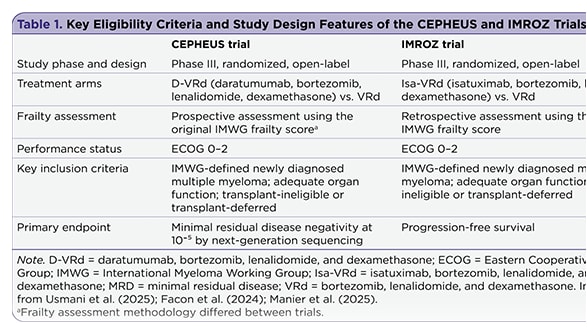
The management of newly diagnosed transplant-ineligible multiple myeloma remains challenging, in part due to the complexity of treatment decisions for frail patients. Recent subgroup analyses provide insight into whether quadruplet therapy may offer advantages over triplet therapy in this population.