Clinical Report: Syphilis Presenting as a Metastatic Tumor: A Case Study
Overview
This report details a case of tertiary syphilis presenting as a metastasis-mimicking lesion in a 57-year-old man. It underscores the diagnostic challenges posed by syphilis, particularly in its late stages, where it can resemble malignancy.
Background
Syphilis, caused by Treponema pallidum, can lead to severe complications if untreated, including cardiovascular and neurological manifestations. Tertiary syphilis may present with gummata, which can mimic malignant tumors, complicating diagnosis and management. Recognizing syphilis in such cases is crucial to avoid unnecessary oncologic interventions.
Data Highlights
Parameter
Value
Normal Range
C-reactive protein
29.5 mg/l
< 5 mg/l
Hemoglobin
12.3 g/dl
13.5–17 g/dl
Gamma-globulins
22%
11–19%
IgG3
172.9 mg/dl
24–125 mg/dl
IgG1
1062 mg/dl
280–800 mg/dl
γ-glutamyltransferase
65 U/l
< 60 U/l
Alkaline phosphatase
215 U/l
40–130 U/l
Key Findings
A 57-year-old man presented with cervical lymphadenopathy and constitutional symptoms.
Laboratory tests indicated elevated inflammatory markers and abnormal immunoglobulin levels.
Imaging revealed lesions suspicious for malignancy, leading to a complex diagnostic process.
Serological tests ruled out other infections, emphasizing the need for syphilis testing in similar cases.
Tertiary syphilis can mimic malignancy, highlighting the importance of including it in differential diagnoses.
Clinical Implications
Clinicians should maintain a high index of suspicion for syphilis in patients presenting with atypical lymphadenopathy or lesions that mimic malignancy. Early serologic testing and awareness of syphilis's varied presentations can prevent misdiagnosis and ensure appropriate treatment.
Conclusion
This case illustrates the diagnostic challenges posed by tertiary syphilis and the importance of considering it in differential diagnoses for metastatic disease presentations. Timely recognition and treatment can significantly alter patient outcomes.
by Tobias R. Dashi, Sebastian Boeltz, Kristina Schilling, Olaf Conrad, Shahed Shafaei, Eva L. Balbach, Franziska Schmid, Barbara Nuebel, Abbas Agaimy, Jochen Wacker, Giuseppe Valenza, Georg Schett, Thomas Harrer
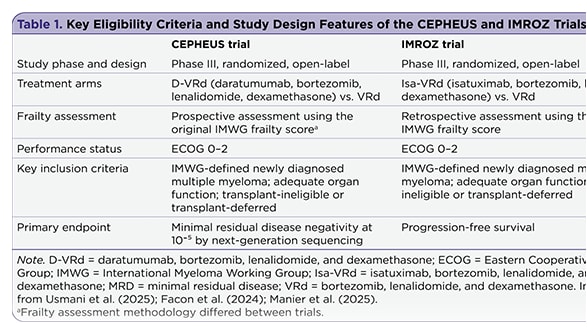
The management of newly diagnosed transplant-ineligible multiple myeloma remains challenging, in part due to the complexity of treatment decisions for frail patients. Recent subgroup analyses provide insight into whether quadruplet therapy may offer advantages over triplet therapy in this population.