Clinical Report: Fabry Disease Presenting as Coronary Artery Disease
Overview
This case study details a 60-year-old male with a 15-year history of exertional angina, initially misdiagnosed with coronary artery disease. Diagnostic imaging and genetic testing ultimately revealed Fabry disease, highlighting the importance of recognizing this condition in patients with unexplained cardiac symptoms.
Background
Fabry disease is a rare X-linked lysosomal storage disorder that can present with cardiac symptoms overlapping those of more common conditions like hypertrophic cardiomyopathy and coronary artery disease. The diagnostic delay often exceeds a decade, leading to significant morbidity due to irreversible organ damage. Awareness of Fabry disease as a potential diagnosis in adult patients with unexplained left ventricular hypertrophy is crucial for timely intervention.
Data Highlights
No numerical data or trial data presented in the article.
Key Findings
The patient experienced a 15-year delay in the diagnosis of Fabry disease, initially misdiagnosed with coronary artery disease.
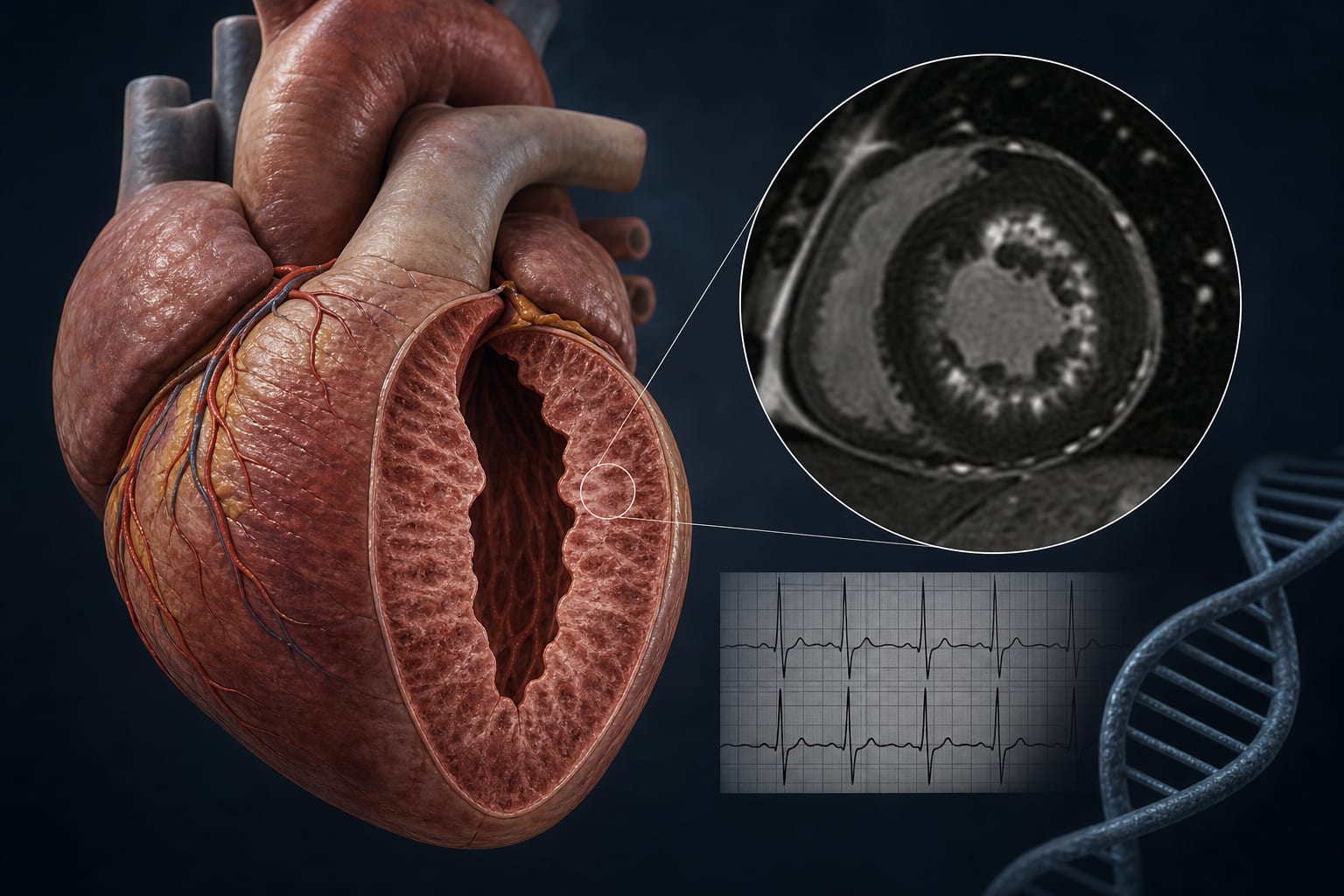
Cardiac magnetic resonance imaging revealed characteristic findings suggestive of Fabry disease.
Plasma α-galactosidase A activity was significantly decreased, confirming the diagnosis.
Genetic testing identified a pathogenic variant in the GLA gene.
Despite the diagnosis, enzyme replacement therapy was not initiated due to various reasons.
Multi-system involvement and imaging findings are critical for diagnosing Fabry disease in patients with cardiac symptoms.
Clinical Implications
Clinicians should maintain a high index of suspicion for Fabry disease in patients presenting with unexplained left ventricular hypertrophy and cardiac symptoms. A structured diagnostic approach, including imaging and genetic testing, is essential to reduce delays in diagnosis and initiate appropriate management.
Conclusion
This case underscores the importance of recognizing Fabry disease in the differential diagnosis of cardiac conditions, particularly in patients with prolonged unexplained symptoms. Early diagnosis and intervention can significantly alter disease progression and improve patient outcomes.