Clinical Report: Assessing Confidence Levels in Open-Globe Injury Management
Overview
Expand to include specific metrics for improvement and their clinical relevance.
Background
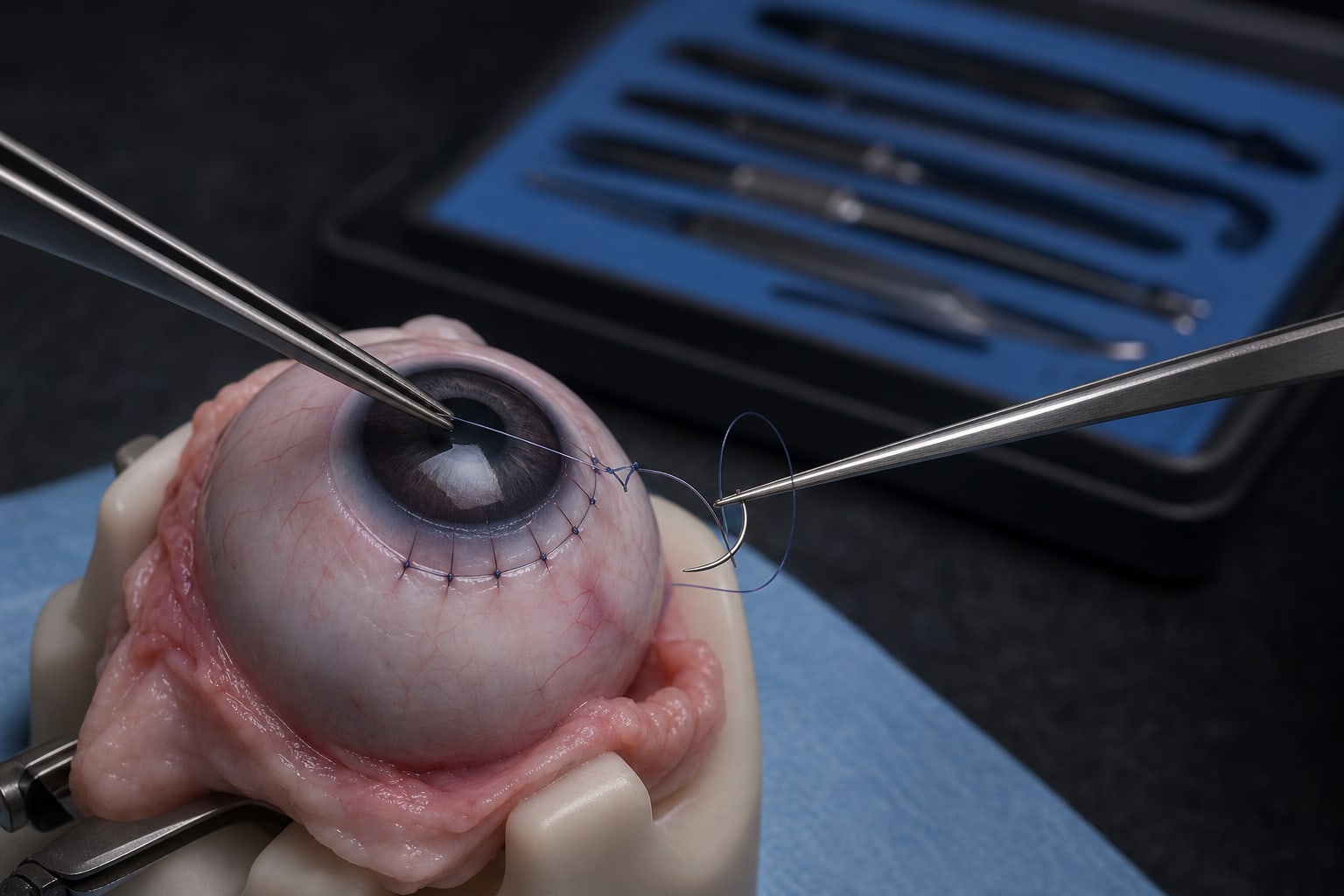
Open-globe injuries and endophthalmitis are critical ocular emergencies that can lead to severe visual impairment. Rapid and effective management is essential, as delayed treatment increases the risk of complications. Training ophthalmology residents in surgical skills is vital to ensure timely and competent care in these situations.
Data Highlights
Task
Confidence Before Training
Confidence After Training
Confidence 6 Months Later
Corneal Suturing
1 (IQR = 1)
7 (IQR = 3)
3 (IQR = 2)
Scleral Suturing
1 (IQR = 1)
7 (IQR = 2)
3 (IQR = 3)
Endophthalmitis Treatment
5 (IQR = 5)
8 (IQR = 4)
8 (IQR = 2)
Key Findings
Confidence in corneal suturing improved significantly from a median of 1 to 7 immediately after training.
Scleral suturing confidence also increased from a median of 1 to 7 post-training.
Confidence in managing endophthalmitis rose from a median of 5 to 8 immediately after the course.
Six months post-training, confidence levels in corneal and scleral suturing showed a decline but remained significantly higher than pre-training levels.
The training effectively addressed key elements of the ophthalmic surgeon's learning curve.
There remains potential for further enhancement of surgical skills among participants.
Clinical Implications
The findings suggest that wet-lab training can significantly enhance the confidence of ophthalmology residents in managing critical ocular emergencies. Ongoing training and skill development are essential to maintain and improve these competencies over time.
Conclusion
Wet-lab training is an effective method for increasing confidence in managing open-globe injuries and endophthalmitis among ophthalmology residents, with lasting benefits observed six months post-training.
Justin Schweitzer, OD, FAAO, and Jessica Steen, OD, FAAO, describe emerging technologies, treatment strategies, and clinical considerations that can help eyecare professionals (ECPs) identify glaucoma earlier and better manage progression.