Digital Health Technologies for Physical Activity-Based Dementia Prevention and Care: A Bibliometric Analysis of Web of Science and Scopus Publications
-
By
-
Fei Cheng
-
Linzi Jin
-
Qifeng Han
-
October 16, 2026
Clinical Report: Digital Health Technologies for Physical Activity-Based Dementia Prevention and Care
Overview
The article frames physical activity as a potentially important component of dementia risk reduction and care, and describes digital technologies used to monitor activity, deliver interventions, and support rehabilitation and ongoing management. The supplied article text introduces a bibliometric analysis of Web of Science and Scopus publications, but provides no methods, publication counts, or analysis results; therefore, specific bibliometric findings cannot be reported.
Background
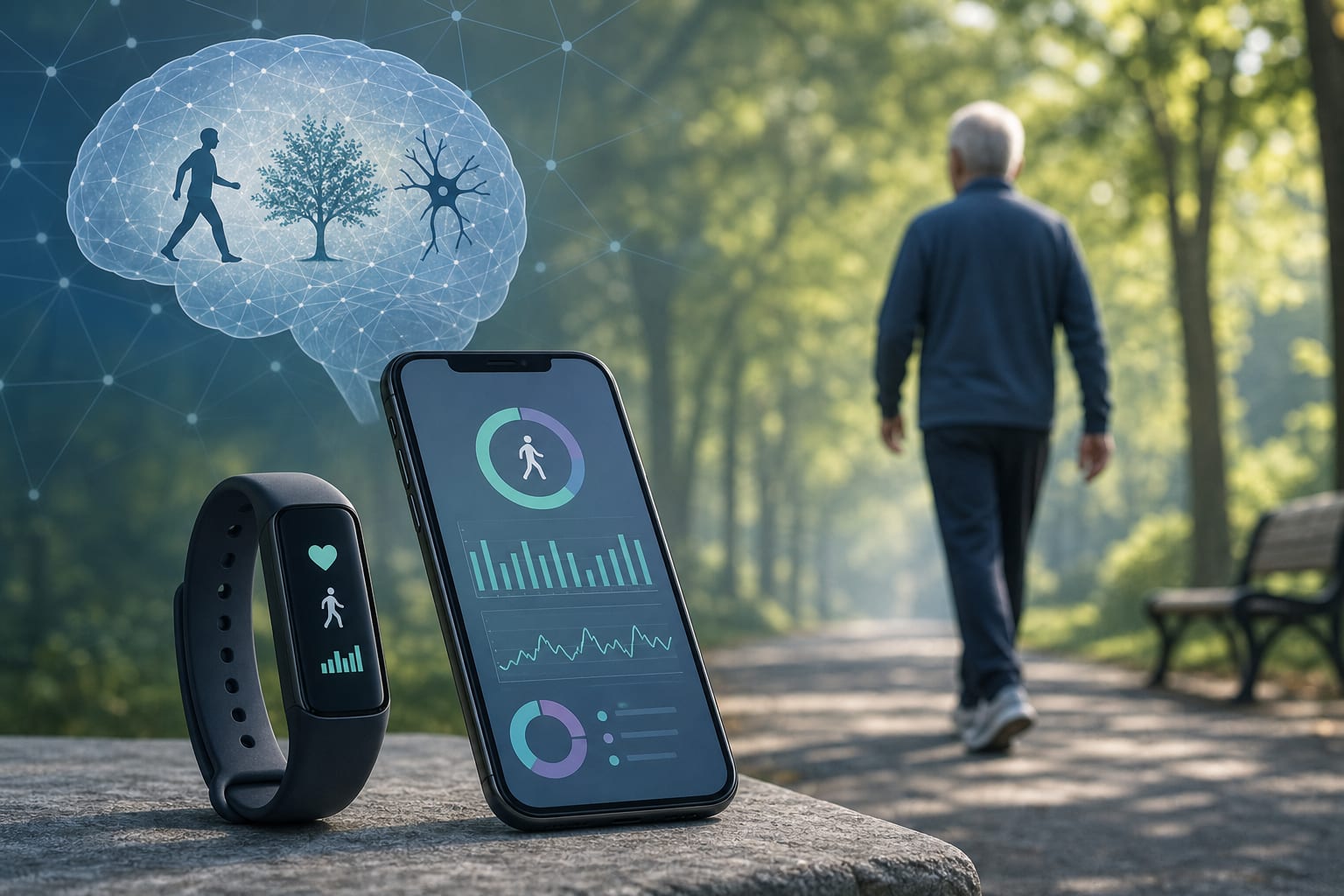
Dementia is a progressive syndrome associated with impaired cognition and daily functioning, and the World Health Organization estimated that 57 million people were living with dementia worldwide in 2021. The source identifies physical activity as a modifiable lifestyle factor relevant to dementia prevention and management, alongside diet, cardiovascular risk control, and cognitive and social engagement. It reports that WHO associates regular physical activity with an approximately 28%–32% lower risk of dementia. Digital health encompasses tools such as mobile applications, wearables, online programs, remote monitoring, virtual reality, and exergaming, which can support activity monitoring and intervention delivery.
Data Highlights
| Measure or context | Reported information | Source |
|---|---|---|
| People living with dementia worldwide | Approximately 57 million in 2021 | WHO estimate cited in the article introduction |
| New dementia cases | Nearly 10 million annually | WHO estimate cited in the article introduction |
| Alzheimer disease share of dementia cases | Approximately 60%–70% | Article introduction |
| Association of regular physical activity with dementia risk | Approximately 28%–32% lower risk | WHO information cited in the article introduction |
| Bibliometric analysis results | Not provided in the supplied article text | Article material supplied for this report |
Key Findings
- The article describes dementia as a major public health challenge and notes its effects on cognition, independence, caregivers, and health and social support systems.
- Physical activity is presented as a lifestyle intervention relevant to dementia primary prevention, early intervention, and long-term management; the article cites a WHO-reported association with approximately 28%–32% lower dementia risk.
- Digital tools identified in the article include activity trackers, wearables, mobile health applications, online intervention platforms, and remote monitoring systems.
- The article also identifies interactive and technology-supported approaches, including virtual reality, augmented reality, exergaming, serious games, digital therapeutics, and assistive technologies.
- The related bibliometric analysis of technology-enabled physical activity interventions describes uncertainty about how platform types have developed and been adopted in clinical versus non-clinical populations.
- The supplied material does not include the focal article’s bibliometric methods or results, so trends, leading contributors, and publication patterns cannot be specified.
Clinical Implications
The source describes digital technologies as tools for physical activity monitoring, behavioral support, intervention delivery, rehabilitation, and ongoing management, but does not provide comparative effectiveness findings for particular platforms. The supplied material therefore supports describing these applications, but not recommending a specific technology or inferring clinical benefit beyond the associations and context explicitly reported.
Conclusion
The article situates digital health technologies within physical activity-based approaches to dementia prevention and care. Because the supplied text does not report the bibliometric analysis results, conclusions about the field’s publication trends or research priorities cannot be drawn from this material.
Related Resources & Content
- World Health Organization, Risk reduction of cognitive decline and dementia: WHO guidelines, second edition, 2026
- Frontiers in Digital Health, The past, present and future use of technology-enabled physical activity interventions in clinical and non-clinical populations: a bibliometric trend analysis across four decades, 2026
- Livingston et al., The Lancet, Dementia prevention, intervention, and care: 2024 report of the Lancet standing Commission, 2024
- National Institute for Health and Care Excellence, Dementia: assessment, management and support for people living with dementia and their carers, NG97
- Journal of Medical Internet Research (JMIR) — Digital Exercise Programs and Their Impact on Cognitive Abilities in Elderly Populations: A Systematic Review and Bayesian Network Meta-Analysis of Randomized Trials
- Journal of Medical Internet Research (JMIR) — Effects of Multicomponent Digital Health Interventions on Multidimensional Physical Activity in Older Adults: Systematic Review, Meta-Analysis, and Meta-Regression of Randomized Controlled Trials
- npj Digital Medicine — Collaborative Design with Frail Residents of Nursing Homes to Enhance a VR-Based Physio-Cognitive Intervention through Gamification
- Risk reduction of cognitive decline and dementia: WHO guidelines, second edition
- Dementia prevention, intervention, and care: 2024 report of the Lancet standing Commission
- NICE Guideline NG97: Dementia—assessment, management and support
- Risk reduction of cognitive decline and dementia: WHO guidelines, second edition
- A 2 year multidomain intervention of diet, exercise, cognitive training, and vascular risk monitoring versus control to prevent cognitive decline in at-risk elderly people (FINGER): a randomised controlled trial - ScienceDirect
- Effects of exercise versus usual care on older adults with amnestic mild cognitive impairment: EXERT versus ADNI - PMC
- Effects of Exercise Alone or Combined With Cognitive Training and Vitamin D Supplementation to Improve Cognition in Adults With Mild Cognitive Impairment: A Randomized Clinical Trial | Geriatrics | JAMA Network Open | JAMA Network
- An online multidomain lifestyle intervention to prevent cognitive decline in at-risk older adults: a randomized controlled trial | Nature Medicine
- Exergaming for dementia and mild cognitive impairment - PMC
- Effects of digital technology-based serious games interventions for older adults with mild cognitive impairment: a meta-analysis of randomised controlled trials | Age and Ageing | Oxford Academic
- The Alzheimer's Association clinical practice guideline for the Diagnostic Evaluation, Testing, Counseling, and Disclosure of Suspected Alzheimer's Disease and Related Disorders (DETeCD‐ADRD): Executive summary of recommendations for specialty care - Dickerson - 2025 - Alzheimer's & Dementia - Wiley Online Library
Based on findings from:
Application of digital health technologies in physical activity-based dementia prevention and management: A bibliometric analysis based on web of science core collection and scopus
Fei Cheng, Linzi Jin, Qifeng Han. Digital Health, 2026.
https://journals.sagepub.com/doi/abs/10.1177/20552076261497820
This content is an AI-generated, fully rewritten summary based on a published scholarly article. It does not reproduce the original text and is not a substitute for the original publication. Readers are encouraged to consult the source for full context, data, and methodology.