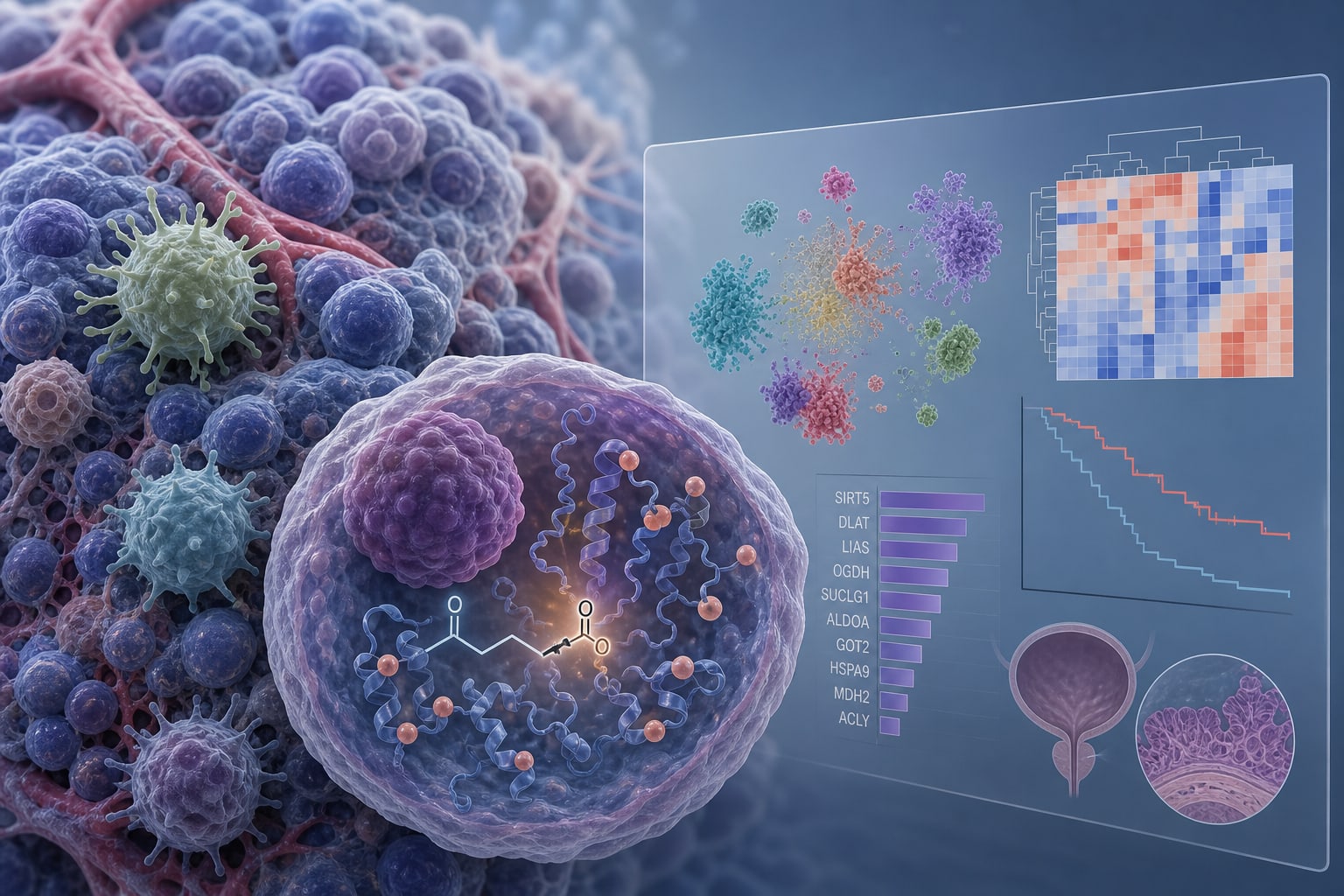
Clinical Report: Discovery of Genes Associated with Succinylation in Bladder Cancer
Overview
This study identifies prognostic succinylation-related genes (SRGs) in bladder cancer (BLCA) and develops a risk model that predicts patient outcomes. Key genes KCTD16, CD3D, and GSDMB were linked to immune evasion and tumor microenvironment dynamics.
Background
Bladder cancer is a prevalent malignancy with a high burden, especially in males, and is associated with significant morbidity and mortality. Identifying reliable prognostic biomarkers is crucial for improving individualized therapy and clinical outcomes. The role of succinylation in tumor progression, particularly in BLCA, has not been thoroughly explored, necessitating further investigation.
Data Highlights
Gene
Expression Change
Significance
GSDMB
Upregulated
p < 0.05
KCTD16
Downregulated
p < 0.05
CD3D
Downregulated
p < 0.05
Key Findings
KCTD16, CD3D, and GSDMB are identified as prognostic genes in BLCA.
The developed risk model shows robust predictive accuracy (AUC > 0.7).
High-risk groups exhibit enhanced immune evasion with a higher TIDE score (p < 0.001).
Single-cell analysis highlights epithelial cells as key subpopulations in the tumor microenvironment.
Knockdown of GSDMB and KCTD16 promotes T24 cell proliferation, indicating their tumor-suppressive roles.
Clinical Implications
The identified SRGs can serve as potential biomarkers for predicting outcomes in BLCA, aiding in the development of personalized treatment strategies. Understanding the role of these genes in immune evasion and tumor microenvironment dynamics may inform therapeutic interventions.
Conclusion
The study underscores the importance of succinylation-related genes in bladder cancer prognosis and their potential as therapeutic targets. Further research is warranted to validate these findings and explore their clinical applications.