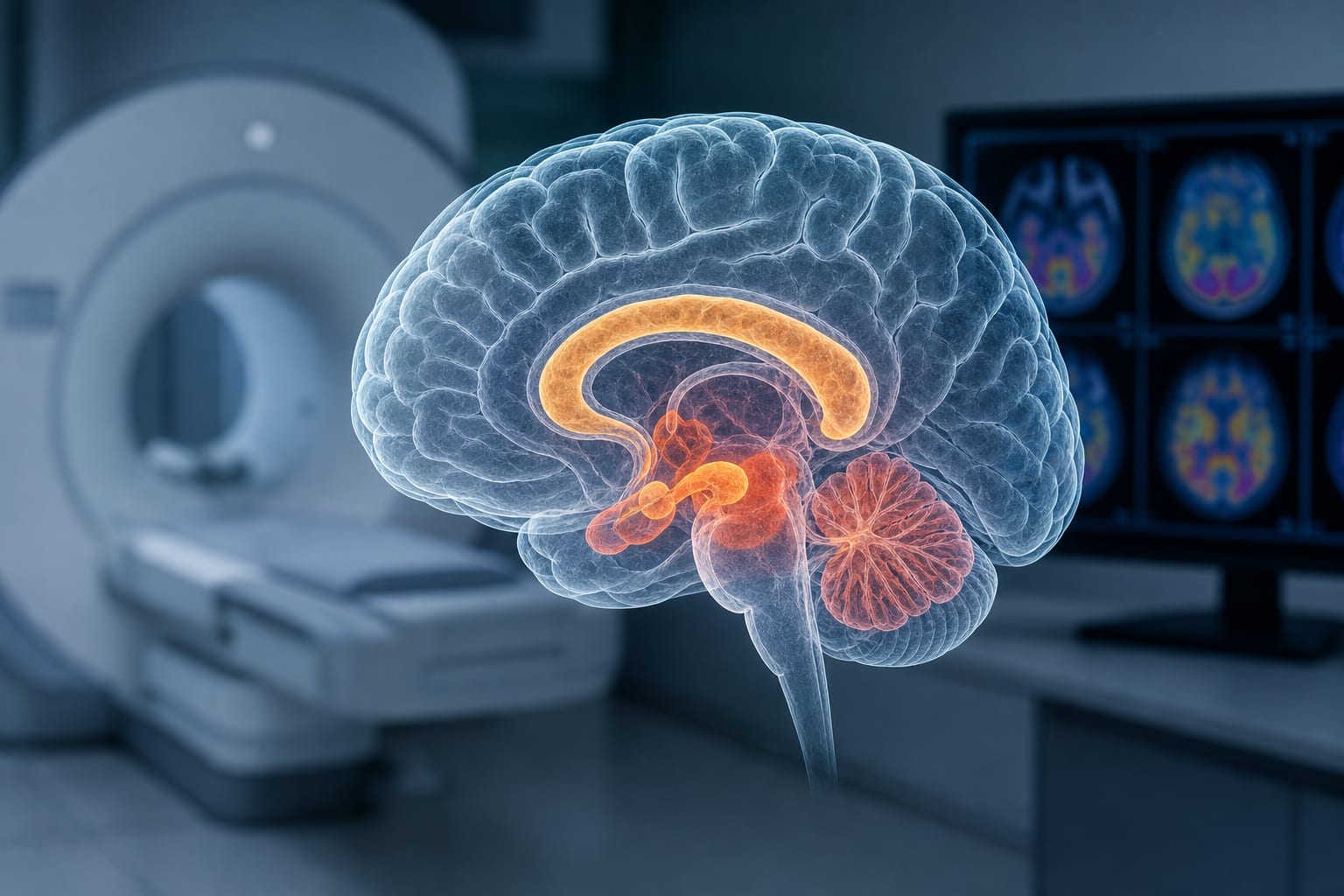
Clinical Report: AETA Peptide's Role in Synaptic Dysfunction Associated with Alzheimer’s Disease
Overview
This report highlights the role of AETA peptides in synaptic dysfunction linked to Alzheimer's disease (AD). AETA levels are elevated in AD patient brains, contributing to synaptic pathology and cognitive decline, particularly in female mice.
Background
Alzheimer’s disease is the most common form of dementia, characterized by progressive cognitive decline and memory impairment. The pathological features of AD include amyloid-β plaques and neurofibrillary tangles, but synaptic dysfunction is a critical early event that correlates strongly with cognitive deterioration. Understanding the molecular mechanisms underlying synaptic impairment is essential for developing targeted therapies.
Data Highlights
No numerical data or trial data was provided in the source material.
Key Findings
AETA peptides are produced from the amyloid precursor protein (APP) through a novel η-secretase pathway.
AETA has been shown to impair long-term potentiation (LTP) at CA3-CA1 synapses and suppress hippocampal calcium dynamics.
AETA partially inhibits the ionotropic activity of NMDA receptors, leading to reduced synaptic strength.
Increased AETA levels in human AD brains correlate with synaptic dysfunction and cognitive decline.
Mimicking elevated AETA in rodent models produces AD-like synaptic and memory deficits, particularly in female mice.
Clinical Implications
The findings suggest that AETA may serve as a critical mediator of synaptic pathology in Alzheimer's disease, highlighting its potential as a therapeutic target. Clinicians should consider the role of synaptic dysfunction in AD progression and the implications of AETA in treatment strategies.
Conclusion
AETA peptides play a significant role in synaptic dysfunction associated with Alzheimer's disease, presenting a novel target for therapeutic intervention. Further research is warranted to explore the therapeutic potential of modulating AETA levels in AD.
by Jade Dunot, Carine Gandin, Marin Truchi, Giulia Pirro, Sébastien Moreno, Agathe Launay, Benjamin Azoulay, Hugo Landra, Sandy Ma Yishan, Luc Buée, Kevin Lebrigand, Paula A. Pousinha, David Blum, Bernard Mari, Ingrid Bethus, Michael Willem, Hélène Marie