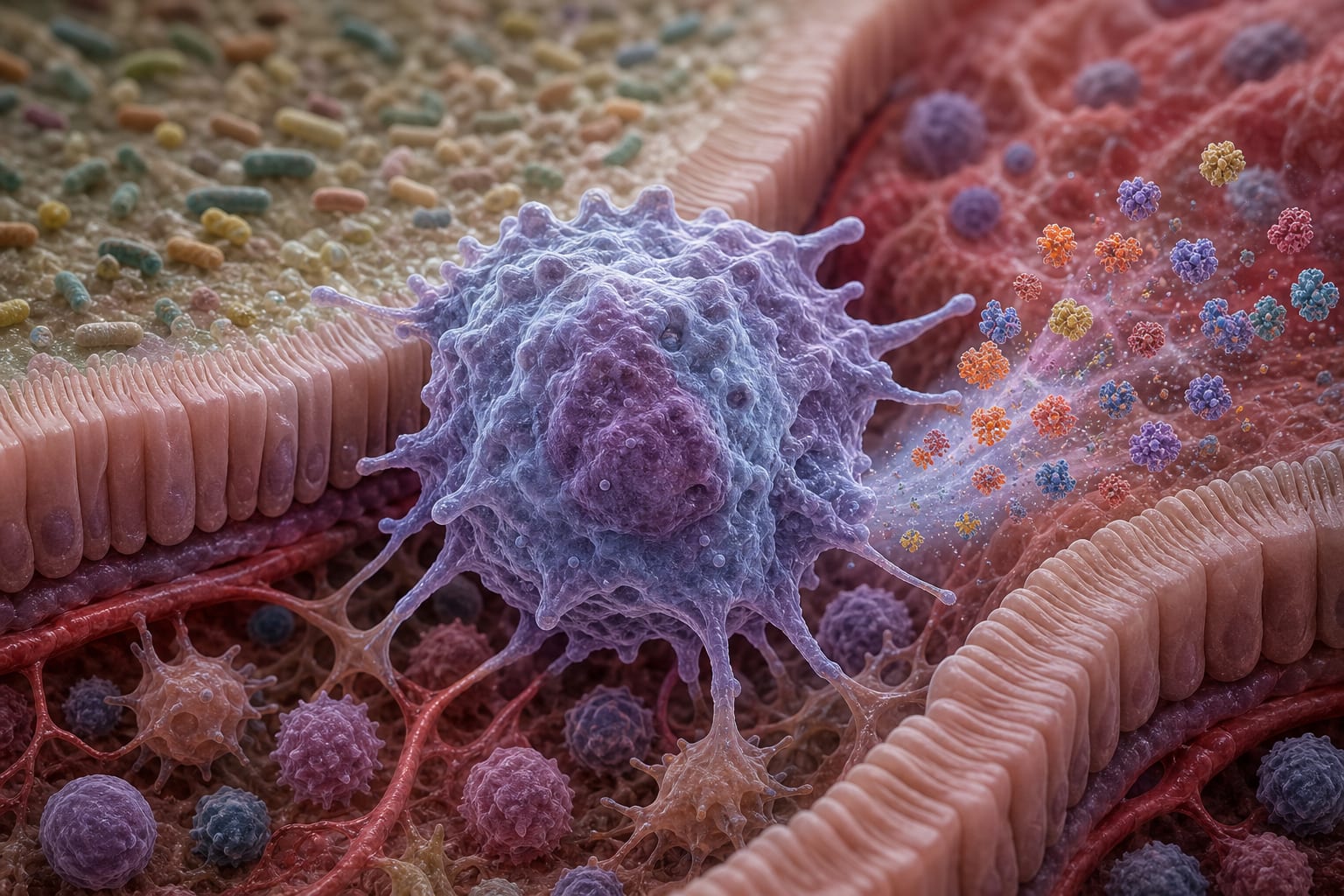
Clinical Report: Dysregulation of Macrophages in Inflammatory Bowel Disease
Overview
This report highlights the critical role of macrophage dysregulation in inflammatory bowel disease (IBD), emphasizing their transformation into pathogenic states that exacerbate inflammation and tissue injury. Current therapeutic strategies targeting macrophage behavior are discussed, alongside the challenges faced in clinical application.
Background
Inflammatory bowel disease, encompassing Crohn's disease and ulcerative colitis, is characterized by chronic mucosal inflammation and is influenced by a complex interplay of genetic, immune, and environmental factors. Macrophages play a pivotal role in maintaining intestinal homeostasis, but their dysregulation contributes significantly to the pathogenesis of IBD. Understanding these mechanisms is essential for developing effective, targeted therapies.
Data Highlights
No specific numerical data or trial results were provided in the source material.
Key Findings
Macrophages in IBD exhibit heterogeneous pathogenic states due to excessive monocyte recruitment and failed differentiation.
Inflamed intestinal mucosa shows distinct macrophage subsets linked to disease severity and mucosal injury.
Pathogenic macrophage states amplify cytokine production and impair epithelial barrier function.
Current therapeutic approaches include targeted nanomedicine and metabolic reprogramming aimed at restoring macrophage function.
Challenges in therapy include lesion heterogeneity and the need for human validation of macrophage-targeted strategies.
Clinical Implications
Clinicians should consider the role of macrophage dysregulation in IBD when developing treatment plans. Mechanism-based therapies targeting macrophage behavior may offer new avenues for improving patient outcomes, particularly in cases of refractory disease.
Conclusion
A deeper understanding of macrophage dysregulation in IBD is crucial for advancing therapeutic strategies. Continued research into macrophage-targeted interventions may lead to more effective, personalized treatment options for patients with IBD.