Construction and evaluation of machine learning models for postoperative prognosis prediction of biliary tract malignancies - Report - MDSpire
Coming Soon: Introducing MDSpire News. Learn more
Conexiant’s news site is now MDSpire News. Learn more

Development and assessment of machine learning algorithms for predicting postoperative outcomes in biliary tract cancers

  • By

  • Ji Li

  • Wei Zhao

  • Qi He

  • Jiangyan Che

  • Chengyou Du

  • September 15, 2026

Share

Clinical Report: Development and assessment of machine learning algorithms for predicting postoperative outcomes in biliary tract cancers

Overview

This study developed a machine learning model to predict postoperative outcomes in biliary tract cancer patients using data from the SEER database and a medical center. Key independent prognostic factors were identified.

Background

Biliary tract malignancies are aggressive tumors with poor prognosis, often diagnosed at advanced stages. The lack of effective screening and treatment options is noted.

Data Highlights

Data SourcePatients
SEER Database6,951
Medical Center245

Key Findings

  • Independent risk factors for overall survival included age, sex, marital status, tumor site, tumor differentiation, AJCC stage, regional nodes examined, regional nodes positive, and LN surgery scope.
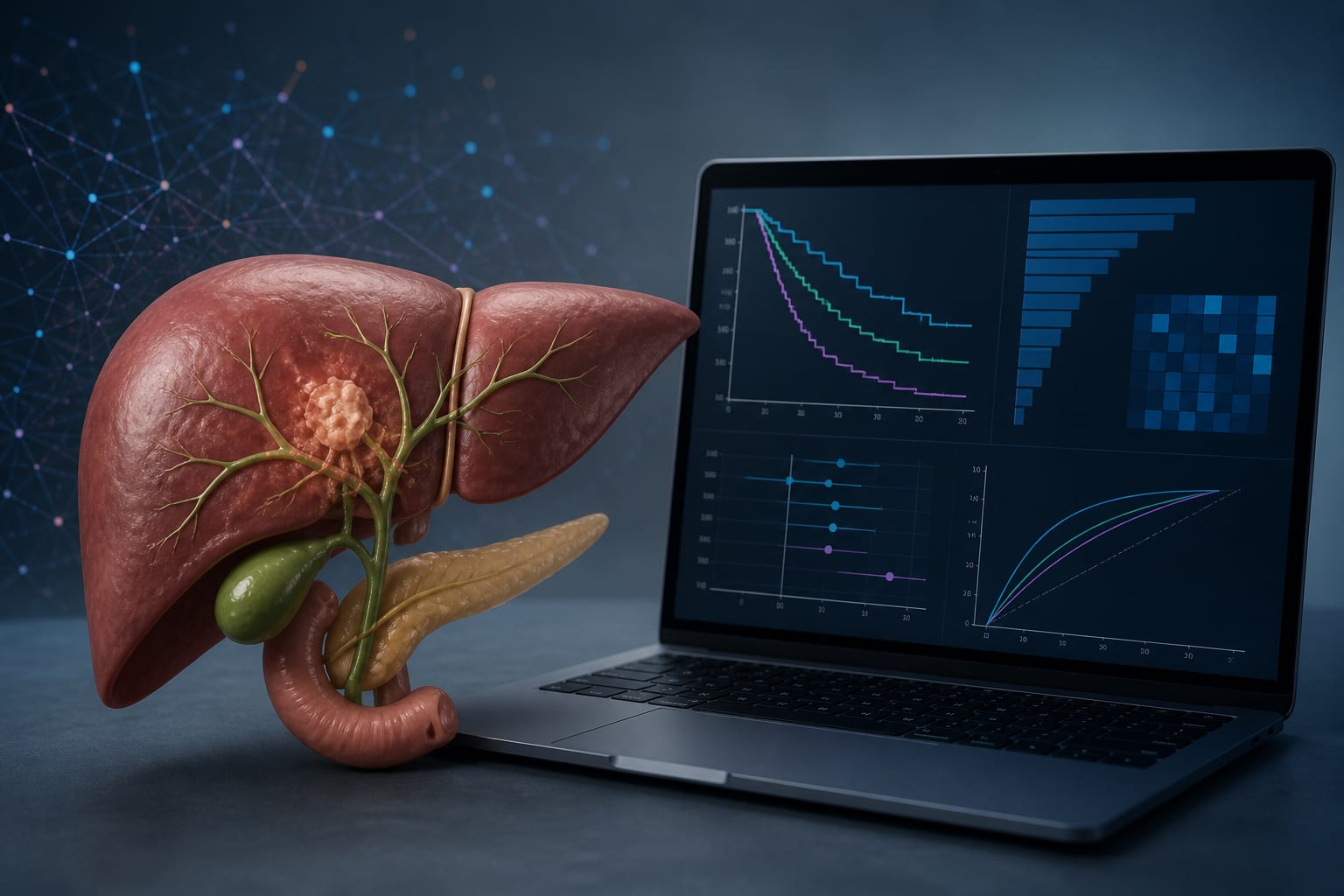
  • The random forest model achieved good AUC values across different datasets.
  • Calibration curves and decision curve analysis indicated strong performance of the random forest model.
  • SHAP analysis identified regional nodes positive, AJCC stage, tumor site, and age as crucial variables in survival analysis.
  • Chemotherapy was associated with improved overall survival in patients with positive lymph nodes in both training and test cohorts.

Clinical Implications

Understanding the identified prognostic factors can guide treatment planning.

Conclusion

The study presents a machine learning model that predicts postoperative prognosis in biliary tract malignancies.

Related Resources & Content

  1. Biliary Tract Cancers, Version 2.2025, NCCN Clinical Practice Guidelines In Oncology - PubMed
  2. Durvalumab or placebo plus gemcitabine and cisplatin in participants with advanced biliary tract cancer (TOPAZ-1): updated overall survival from a randomised phase 3 study - PubMed
  3. Obesity Surgery — The Role of Artificial Intelligence in Bariatric Surgery: Present Insights and Future Directions
  4. Evaluating Machine Learning Techniques for Forecasting Surgical Outcomes Following Colorectal Procedures: A Comprehensive Review
  5. Frontiers in Oncology — Development and validation of a machine learning-based predictive model for early outcomes following combined suction-assisted lipectomy and lymphovenous anastomosis in breast cancer-related lymphedema: a retrospective cohort study
  6. asco ai in oncology — Machine Learning Model Predicts Bladder Cancer Recurrence After Surgery
  7. Biliary Tract Cancers, Version 2.2025, NCCN Clinical Practice Guidelines In Oncology - PubMed
  8. Durvalumab or placebo plus gemcitabine and cisplatin in participants with advanced biliary tract cancer (TOPAZ-1): updated overall survival from a randomised phase 3 study - PubMed
  9. British Society of Gastroenterology guidelines for the diagnosis and management of cholangiocarcinoma - PMC

Original Source(s)

Related Content