Clinical Report: Inhibiting the ISG15+STAT1+ Monocyte-Driven Inflammatory Response
Overview
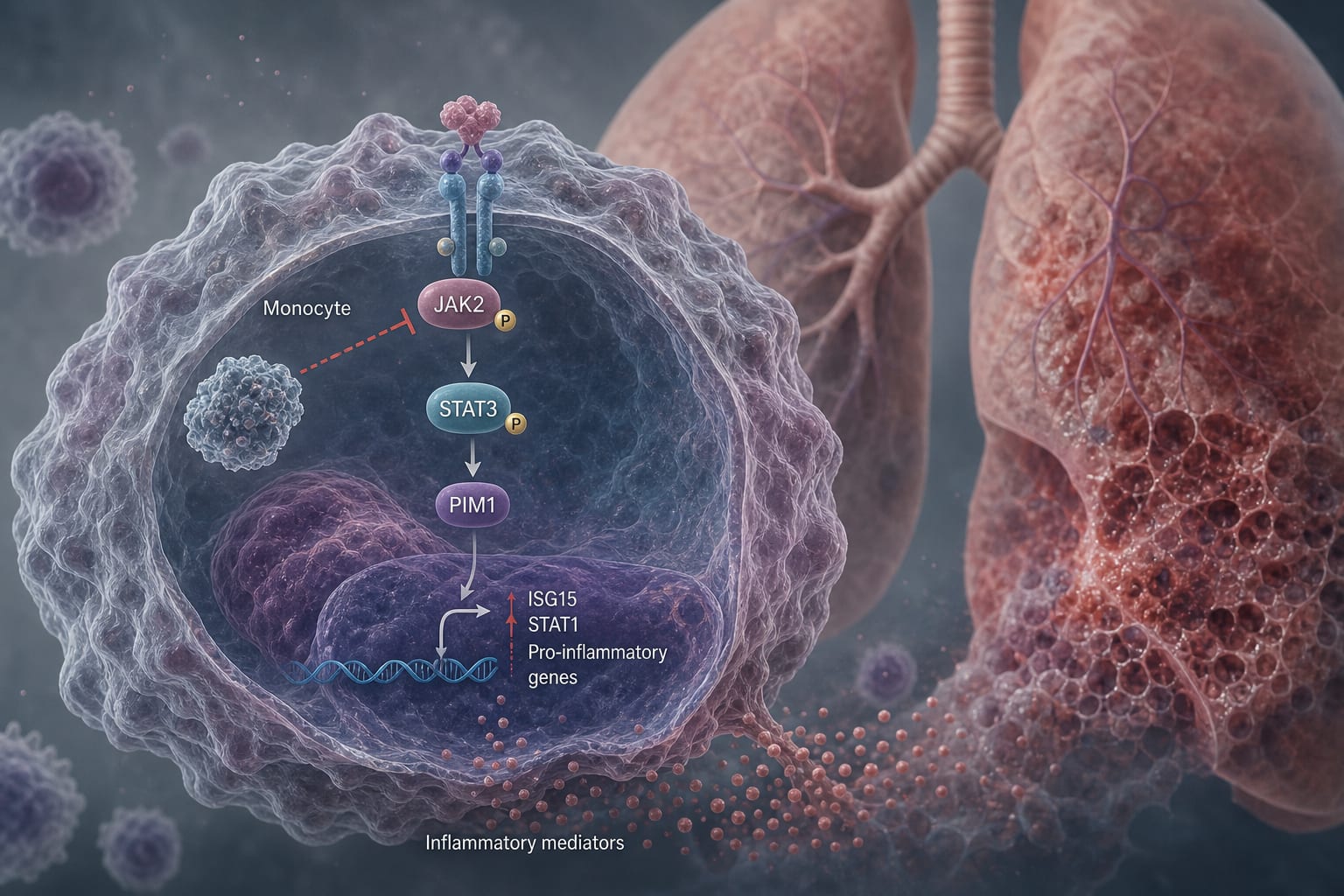
This study identifies the JAK2/STAT3/PIM1 signaling axis as a key driver of traumatic lung injury (TLI) and highlights the role of ISG15+STAT1+ monocytes in mediating inflammatory responses following trauma.
Background
Traumatic lung injury (TLI) is a significant cause of morbidity and mortality, often leading to acute respiratory distress syndrome (ARDS), which has a high mortality rate. Understanding the immune mechanisms underlying TLI is crucial for developing targeted therapies. The study focuses on specific immune cell drivers and potential therapeutic targets to improve outcomes in TLI patients.
Data Highlights
No numerical data provided in the source material.
Key Findings
Classical monocytes showed the greatest disturbance following trauma.
The ISG15+STAT1+ monocyte subpopulation expanded post-trauma, driving an inflammatory response.
PIM1 was identified as a core pathogenic gene co-upregulated in both peripheral blood and lung tissue.
Elevated PIM1 expression was confirmed as a causal risk factor for ARDS.
The JAK2/STAT3/PIM1 pathway is activated during the acute trauma phase.
Fedratinib effectively inhibits M1 polarization and inflammatory gene expression in vitro.
Clinical Implications
The identification of the JAK2/STAT3/PIM1 signaling axis as a therapeutic target is presented.
Conclusion
The study identifies the JAK2/STAT3/PIM1 signaling axis within the ISG15+STAT1+ monocyte subpopulation as a key driver of TLI.