Integrative Host-Response Framework for Early Gastric Neoplasia
Overview
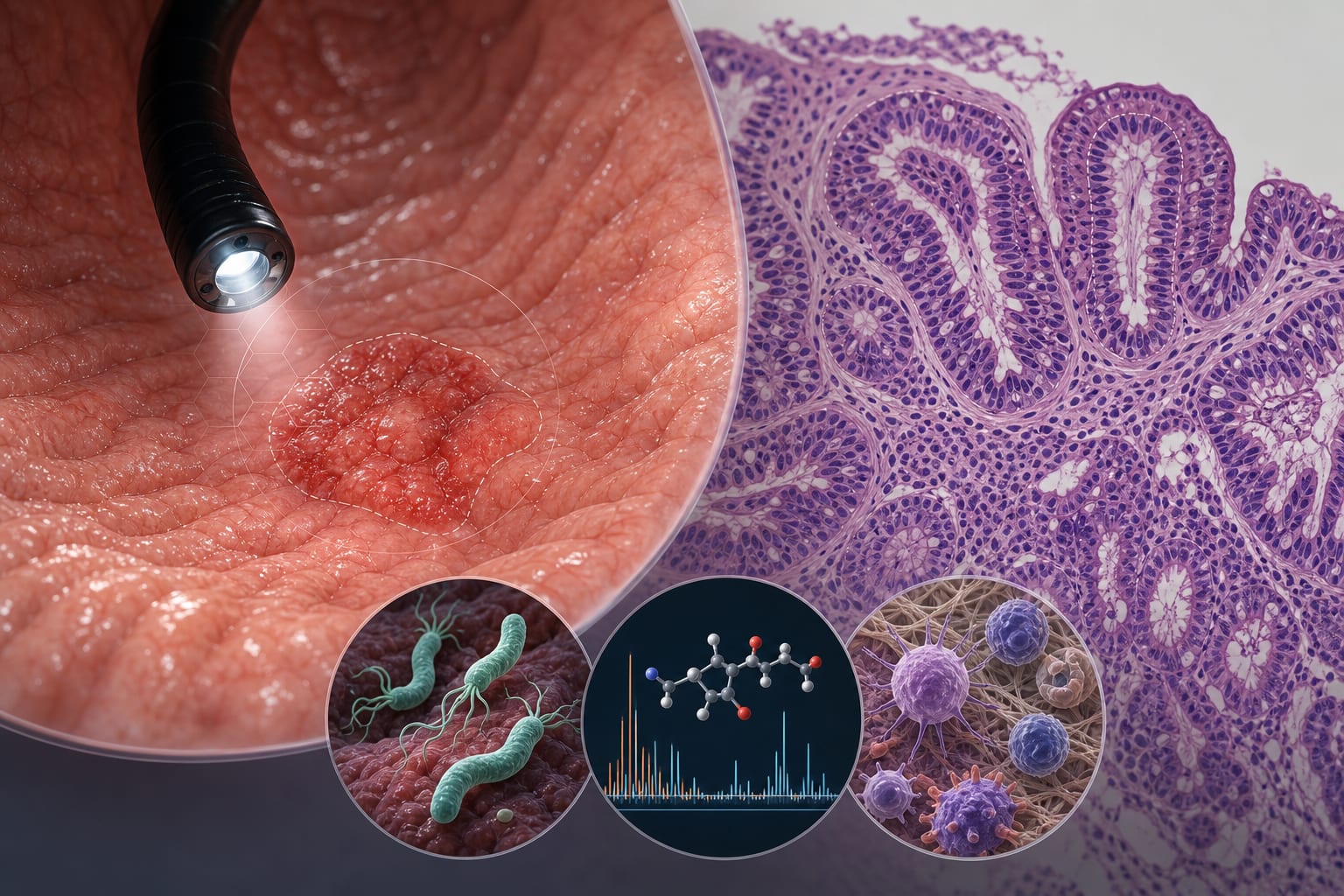
This review proposes a comprehensive framework for understanding early gastric neoplasia by integrating endoscopic, histopathological, and host-response factors.
Background
Early gastric neoplasia is a critical phase in gastric carcinogenesis, where timely detection and intervention can lead to curative outcomes. However, the biological heterogeneity of these lesions complicates diagnosis and treatment.
Data Highlights
No numerical or trial data provided in the source material.
Key Findings
The proposed framework includes three layers: lesion, field, and host-response.
The lesion layer focuses on morphological and microscopic features of neoplastic disease.
The field layer assesses background mucosal risk factors such as H. pylori status and intestinal metaplasia.
The host-response layer incorporates inflammatory, immune, and metabolic variables.
Integration of these layers may enhance surveillance and prevention strategies for early gastric neoplasia.
Future research should focus on multicenter validation and standardized methodologies.
Clinical Implications
Clinicians should consider a comprehensive approach that includes not only the lesion characteristics but also the mucosal field and host responses when evaluating early gastric neoplasia.
Conclusion
The integration of optical, histological, and host-response data is essential for advancing the understanding and treatment of early gastric neoplasia.
Harold Burstein, MD, PhD, and Erica Mayer, MD, MPH discuss results from the SERENA-6 trial, which were presented at the 2026 ESMO Breast Cancer Congress.