Clinical Report: C2 Laminar Screw Fixation Technique for the Cranio-Cervical Junction
Overview
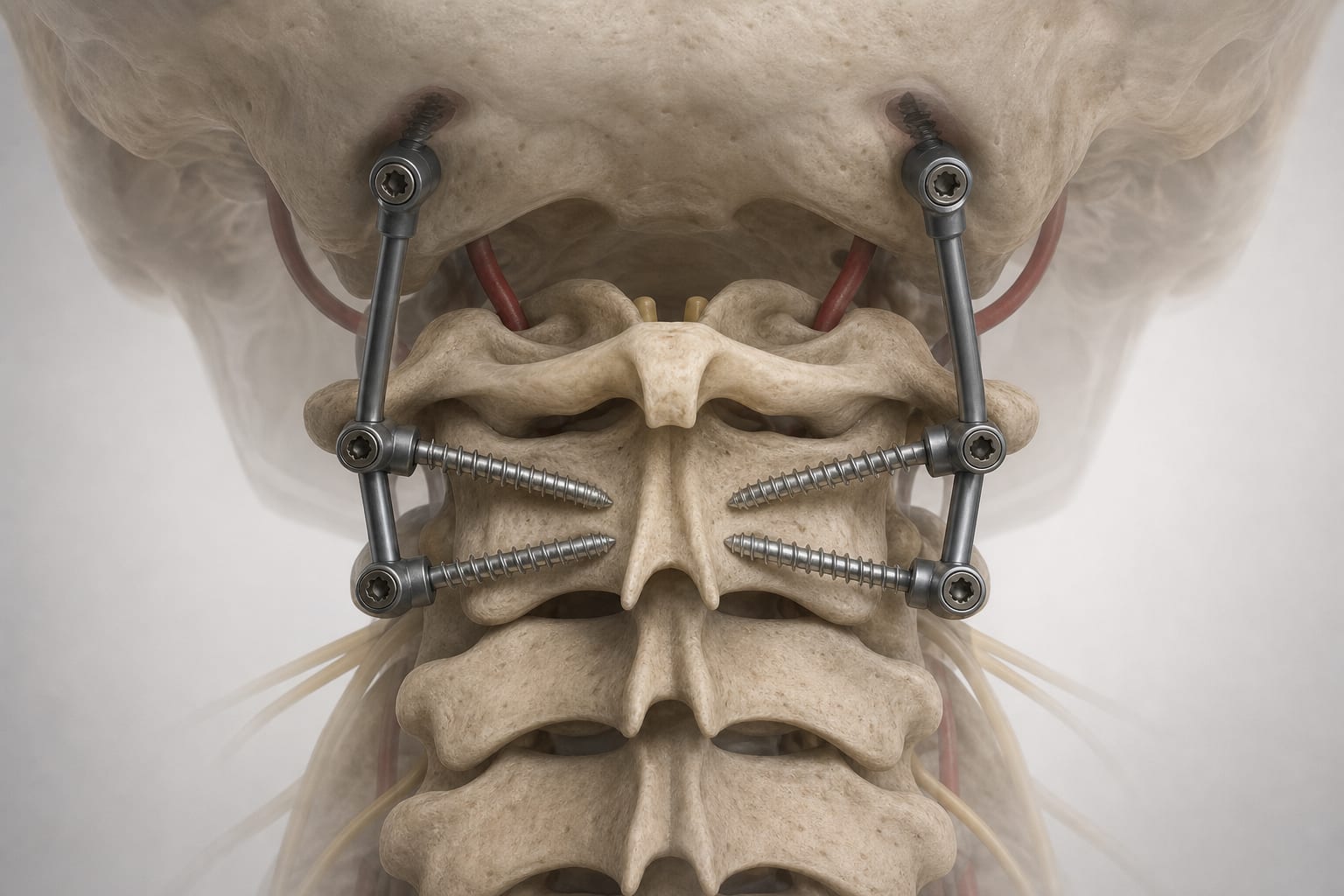
The C2 laminar screw fixation technique offers a viable alternative for treating atlantoaxial dislocation, particularly in patients with anatomical variations that complicate traditional screw placement. This method minimizes the risk of vertebral artery injury and enhances surgical visualization.
Background
Atlantoaxial dislocation is a prevalent condition of the upper cervical spine that often necessitates surgical intervention. Traditional fixation methods can be challenging due to anatomical variations, which increases the risk of complications. The C2 laminar screw technique represents an evolution in surgical approaches, aiming to improve safety and efficacy in complex cases.
Data Highlights
No numerical data provided in the source material.
Key Findings
The C2 laminar screw technique reduces the risk of vertebral artery injury during surgery.
This method allows for better visualization of screw placement compared to traditional techniques.
Misalignment of screw heads can complicate rod connection, necessitating specialized connectors.
The technique is particularly beneficial for patients with anatomical variations in the atlas and axis.
Robust C1 fixation combined with laminar screws achieves high fusion rates with low complication rates.
Clinical Implications
Surgeons should consider the C2 laminar screw fixation technique for patients with atlantoaxial dislocation, especially when anatomical variations pose risks with traditional methods. This approach may enhance surgical outcomes and reduce complications associated with vertebral artery injuries.
Conclusion
The C2 laminar screw fixation technique presents a promising alternative for managing atlantoaxial dislocation, addressing the challenges posed by anatomical variations and improving patient safety during surgical procedures.