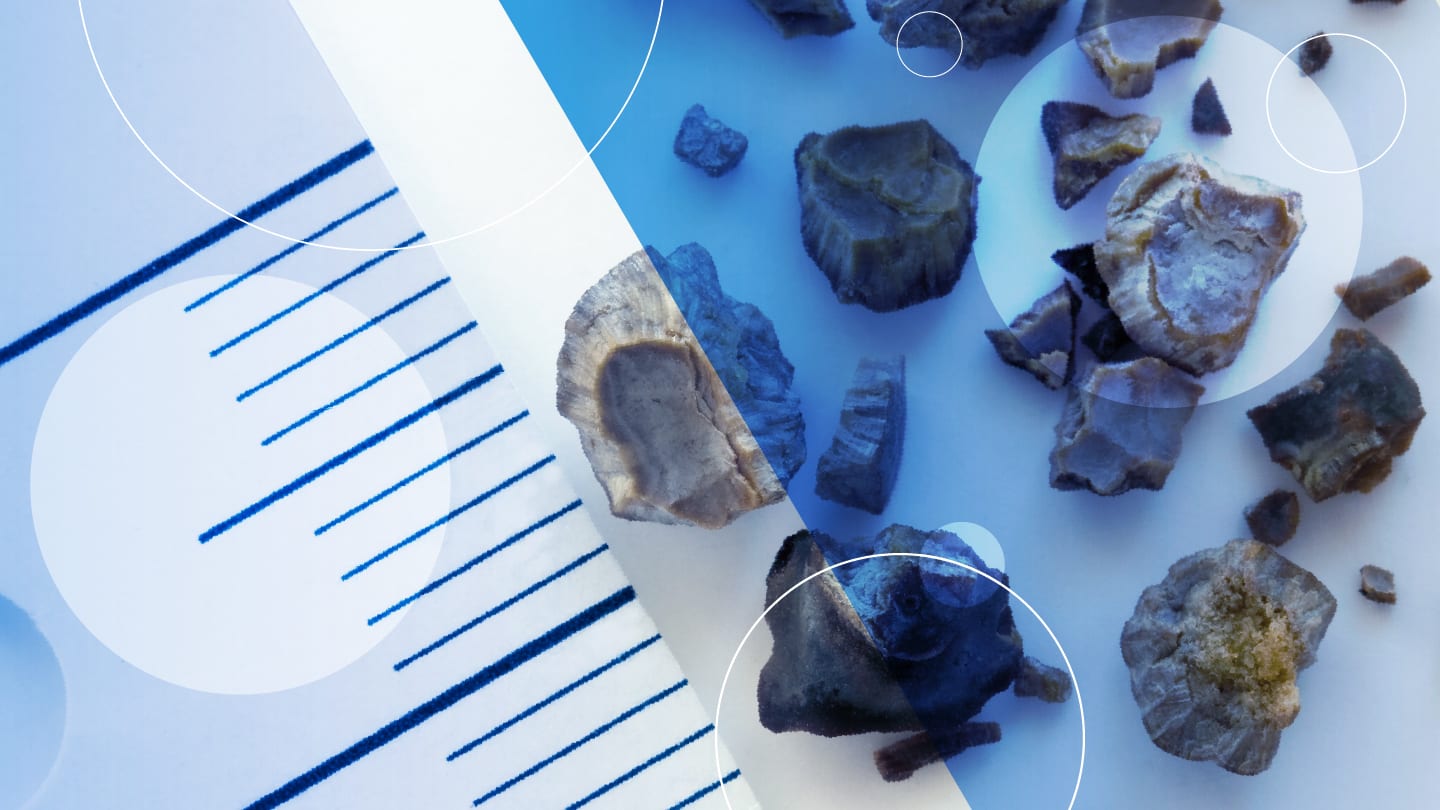
Clinical Report: AI Improves Kidney Stone Identification
Overview
A Mayo Clinic-developed AI model predicted kidney stone composition with 73% accuracy in an independent dataset, compared with 33% for urinary supersaturation calculations alone. The researchers state that the model may provide additional information when a stone is unavailable for direct analysis, but should supplement—not replace—direct stone analysis and established clinical assessment.
Background
Kidney stones affect approximately 1 in 11 Americans during their lifetime, and recurrence is frequent. Identifying stone composition is important to long-term management, but stones are not always recovered for laboratory analysis. Clinicians may then estimate composition using laboratory measurements and other clinical information. Urinary supersaturation is routinely used to assess crystal-formation tendency, but the source reports that these calculations alone provide limited information about the composition of an existing stone.
Data Highlights
| Measure | Finding |
|---|---|
| Model development cohort | 13,000 patients with stone analysis and 24-hour urine testing within 90 days, September 2015–March 2024 |
| Independent evaluation dataset | 1,653 patients |
| AI model accuracy | 73% |
| Urinary supersaturation calculation accuracy | 33% |
| Predicted categories | Predominantly calcium oxalate, predominantly calcium phosphate, uric acid, and other compositions |
Key Findings
- The model combined patient age, sex, and urinary measurements to predict four stone-composition categories.
- In the independent dataset, the model correctly classified 73% of stones, versus 33% with urinary supersaturation calculations alone; the difference was statistically significant.
- The model maintained superior performance across different age and sex groups.
- Direct laboratory analysis remains the most reliable method for establishing stone composition, according to the article.
- The researchers emphasize that AI predictions should supplement, not replace, direct stone analysis and established clinical assessments.
- The article states that further evaluation of clinical implementation is needed to determine whether predictions improve treatment decisions and reduce recurrence.
Clinical Implications
When a stone is unavailable for direct analysis, the model may offer additional diagnostic information from patient characteristics and urine tests already collected in routine care. The researchers caution that its predictions are supplementary and that further evaluation is needed to establish effects on treatment decisions and recurrence.
Conclusion
In an independent evaluation, the AI model outperformed urinary supersaturation calculations alone for predicting kidney stone composition. Its role in clinical implementation remains to be evaluated, and it is not presented as a replacement for direct stone analysis.
Related Resources & Content
- Mayo Clinic Proceedings, Year not provided — A Validated Artificial Intelligence Model Versus Urinary Supersaturation Alone for Predicting Kidney Stone Composition
- European Association of Urology, 2026 — EAU Guidelines on Urolithiasis: Analysis of stone composition
- American Urological Association, 2026 — Medical Management of Kidney Stones: AUA Guideline, Part I
- American Urological Association, 2026 — Medical Management of Kidney Stones: AUA Guideline, Part II
- MDSpire News — AI Aids Rapid Kidney Stone Detection
- npj Digital Medicine — Clinical validation of an AI-assisted system for real-time kidney stone detection during flexible ureteroscopic surgery
- World Journal of Urology — Methodology of peri-operative imaging data reporting for stone disease: a systematic review toward the development of a novel checklist—iSTAR
- ASCO Publications — Using automated machine learning to detect kidney anomalies.
- AI Aids Rapid Kidney Stone Detection
- Clinical validation of an AI-assisted system for real-time kidney stone detection during flexible ureteroscopic surgery
- Methodology of peri-operative imaging data reporting for stone disease: a systematic review toward the development of a novel checklist—iSTAR
- 3.3.2.b **Analysis of stone composition**
- Guidelines - EAU Guidelines on Urolithiasis - Uroweb
- Medical Management of Kidney Stones: AUA Guideline (2026) Part I: Evaluation of Patients With Kidney Stones and Dietary Management of Patients With Calcium Stones
- Medical Management of Kidney Stones: AUA Guideline (2026) Part II: Treatment and Follow-up of Kidney Stones
- A Validated Artificial Intelligence Model Versus Urinary Supersaturation Alone for Predicting Kidney Stone Composition.
- Determination of urinary stone composition using computed tomography using artificial intelligence
Based on findings from:
AI Improves Kidney Stone Identification
The Pathologist, 2026.
https://www.thepathologist.com/issues/2026/articles/november/ai-improves-kidney-stone-identification/
This content is an AI-generated, fully rewritten summary based on a published scholarly article. It does not reproduce the original text and is not a substitute for the original publication. Readers are encouraged to consult the source for full context, data, and methodology.