From data to delivery: a mini-review on the clinical applications and challenges of artificial intelligence in obstetric anesthesia and analgesia - Report - MDSpire
Advertisement
From data to delivery: a mini-review on the clinical applications and challenges of artificial intelligence in obstetric anesthesia and analgesia
Clinical Report: Advancements and Obstacles in AI for Obstetric Anesthesia
Overview
Artificial intelligence (AI) is being integrated into obstetric anesthesiology through predictive analytics and decision support. However, challenges such as data variability and the need for external validation exist.
Background
The application of AI in clinical medicine is evolving, particularly in anesthesiology and obstetrics. AI has the potential to improve risk assessment and patient outcomes, but its inconsistent incorporation into obstetric anesthesiology highlights the need for further research.
Data Highlights
No numerical data presented in the source material.
Key Findings
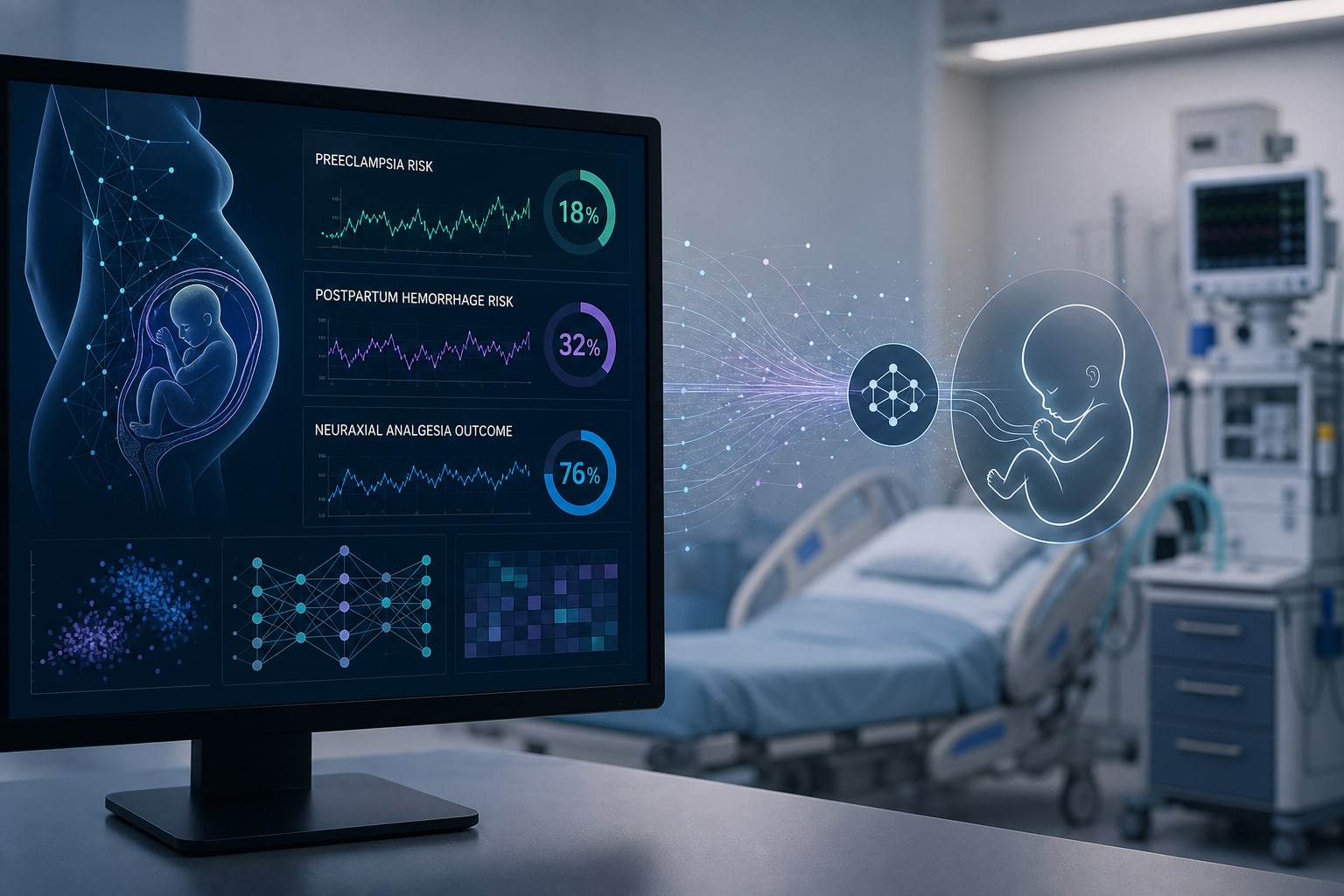
AI can forecast complications such as preeclampsia and postpartum hemorrhage.
Current applications include machine learning-enhanced ultrasound for neuraxial interventions and predicting hypotension from spinal anesthesia.
Most studies on AI in obstetric anesthesiology are retrospective and lack external validation.
Challenges include algorithmic bias, data variability, and integration into clinical workflows.
Clinical Implications
Current limitations and challenges in integrating AI into obstetric anesthesiology must be recognized.
Conclusion
Addressing existing barriers is crucial for the effective implementation of AI in obstetric anesthesiology.