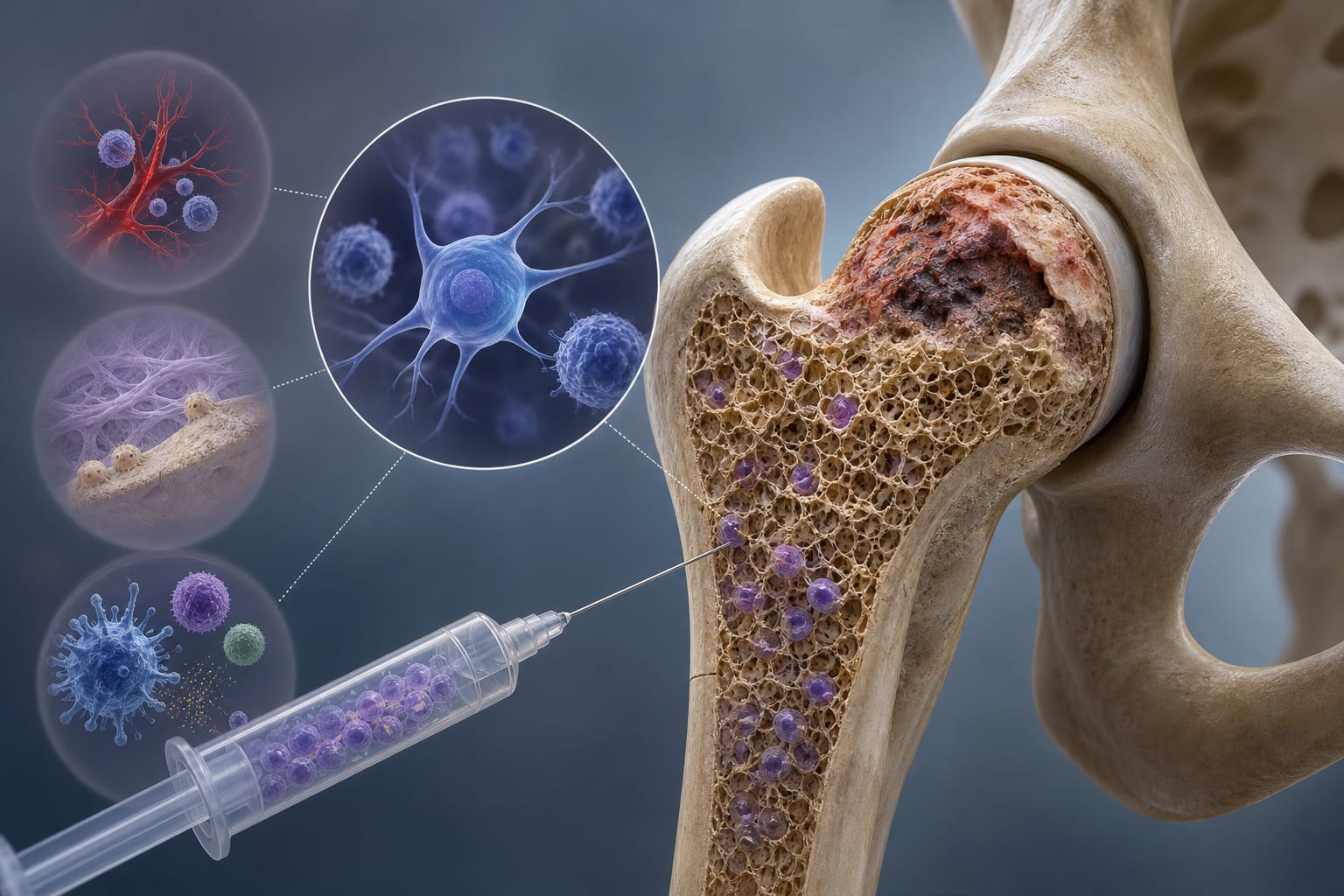
Clinical Report: Advancements and Obstacles in Stem Cell Treatments for Osteonecrosis
Overview
Stem cell therapy (SCT) shows promise in enhancing symptoms and slowing osteonecrosis progression, yet faces challenges such as inconsistent cell quality and regulatory hurdles. This report reviews the current state of SCT in osteonecrosis and identifies key limitations and future directions.
Background
Osteonecrosis is a debilitating condition primarily affecting individuals in their working age, leading to joint degeneration and disability. Conventional treatments fail to address the underlying causes, prompting interest in regenerative therapies like SCT, which aim to restore bone integrity and function. Understanding the pathophysiology of osteonecrosis is crucial for developing effective interventions.
Data Highlights
Preliminary clinical trials indicate that SCT can enhance symptoms and slow structural defects in osteonecrosis. However, challenges such as inconsistent cell quality and non-standardized protocols limit its effectiveness.
Key Findings
Osteonecrosis results from ischemia leading to bone cell apoptosis and structural failure.
MSCs can differentiate into osteoblasts and secrete pro-angiogenic molecules, aiding in bone repair.
Current SCT applications are primarily based on MSCs from various sources, including bone marrow and adipose tissue.
Key limitations of SCT include regulatory obstacles and limited long-term outcome data.
Recent trials suggest that combining SCT with mechanical support may improve functional outcomes.
Clinical Implications
Clinicians should consider SCT as a potential option for patients with osteonecrosis, particularly in early stages. However, they must remain aware of the limitations and variability in treatment protocols and outcomes.
Conclusion
While SCT offers a promising avenue for treating osteonecrosis, further research is needed to standardize protocols and improve long-term outcomes.
Acidic gum beat sugar-free at cranking out nitric oxide from beetroot juice — exactly backward from what test-tube studies predicted. Also this week: a sleep gene that ignores amyloid, and jackfruit sap moonlighting as a bone-building drug delivery system.