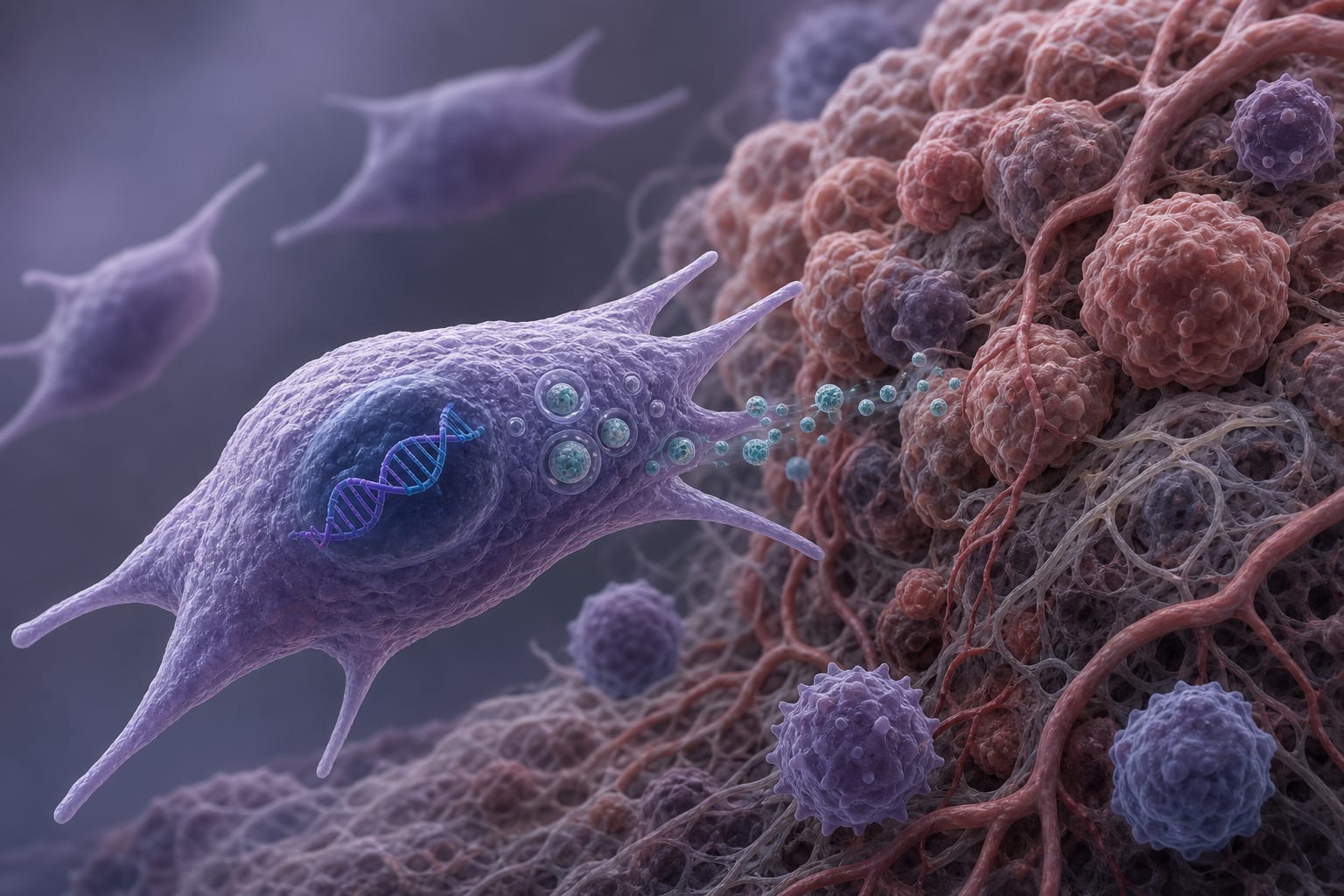
Engineering Approaches to Enhance Mesenchymal Stem Cells for Cancer Treatment
Overview
This review discusses the dual roles of mesenchymal stem cells (MSCs) in cancer, highlighting their potential as both tumor promoters and suppressors. It emphasizes engineering MSCs for targeted delivery of anticancer therapies, while addressing the challenges in harnessing their therapeutic potential.
Background
MSCs are multipotent cells with the ability to differentiate and modulate immune responses, making them a focus in cancer therapy. Their presence in the tumor microenvironment can lead to both tumor progression and suppression, complicating their therapeutic application. Understanding their roles and engineering them for specific functions could enhance cancer treatment strategies.
Data Highlights
No numerical data or trial data provided in the source material.
Key Findings
MSCs can enhance tumor cell proliferation, invasion, and therapy resistance through various mechanisms.
The CXCL12/CXCR4 signaling axis is crucial for MSC recruitment to tumors.
Engineered MSCs can serve as carriers for targeted anticancer therapies, including oncolytic viruses and immune modulators.
MSCs exhibit a dual role in the tumor microenvironment, acting as either tumor promoters or suppressors depending on various factors.
Challenges in MSC-based therapies include optimizing their engineering and addressing off-target effects.
Clinical Implications
The engineering of MSCs presents a novel approach to enhance the efficacy of cancer therapies. Understanding their dual roles in the tumor microenvironment is essential for developing effective treatment strategies.
Conclusion
Engineering MSCs for targeted cancer therapy holds promise, but further research is needed to overcome existing challenges and optimize their clinical application.